
 Overview
Starting a rebranding journey can be a game-changer for businesses, breathing new life into their brand identity. But without a well-defined rebranding timeline, even the most thrilling rebrand ideas can fall flat, leaving companies scrambling to regain their footing. That’s why a strategic timeline is paramount. It serves as a roadmap, guiding you through the process and ensuring a seamless brand refresh that captivates your target audience.
Every step in this journey demands careful planning and execution, from defining your goals and conducting market research to designing rebranding packages and rolling them out. This guide will provide the necessary tools to create an intelligent rebranding timeline. It offers valuable insights and actionable steps that will help you maximize the impact of your brand overhaul.
Whether you are an experienced marketer or an ambitious entrepreneur, this blueprint will give you the confidence to navigate the complexities of rebranding. Following this guide, you can position your brand for long-term success in a continuously evolving market landscape.

Importance of Rebranding Timeline
A well-planned timeline for rebranding is crucial for a successful brand transformation. It ensures that the new branding elements are seamlessly integrated across all digital platforms and marketing materials, resulting in a unified brand experience.
The timeline must account for preliminary steps such as research, strategy development, and the creation of brand elements like a logo redesign. It should also allocate sufficient time to prepare and present the agenda slide during the rebranding announcement.
It must include a section for developing a compelling rebranding press release that engages the target audience. A well-executed timeline ensures a cohesive brand experience, enhances customer perception, and drives business growth. On average, the rebranding process takes 12 to 18 months from beginning to end.
Pre-Launch Phase
This is the preparatory phase, where companies develop their strategies and decide whether to pursue a brand refresh or a complete rebrand. At this stage, companies must define their goals and objectives, conduct research, and conduct brand audits to formulate a strategy.
Initial planning is the most critical aspect of the rebranding. Ideally, this process takes 12 to 24 weeks. The timeframe may vary depending on the company’s size and the goals it aims to achieve. For instance, a business that wants to undergo a brand refresh may take less time than the mentioned timeframe. Similarly, a company wishing to complete a brand overhaul may expect to take longer.
Define Rebranding Objectives
The timeframe for defining rebranding objectives varies depending on the type of rebranding undertaken. For a partial rebrand involving updates to visual elements like logos or brand colors, the objective-setting process can be relatively swift, taking 2-4 weeks.
But a complete rebrand, which encompasses brand strategy and positioning, requires a more extensive approach. This may involve rebranding survey questions and stakeholder workshops, potentially taking six weeks to clearly define the reasons for rebranding.
Market Research and Competitor Analysis
Market research and competitor analysis are a critical step in any rebranding strategy. The research phase can be relatively quick for a partial rebrand focused on specific brand elements, spanning 3 to 5 weeks. But a complete rebrand demands a more comprehensive approach.
It may involve research services, focus groups, surveys, and in-depth analysis of competitors’ branding strategies. This process can take anywhere from 4 to 6 weeks, depending on the scope, industry, and the availability of relevant reviews and data. Factors such as market complexity, number of competitors, and required level of detail can influence the duration of this phase.
Current Brand Audit
Analyzing current brand assets and identifying areas for improvement is a crucial step in both partial and complete rebrands. For a partial rebrand focused on specific elements such as logos or brand messaging, this process can be relatively quick, taking 4-6 weeks to assess the existing brand and pinpoint areas for refinement. But a complete brand overhaul requires a more comprehensive approach, potentially spanning 6-8 weeks.
This involves a deep dive into the current brand, its positioning, visual identity, and customer perception. Factors such as the organization’s size, the number of stakeholders, and the complexity of the existing brand can affect the duration of this phase.
For example, the number of digital assets and channels will significantly affect the timeline for a digital rebrand. Similarly, the rebranding marketing strategy may take an additional 1 or 2 weeks.
Strategy Development
The strategy development phase typically lasts 2-3 months. During this time, companies work closely with brand development experts or design services providers to lay the foundation for their new brand identity. A critical step in this phase is crafting a new brand positioning statement that differentiates the company from its competitors and resonates with its target audience. This statement serves as the cornerstone of the brand identity.
Businesses must establish their core brand values and create consistent brand messaging that genuinely reflects them. The messaging should be designed to improve brand awareness and connect with the targeted audience.
An engaging brand story and narrative play a vital role in building an emotional connection with customers and communicating the reasons behind the brand’s changes.
Companies must create comprehensive brand guidelines that cover logos, color schemes, typography, and imagery. These guidelines should be documented in a brand style guide to ensure consistent implementation.
Creative Development
Creative development is disciplined execution. Within a defined brand timeline, typically 2–4 months, strategy turns into tangible systems. To define rebranding properly, every visual and verbal element must ladder back to positioning.
This phase establishes the core identity: logo, visual language, and scalable brand assets across packaging, web, and sales materials. The brand launch timeline should align production with rollout priorities, especially in a corporate rebrand rapid rollout scenario. Cohesion matters. Every asset must work together to reinforce clarity, credibility, and in-market performance.
Launch Phase
The partial or complete rebranding launch phase typically takes 1-2 months. During this phase, the company announces the rebranding, unveils the new brand assets, and implements effective rebranding strategies, while maintaining careful project management to ensure a smooth transition and minimize disruptions. Additionally, companies should consider the cost of rebranding, which can vary depending on the scope and complexity of the branding process.
Internal Communications and Training
Effective internal communication and training ensure a smooth transition and change management during a rebrand. This phase typically lasts 1-1.5 months and involves informing and educating employees about the rebranding project and the new brand identity. Companies must provide comprehensive training on brand guidelines, messaging, and proper implementation across various touchpoints.
It’s also essential to gather feedback from key stakeholders and address any concerns or questions they may have. This phase ensures that employees understand the rationale behind the rebrand, feel engaged in the process, and are equipped to communicate and represent the new brand effectively.
External Launch
An external launch is execution under pressure. Over a realistic rebranding timeline, every touchpoint must shift in sync with logo design, color palette, graphic design systems, and marketing material. This isn’t about unveiling a nice package. It’s about reinforcing brand voice and brand value with precision, so existing customers recognize the evolution without confusion.
A disciplined rollout replaces guesswork with structure. Follow a clear checklist and ensure consistency with the rebranding template. Align digital, retail, and PR efforts. Study examples like Old Spice, where the transformation was bold but cohesive. Consistency across channels is what turns a launch moment into sustained momentum, ensuring a successful rollout.
Post-Launch Phase
Rebranding success isn’t declared at launch. It’s proven in the market. After your rebrand rollout, measure shifts in brand perception, recognition, and equity against pre-launch benchmarks. Monitor sentiment, reviews, and competitive response to identify early signals, positive or negative. The risks of rebranding surface quickly when brand consistency slips or a branded asset fails to reinforce the intended brand architecture.
Evaluate campaign performance against clear KPIs and follow best practices in data monitoring and competitive tracking. A successful rebrand protects equity, strengthens differentiation, and performs under real-world pressure, not just internal approval.
Data-Driven Rebranding Strategy for Maximum Impact
Rebranding without validation is a risk. SmashBrand is a rebranding agency built to remove that risk. We research, design, and test every critical element before launch, so your rebrand is grounded in performance, not opinion.
From defining a clear branding timeline to building a disciplined rebrand rollout plan, we create a strategy that aligns teams, reduces execution risk, and protects in-market momentum. If you’re ready for a rebrand engineered for measurable shelf impact, let’s talk.

A seasoned veteran in the CPG (Consumer Packaged Goods) industry, Jason Vaught brings a wealth of knowledge and hands-on experience as the director of content and marketing for SmashBrand. His comprehensive role at the forefront of brand communication ensures that CPG brands remain well-informed about the suite of services SmashBrand offers. Furthermore, his insights derived from the company's strategy, design, and testing services are invaluable to brand owners and managers seeking expert guidance.
From his early endeavors in launching a successful sports nutrition brand that gained prominence in significant bodybuilding and fitness retail spaces to his entrepreneurial ventures in kick-starting multiple brick-and-mortar and e-commerce startups across diverse industries, Jason's career is studded with substantial milestones. Notably, he has innovated numerous products later embraced by leading industry brands, showcasing his knack for anticipating market demands and setting trends.
Jason's journey in the CPG industry commenced at age 21. Over the years, he has worn multiple hats, ranging from a manufacturer and retailer to a distributor and brand owner. This multifaceted experience equips him with the rare ability to offer practical advice grounded in real-world expertise. His mission is to guide and support other CPG brand owners, directors, and managers on their path to success.
Subscribe to
Nice Package.
SmashBrand’s Nice Package: Stay current with our latest insights
Free Resource.
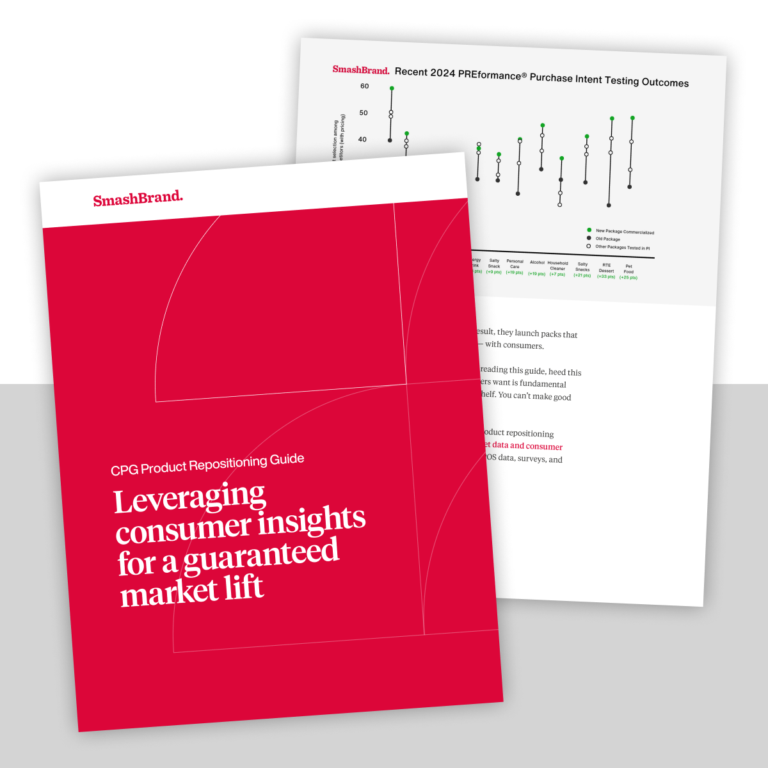
CPG product repositioning guide.
Explore the five undeniable signs your CPG product needs repositioning along with strategies for leveraging consumer insights for a guaranteed market lift.
Download Whitepaper About CPG product repositioning guide.