
 Overview
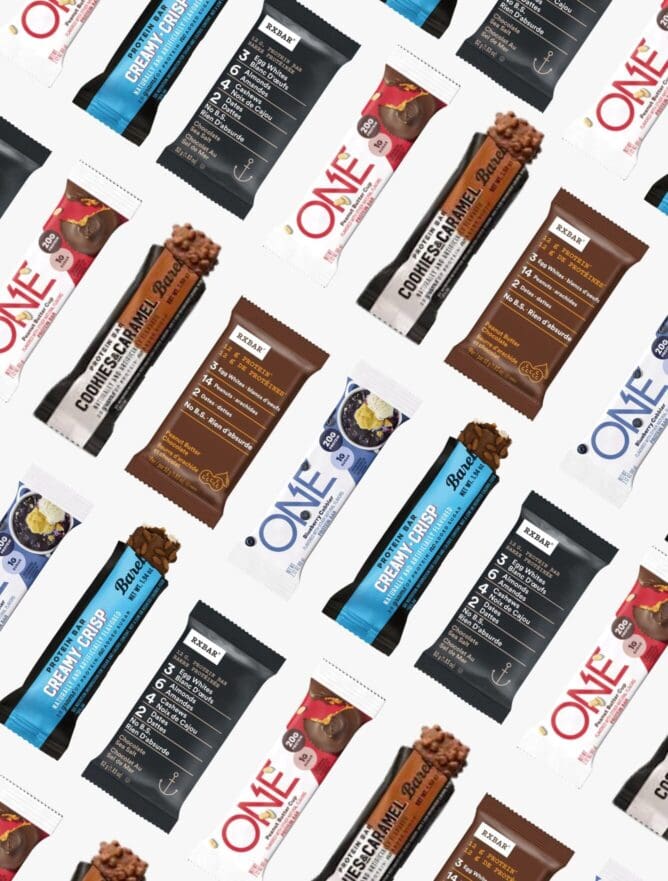
In the protein bar category, choices are limited. Shoppers scan the protein, glance at the calories, confirm the flavor, and decide. If your packaging fails to align with that sequence, it never earns the basket. That moment is where packaging design for protein bars earns, or destroys, its value.
The problem is scale. As protein bars flood the market, flexible packaging, single-serve wrappers, and custom protein bar boxes are exploding in volume. Yet most protein bar packaging still relies on intuition, graphic design trends, or overbuilt protein claims. The result? Confusing wrappers, indistinguishable boxes, and an energy bar packaging design that looks busy but moves slowly.
This article breaks down how data-driven packaging design actually works for protein bars, what drives choice, what kills velocity, and how packaging decisions around protein, calories, wrappers, and boxes can be tested, optimized, and proven before they ever hit the shelf.
Defining performance in protein bar packaging.
It’s not whether the brand team liked the look or whether the custom wrapper felt premium in hand. In protein bars, performance is measurable, repeatable, and predictive. The brands that scale fastest define success by what packaging does in-market, not how it’s defended in a room.
Pick-Up Rate in Competitive Sets
Pick-up rate answers one brutal question: Does your packaging get chosen when everything else is equal? In dense bar sets, often 30+ SKUs, custom protein bar packaging must earn attention instantly.
Brands like BUILT win here by prioritizing macro clarity and bold contrast over decorative branding. Their front-of-pack hierarchy makes protein grams and indulgent flavor cues immediately legible, even within dense display boxes.
Corrugated packaging and custom-printed boxes can elevate presence, but only if the wrapper itself first earns attention. If the front panel doesn’t trigger a hand reach, material upgrades and structural refinements become secondary at best.
Purchase Intent vs. Competitor Baseline
A strong purchase intent score means nothing unless it outperforms direct competitors. Testing your product packaging design against category competitors shows whether it is gaining or losing ground. When brands like Barebells leaned harder into flavor-forward branding, they didn’t just look different; they outperformed indulgent competitors, proving the shift worked.
Repeat Purchase Likelihood Tied to Expectation Accuracy
Velocity dies when packaging overpromises. Texture, flavor, and satiety cues must align with the eating experience. Brands like Power Crunch clearly communicate wafer texture on-pack, reducing uncertainty before the first bite. Meanwhile, No Cow reinforces its plant-based density and high-protein positioning without implying confectionery softness.
In both cases, the wrapper sets a specific expectation, and the product delivers against it. Custom packaging succeeds only when customers feel the bar performed exactly as promised. Miss that alignment, and no premium material, structural upgrade, or custom-printed box will rescue repeat purchase.
Velocity Impact at Shelf and Online
True performance shows up in movement, units per store per week, and online conversion. Packaging that works at the shelf but collapses at the thumbnail scale is incomplete. High-performing brands design custom wrappers, display boxes, and food packaging systems that hold clarity across retail and e-commerce. Velocity is the scoreboard. Everything else is noise.
Purchase Driver Hierarchy for Protein Bars Packaging
Protein bar packaging does not operate like lifestyle food packaging or cosmetic packaging, where visual mood can carry disproportionate weight. In this category, purchasing decisions follow a structured mental sequence shaped by hunger, function, and risk reduction. If your product packaging does not align with that sequence, no level of graphic refinement, corrugated packaging quality, or custom boxes will compensate.
Below is the hierarchy that consistently governs real-world behavior in protein bars.
Protein quantity as a satiety filter.
Protein quantity is the first threshold. It determines whether the bar even qualifies for consideration. Shoppers in this category often replace something: a snack, a meal, or an energy dip. The protein number becomes shorthand for fullness. It signals whether the option will meaningfully contribute to satiety or simply add calories.
This is why brands like Quest Nutrition and ONE treat protein grams as the visual anchor of their retail packaging. The hierarchy is deliberate. Large numerals create immediate comprehension in crowded shelf sets, particularly within display boxes or corrugated packaging trays where multiple SKUs compete for attention.
If protein is visually minimized, the bar often fails before the consumer evaluates any other aspect of the design, flavor, or brand identity.
Flavor clarity as the emotional closer.
Once protein establishes functional legitimacy, flavor determines whether the bar feels desirable. Flavor clarity is not simply about listing ingredients. It is about eliminating ambiguity. In high-density retail packaging environments, unclear flavor names slow decision-making and increase abandonment. Consumers gravitate toward direct, instantly understandable cues.
Barebells provides a useful example. Its flavor-forward design prioritizes indulgence cues without sacrificing nutrition positioning. The product packaging clearly communicates what the eating experience will be like, reducing hesitation and supporting impulse purchases.
Flavor is where rational justification transitions into emotional confidence. If the packaging underperforms here, even strong nutrition credentials may not convert.
Texture expectation as the repeat gatekeeper.
Initial purchase can be influenced by protein and flavor. Repeat purchase depends on the accuracy of expectations.
Protein bars occupy a sensitive territory between confection and nutrition. When packaging signals a soft-baked texture but delivers a dense, dry experience, the mismatch quickly erodes trust. In a category where shelf life and portability matter, structural packaging and material choices must protect the product’s integrity without misleading consumers about its mouthfeel.
Brands like Power Crunch use wafer cross-sections and layered visuals to make texture unmistakable before purchase. The packaging signals light, crispy structure, and the eating experience delivers exactly that. Similarly, Pure Protein reinforces expectations of dense, coated bars through product photography and structural cues that convey heft and satiety.
Calorie and sugar trade-off.
This stage is less emotional and more comparative. Shoppers quickly evaluate whether the nutritional trade-off aligns with their goals. High-protein foods lose impact when paired with excessive sugar. Conversely, very low calorie intake may indicate insufficient satiety.
Effective packaging solutions simplify this evaluation. Rather than overwhelming customers with scattered claims, strong design organizes nutritional information to clarify the exchange. This is particularly critical when bars are merchandised in custom-printed boxes or side-by-side retail packaging configurations where rapid comparison is inevitable.
Ingredient trust signals.
While not typically the first driver, ingredient trust reassures eco-conscious consumers and nutrition-focused buyers who scrutinize custom labels and ingredient panels. Trust signals must be visible but disciplined. When too many clean claims dominate the front of the pack, the product begins to resemble supplement packaging rather than food.
RXBAR built its brand identity around simplicity and direct communication of ingredients. The approach works because it supports the core hierarchy rather than competing with it. The brand’s story reinforces transparency without overwhelming the primary drivers. Ingredient trust strengthens conversion when it complements, not replaces, protein and flavor clarity.
Brand role clarity.
Finally, consumers evaluate context. What role does this bar play in their routine? Is it positioned as a meal replacement, a post-workout option, or an afternoon energy reset? Packaging must communicate this clearly through design, messaging, and structural cues. Without role clarity, the bar risks blending into the broader energy bar category and having no defined reason to exist.
Retail packaging that articulates its role effectively creates a mental shortcut. Consumers understand not only what the bar is, but when and why they should choose it. That alignment increases both trial and repeat.
Protein Bar Packaging Doesn’t Stop at the Wrapper
If your packaging strategy ends at the custom wrapper, you’re thinking too small. In protein bars, case packs are the real commercial engine. Retailers buy by the case. Warehouses move by the pallet. Velocity is evaluated at that level, not at the single bar.
Case packs determine shelf efficiency, labor requirements, replenishment speed, and damage rates. A poorly engineered corrugated case can crush bars, slow restocking, or frustrate store teams. A well-designed shelf-ready case pack converts directly into a display tray, protects the structure, and maximizes facings.
Pallet packaging matters just as much. An optimized TI/HI configuration improves freight economics and reduces compression damage during transit. High-performing brands treat wrapper, case pack, and pallet architecture as one integrated packaging system.
Designing for macro clarity without cognitive overload.
Macro clarity is not about adding more nutrition information to the front of the pack. It is about organizing information in a way that mirrors how people actually evaluate a protein bar. A data-driven hierarchy translates into layout decisions, typographic scale, color contrast, and disciplined restraint. When done correctly, it shortens decision time. When done poorly, it overwhelms.
This is where protein bar packaging design separates itself from categories like wine packaging, where storytelling and heritage can carry more weight than functional metrics. In protein bars, numbers drive qualification.
Why Numbers Outperform Adjectives
Shoppers trust numbers because numbers feel objective.
- “High protein” is interpretive.
- “20g protein” is specific.
Specificity reduces friction. It allows consumers to compare options without guessing what “high” means. In dense shelf environments, that clarity becomes a competitive advantage. The brain processes numerals faster than descriptive language, particularly when those numerals are visually dominant.
This principle also applies in packaging design for protein powder, where gram counts are often the primary decision trigger. The difference is that protein powder buyers are usually in evaluation mode. Protein bar buyers are in quick-decision mode. That compresses the importance of clear numerical communication even further.
Why “High Protein” Underperforms “20g Protein.”
From a design perspective, adjectives create hierarchy problems.
When “High Protein” is the lead claim, it competes visually with flavor, calorie count, sugar claims, and brand identity. It becomes one more statement among many. A number, however, anchors the layout. It becomes a focal point.
Consider how strong packaging design ideas structure the front panel:
- Large protein number
- Clear unit (“g”)
- Secondary macro context nearby (calories or sugar)
This structure creates a visual shortcut. It tells the shopper exactly what they need to know before they invest cognitive effort in reading further.
How visual dominance, contrast, and placement affect choice speed.
Macro clarity is not only about what you say. It is about where and how you say it.
Visual dominance is achieved through:
- Typographic scale
- High contrast color blocking
- Isolation from surrounding claims
When protein grams are buried within flavor graphics or crowded among badges, choice speed slows. When they are isolated in a bold, high-contrast zone, they accelerate scanning.
Placement also matters. Upper-third positioning consistently outperforms lower placement because it aligns with natural eye flow. In retail packaging, the first visual sweep often lands near the top center or upper left. If the macro headline lives there, comprehension increases.
Contrast is equally critical. Light numerals on dark backgrounds improve legibility in low-attention environments like convenience stores or gym displays.
The Danger of Stacking Too Many Claims on the Front-of-Pack
One of the most common packaging failures in protein bars is overloading the front panel.
- High protein.
- Low sugar.
- Gluten-free.
- Keto-friendly.
- Non-GMO.
- Plant-based.
- Added collagen.
Each claim may be true. Together, they create noise.
Cognitive overload forces the shopper to process multiple value propositions simultaneously. Instead of reinforcing the primary driver, the pack becomes a checklist. And checklists slow down decisions.
This is where disciplined hierarchy separates strong brands from reactive ones. Not every claim deserves equal prominence. Data-driven packaging design ideas prioritize the top purchase driver and demote the rest to supporting roles.
Why most protein bar packaging fails after launch.
Most failures are not creative failures; they are process failures. Here’s where things break down:
- Packaging is evaluated in isolation: A wrapper that looks strong on its own often disappears when placed next to 30 other protein bars in real retail packaging environments.
- Decisions are driven by internal consensus: Cross-functional alignment replaces consumer validation. If enough stakeholders “feel good” about the design, it moves forward, without proving it wins against alternatives.
- No pre-market performance validation: Claims, hierarchy, and visual systems are rarely tested against purchase drivers. Without measuring pick-up rate, purchase intent, or clarity, brands launch based on confidence rather than evidence.
- Success is measured subjectively instead of against benchmarks: High-performing brands measure against competitor baselines and defined velocity goals, not internal satisfaction.
- Overcorrecting for trends instead of category truths: Chasing clean, minimalist design or bold redesigns without validating macro clarity and flavor signaling results in beautiful packaging that underperforms.
- Treating packaging as branding, not as a sales system: When packaging is seen as storytelling instead of structured decision architecture, hierarchy collapses, and velocity suffers.

Nice Package
Don’t miss out on our monthly newsletter Nice Package!
Each month, we deliver a data-driven newsletter directly to your inbox, unpacking a critical topic in the FMCG & CPG industry.
"*" indicates required fields
Data-driven packaging design for protein bars that makes it stand out.
SmashBrand is a data-driven packaging design agency specializing in high-performance CPG brands, including protein bars and functional nutrition. We don’t rely on opinion or trend cycles. We build packaging systems engineered to win at shelf, validated against real purchase drivers, and optimized to increase velocity before launch.
Our integrated process unites strategy, creative, and predictive consumer testing into one stage-gated workflow. We identify what drives choice in your category, translate it into structured design, and validate performance in competitive contexts. No guesswork. No subjective approvals. Just packaging built to perform.

A seasoned veteran in the CPG (Consumer Packaged Goods) industry, Jason Vaught brings a wealth of knowledge and hands-on experience as the director of content and marketing for SmashBrand. His comprehensive role at the forefront of brand communication ensures that CPG brands remain well-informed about the suite of services SmashBrand offers. Furthermore, his insights derived from the company's strategy, design, and testing services are invaluable to brand owners and managers seeking expert guidance.
From his early endeavors in launching a successful sports nutrition brand that gained prominence in significant bodybuilding and fitness retail spaces to his entrepreneurial ventures in kick-starting multiple brick-and-mortar and e-commerce startups across diverse industries, Jason's career is studded with substantial milestones. Notably, he has innovated numerous products later embraced by leading industry brands, showcasing his knack for anticipating market demands and setting trends.
Jason's journey in the CPG industry commenced at age 21. Over the years, he has worn multiple hats, ranging from a manufacturer and retailer to a distributor and brand owner. This multifaceted experience equips him with the rare ability to offer practical advice grounded in real-world expertise. His mission is to guide and support other CPG brand owners, directors, and managers on their path to success.
Subscribe to
Nice Package.
SmashBrand’s Nice Package: Stay current with our latest insights
Free Resource.
CPG product repositioning guide.
Explore the five undeniable signs your CPG product needs repositioning along with strategies for leveraging consumer insights for a guaranteed market lift.
Download Whitepaper About CPG product repositioning guide.