Brand development that increases sales velocity, guaranteed.

Eliminate guesswork in positioning, packaging design, and messaging with contextual consumer testing that predicts market performance.

Our brand and package testing predicts shelf behavior and validates winners, replacing guesswork with trustworthy consumer data.
Our Methodology.

SmashBrand’s testing methodology simulates the critical 3 to 13-second consumer decision-making window at the retail and digital shelf.

We replicate real-world buying scenarios to identify winning packaging designs, product innovations, and positioning strategies before you invest in production. By testing in authentic shopping contexts, we capture genuine consumer behavior and the specific purchase drivers that influence category decisions.

This data-driven approach eliminates subjective guesswork and costly redesigns, allowing you to iterate through creative development with confidence and maximize your brand’s market potential from launch.

Testing Services include:

  • Product Idea Screen

  • Usage & Attitudes

  • Purchase Intent

  • Brand Stretch

  • Category Baseline

  • Price Optimizer

  • Product Naming

  • Messaging & Claims

  • Product Positioning

  • Design Diagnostic

Validate brand and package performance with contextual shopper testing that maps decisions, optimizes messaging, and boosts shelf impact.

The rapid testing and design together are critical. We can't mess up our biggest brands. We needed this.

VP Insights, Walmart

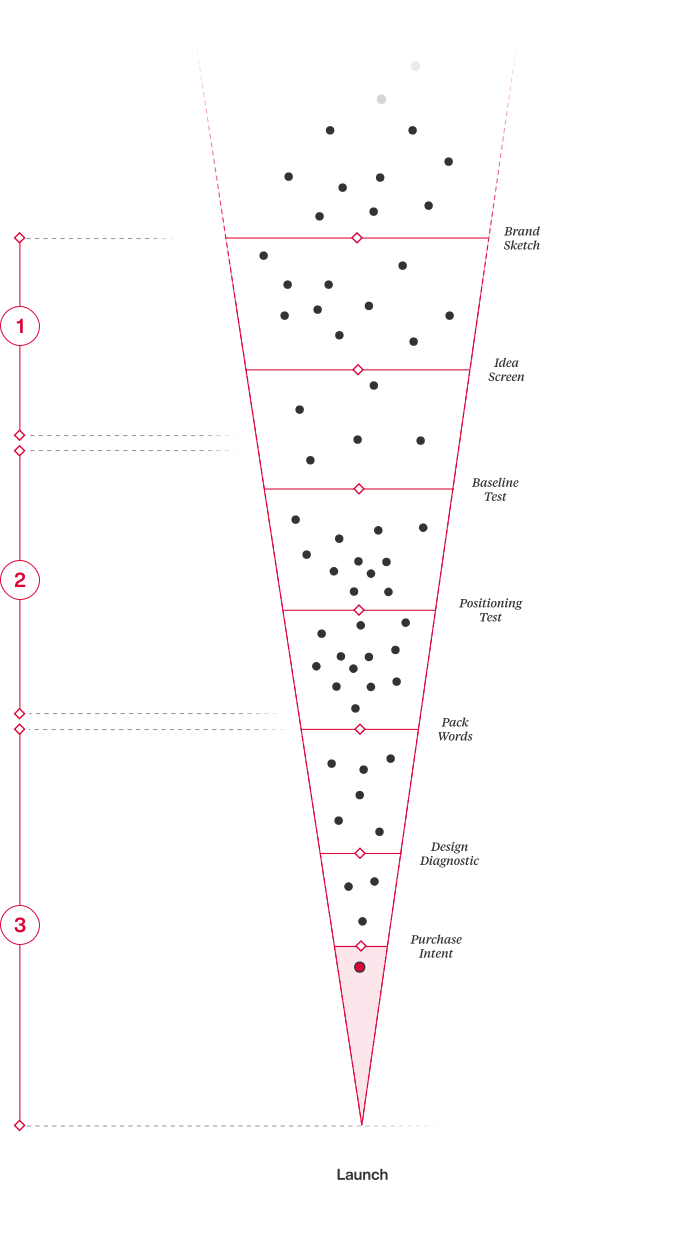
Testing drives better business outcomes across every stage of brand development.

Consumer decision-making happens in seconds, but those moments determine your brand’s market performance. That’s why consumer testing isn’t just a step in the SmashBrand process, it’s the foundation for building successful CPG brands. Our data-driven approach integrates testing throughout every phase of brand development to minimize risk and maximize ROI.

descr
Brand and package testing benchmarks competitors, quantifies preference lifts, and explains why shoppers choose most persuasively.
1
Innovation

We validate concepts and identify new white space opportunities for brands through iterative consumer qualiquant testing.

2
Positioning

We leverage iterative testing to refine messaging and claims that resonate with your target audience and change buying behavior.

3
Design

We use contextual visual testing to ensure your packaging stands out on shelf, communicates effectively, and drives purchase.

This comprehensive, test-and-learn methodology minimizes risk and maximizes
your product’s potential for market success.

Design Testing

Our packaging design agency combines quantitative and qualitative testing to optimize packaging performance before production, eliminating costly redesigns and failed launches. By testing creative concepts with category consumers early and often, we identify what drives purchase decisions and refine designs accordingly. This iterative, data-driven process ensures your packaging stands out on shelf and converts browsers into buyers from day one.

Design Testing

Category Baseline Test

The Category Baseline Test evaluates your brand, packaging, and key competitors with thousands of category consumers to identify and rank the most critical purchase drivers that influence buying decisions and how each brand performs against them. This detailed analysis provides a definitive opportunity blueprint for positioning and package design success by revealing exactly what must change and why, eliminating subjective guesswork and saving hundreds of initial creative hours.

  • Measures and benchmarks your brand and competitors against key category purchase drivers, identified through behavioral analysis of thousands of shoppers.
  • Reveals critical white space opportunities by clearly mapping category purchase drivers against competitive positioning and packaging design.
  • Establishes precise, quantitative baselines for shelf visibility, shopper engagement, and purchase preference, ensuring clear metrics to gauge future improvements.
Learn more
Brand and package testing accelerates alignment and proves messaging and visuals that perform across channels.
Design Testing

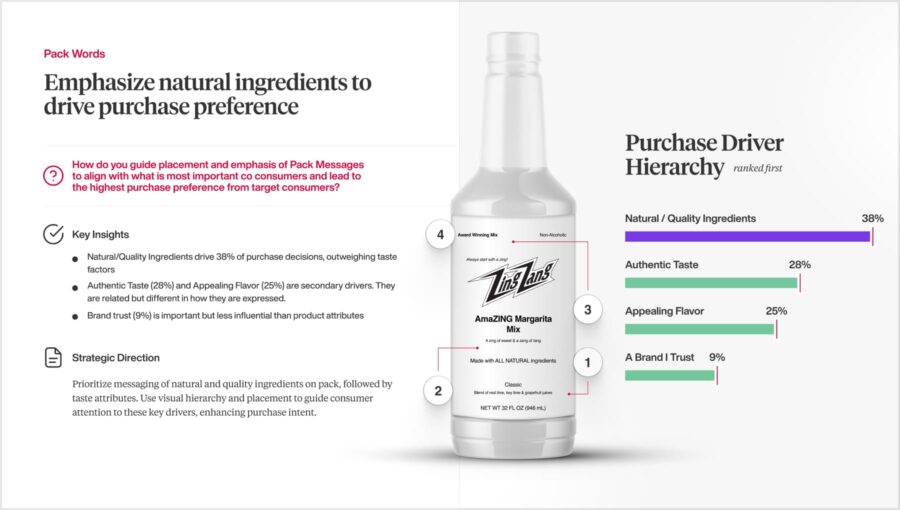
Pack Words Claims Test

Know exactly which words drive purchase and which create confusion before your packaging goes to print. The Pack Words Test isolates and tests front-of-pack messaging with thousands of category consumers to identify which words drive purchase decisions and which create barriers, determining the optimal messaging hierarchy that converts browsers into buyers.

  • Isolates front-of-pack messaging from visual elements to reveal how consumers actually process and prioritize written information.
  • Maps messaging to the consumer decision journey, ensuring critical purchase drivers receive proper emphasis and placement.
  • Validates claims credibility and resonance while identifying optimal copy volume, hierarchy, and panel placement strategy.
Learn more
Brand and package testing quantifies attention, comprehension, preference, and choice—reducing launch risk and confirming speed.
Design Testing

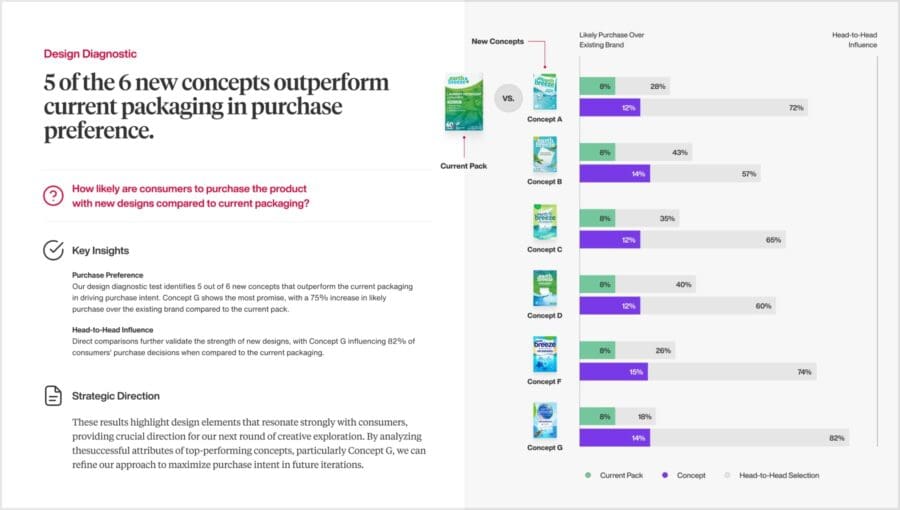
Package Design Diagnostic Test

Identify winning design directions early to focus creative resources on concepts with the highest potential. Our diagnostic test evaluates early packaging concepts with thousands of category consumers to pinpoint which creative directions show strongest potential and which should be eliminated, guiding optimization before major creative investment.

  • Efficiently identifies design directions with highest purchase driver strength while eliminating weak concepts early.
  • Reveals specific design patterns that strengthen key purchase drivers and those that create consumer confusion.
  • Provides comprehensive performance rankings and element-level feedback to guide creative team focus and iteration.
  • Maps visual attention patterns to optimize hierarchy and ensure critical elements capture consumer focus.
Learn more
Brand and package testing identifies winners, proves why they work, and supplies retailer-ready evidence for premium placement.
Design Testing

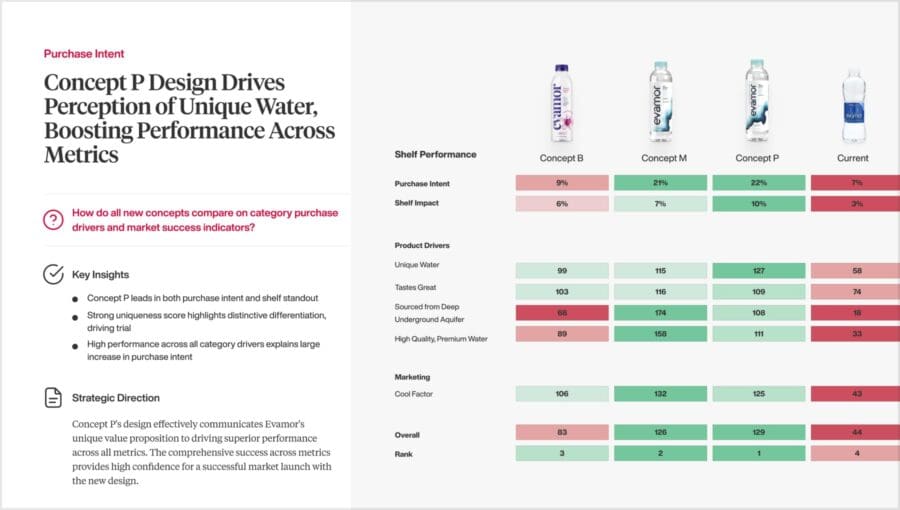
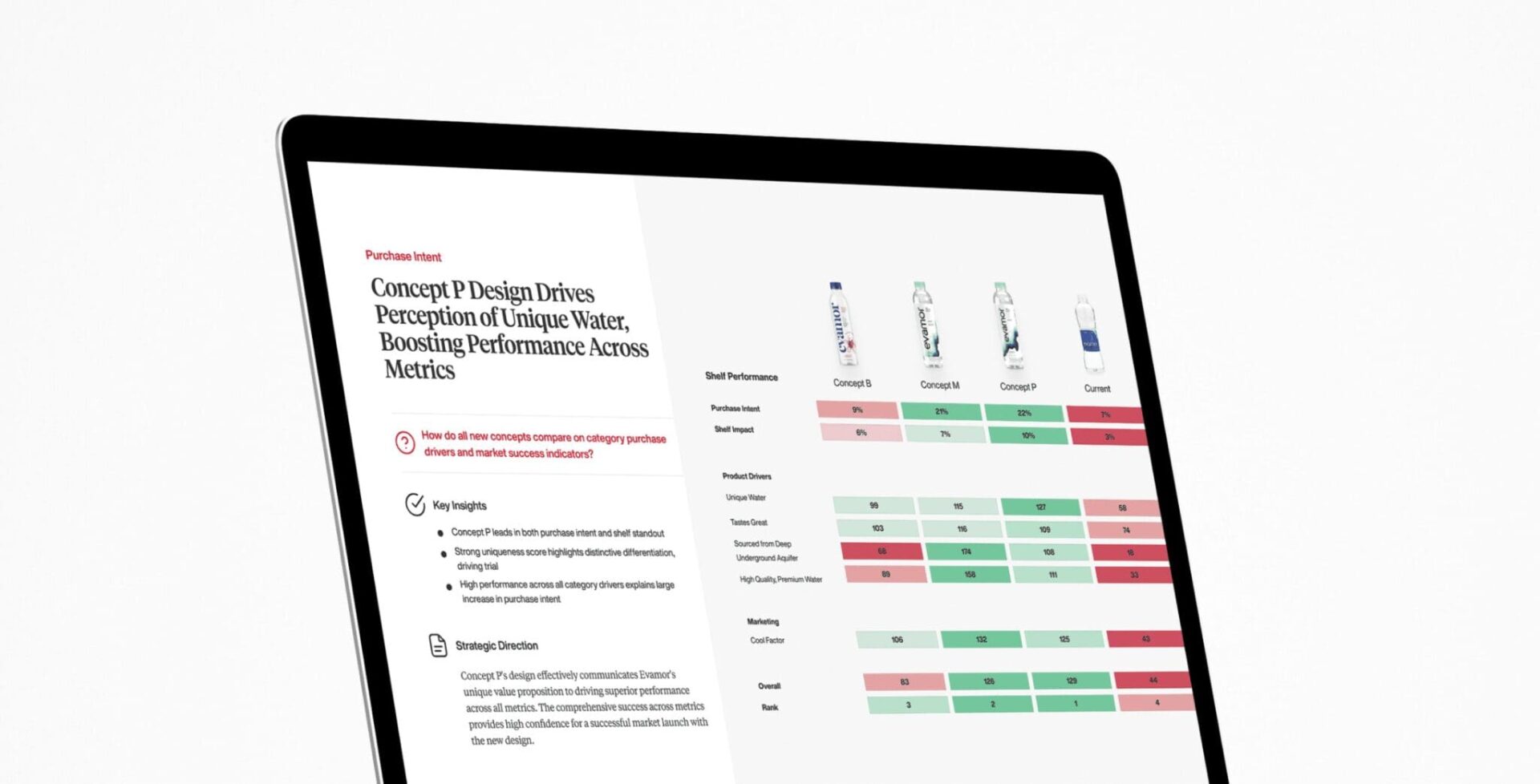
Purchase Intent Test

Validate your packaging will drive sales before production with 94% predictive accuracy. Our Purchase Intent Test simulates real shopping conditions to provide final confirmation your design will perform, giving you confidence to move forward or identifying critical issues before launch investment.

  • Predicts in-market performance with 94% accuracy through realistic competitive shopping simulations.
  • Measures purchase intent lift versus current packaging and key competitors in authentic retail shelf sets.
  • Delivers statistically robust validation using 150+ target consumers per concept with advanced modeling techniques.
  • Provides definitive go/no-go data for production decisions and compelling metrics for buyer presentations.
Learn more
Brand and package testing validates equities, clarifies hierarchy, and confirms findability—so every pixel works harder.

Positioning Testing

We test positioning strategies and messaging with category consumers to identify what drives preference for your brand over competitors. By evaluating how consumers respond to different value propositions in realistic shopping contexts, we pinpoint the positioning that maximizes purchase intent and justifies your price point. This ensures your brand’s core message resonates with target shoppers and translates into measurable shelf performance.

Positioning Testing

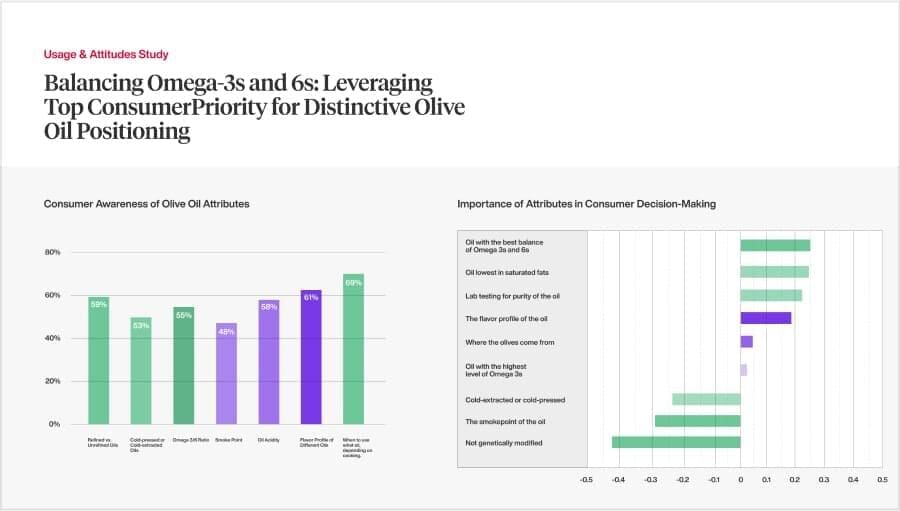
Usage and Attitudes (U&A) Study

Understand exactly what drives category decisions and where opportunities exist before developing positioning strategy. Our U&A study maps consumer decision-making patterns and unmet needs within your category, providing the strategic foundation for positioning that resonates with real shopping behavior.

  • Maps consumer decision-making patterns, pain points, and unmet needs to reveal authentic positioning opportunities.
  • Identifies purchase triggers and barriers through behavioral analysis of thousands of category shoppers.
  • Reveals white space opportunities and competitive vulnerabilities to inform strategic differentiation.
Brand and package testing measures stop, shop, choose behaviors, replacing opinions with evidence.
Positioning Testing

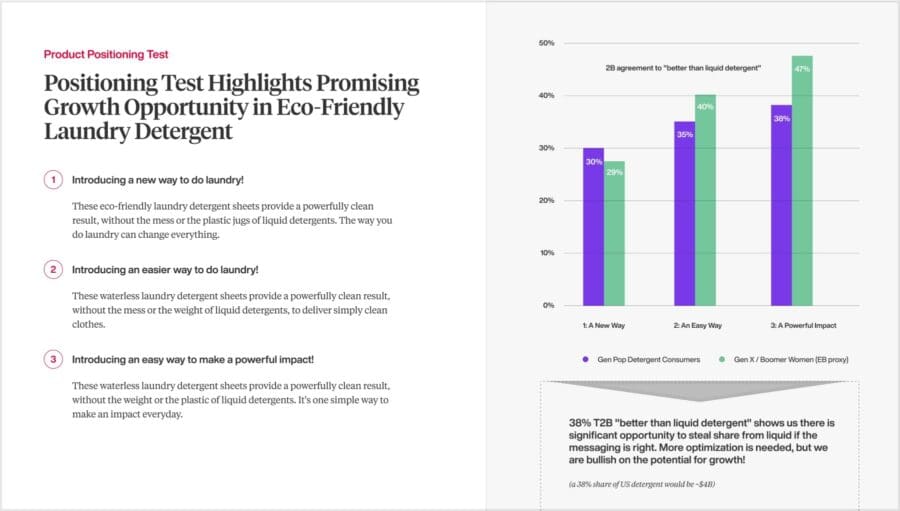
Product Positioning Test

Test positioning strategies to identify what drives preference for your brand over competitors before finalizing messaging. By evaluating how consumers respond to different value propositions in realistic shopping contexts, we pinpoint the positioning that maximizes purchase intent and justifies your price point.

  • Tests positioning strategies in realistic shelf scenarios to measure which messaging drives strongest purchase preference.
  • Quantifies competitive advantage and emotional resonance against category benchmarks to identify winning positioning elements.
  • Validates messaging hierarchy and claims credibility to ensure positioning translates into measurable shelf performance.
Brand and package testing prioritizes shopper-language claims and drives faster conversion on shelf and online.

Innovation Testing

We test product concepts and extensions before significant R&D investment, dramatically reducing the risk of failed launches. By evaluating new product ideas with category consumers in realistic shopping scenarios, we identify which innovations will drive incremental revenue and which will cannibalize existing sales. This validation process accelerates time to market while ensuring your innovation pipeline focuses only on concepts with proven consumer appeal.

Innovation Testing

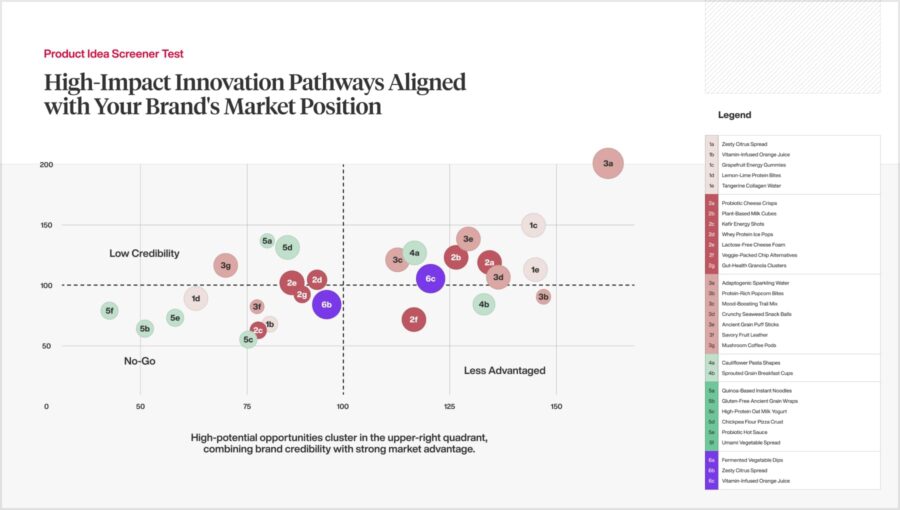
Product Idea Screener Test

Screen innovation concepts early to focus R&D investment on ideas with proven consumer appeal before significant development costs. Our screener test evaluates new product concepts with thousands of category consumers to identify which innovations will drive incremental revenue and which should be eliminated from your pipeline.

  • Rapidly identifies concepts with highest market potential while eliminating weak ideas before costly development investment.
  • Measures consumer interest, uniqueness perception, and purchase intent to predict market viability.
  • Provides clear concept rankings to prioritize innovation resources on the most promising opportunities.
Brand and package testing isolates impactful elements and delivers keep/change/drop guidance, aligning teams and reducing iterations.
Innovation Testing

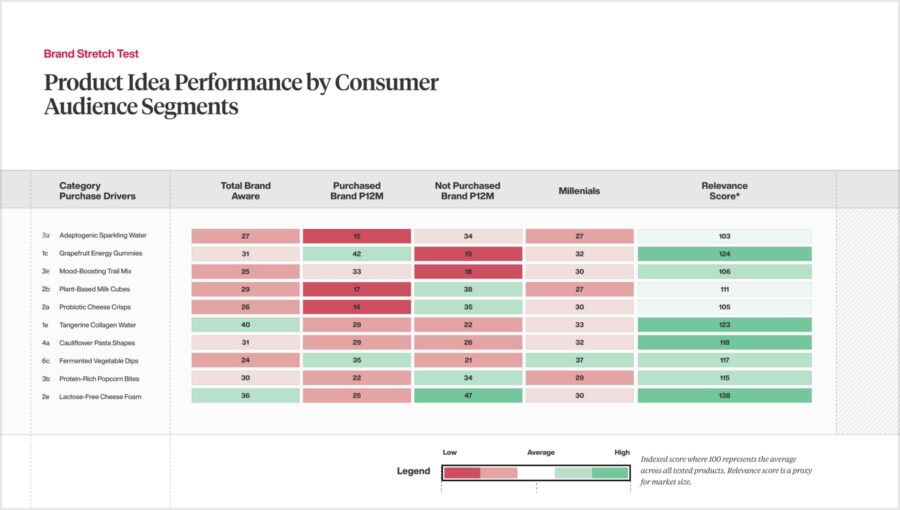
Brand Stretch Test

Validate your brand can successfully extend into new categories before investing in product development. Our Brand Stretch Test measures how well your brand equity transfers to new product areas, identifying where you have the strongest competitive advantage and lowest risk of failure.

  • Quantifies brand equity transfer to new categories, revealing where your brand has natural extension opportunities.
  • Measures consumer acceptance and credibility of your brand in new product areas against category expectations.
  • Identifies extension risks and competitive vulnerabilities to guide innovation strategy toward validated opportunities.
  • Provides data-driven confidence for innovation investments by validating brand-category fit before development.
Brand and package testing quantifies lifts from headlines, benefits, and proof, maximizing preference, credibility, and retailer confidence.
Innovation Testing

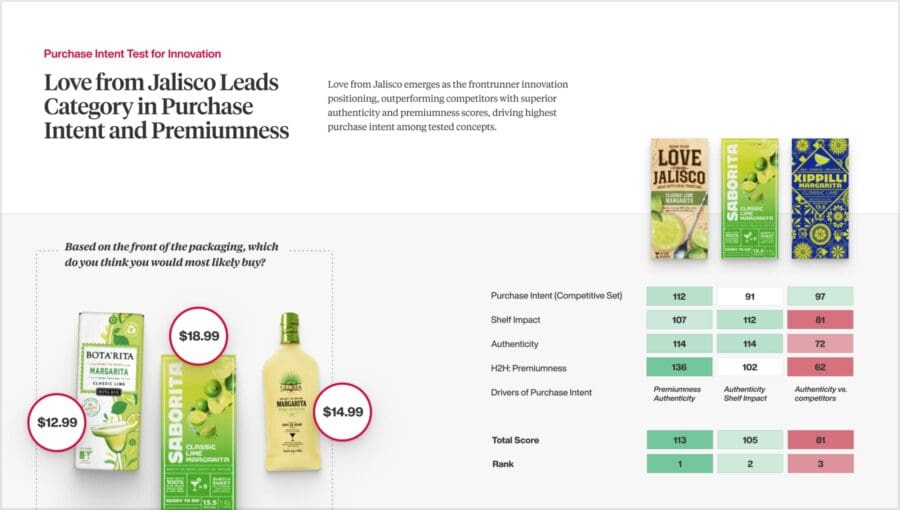
Purchase Intent Test for Innovation

Validate new product concepts will drive sales before launch investment. This comprehensive test simulates real competitive scenarios to predict market performance and provide final go/no-go validation for innovation launches.

  • Predicts innovation market performance through realistic competitive shopping simulations.
  • Evaluates multiple innovation concepts simultaneously to identify winners and prioritize launch sequence.
  • Measures shelf impact, purchase drivers, and price sensitivity to optimize concept positioning before launch..
  • Delivers definitive market viability data to support innovation business cases and secure organizational buy-in.
Brand and package testing validates architecture and navigation to improve findability, strengthen brand blocks, and increase conversion.

Talk to us

Contact us to discuss how we can help you experience the full possibility of your brand.

"*" indicates required fields

This field is for validation purposes and should be left unchanged.
What happens next?
  1. One of our experts will look over your details and contact you.
  2. If needed, we’ll sign an NDA to keep the highest level of privacy.
  3. We'll schedule a discovery call to discuss your specific job to be done and how we can help drive your brand's growth.
FAQ

Frequently Asked Questions About Our Testing Services

Can we hire SmashBrand for package design testing only, without the design work?

Testing-only engagements are a regular part of our work. Some brands have an in-house design team; others bring us creative from another agency and want an independent read before they commit to production. You keep your creative partner, and your brand identity stays where it is.

You don’t need to buy every test. You can come in where your decision is: a Design Diagnostic Test to learn what to fix, a Purchase Intent Test to validate finished finalists, or both. Before fielding, we check that the files you send are shelf-ready and correctly scaled, because a flawed render corrupts the data. The tests read what a shopper sees at shelf: the front of pack. For example, one brand hired us for testing alone. Our finding was that nothing beat their current pack, and that is what we reported.

If we can only afford one test, which one should we run?

The Design Diagnostic Test. On a full packaging design project, it gives you the most from a single test, for two reasons.

First, it tests more creative. The Design Diagnostic reads a broad set of concepts against your current pack and real competitors, so shoppers weigh in on the full range of ideas, not just one or two finalists. Second, it comes early enough to act on. Because it’s a diagnostic, it tells us what’s working, what isn’t and why, and our creative team puts those insights into the next round of design. A test at the very end can confirm a decision, but it can’t shape it.

The Purchase Intent Test is our formal validation stage, and it’s the right addition when budget allows. In our experience, though, when a concept performs strongly in the Design Diagnostic and moves forward mostly unchanged, the Purchase Intent Test tends to confirm the same result.

How do you make sure you are testing our actual target consumer?

Every study starts with a recruit specification that we write and check for feasibility, and that you approve before anything fields.

The first requirement is people who actually buy your category, with the purchase window matched to how often it’s bought. The exception is a young category growing mainly through first-time trial, where requiring past purchase would screen out the very shoppers you need to win.

Beyond that, we resist narrowing too far. Many brands want to test with their ideal target consumer, a profile built for advertising and market activation, where you can aim a message at a specific audience. A pack on shelf can’t do that: it has to appeal to everyone who might buy the product. So we recruit a broad set of real category buyers, collect demographics and attitudes, and look at how results vary across groups. If your ideal consumer responds differently, you’ll see it, measured rather than assumed. The audience definition then carries through the engagement, so results stay comparable from stage to stage.

How many people do you test, and how do you know the results are statistically valid?

Our testing runs in stages, and each is sized for the decision it supports.

The Category Baseline Test uses about 100 people per product to map what drives purchase in your category. The Design Diagnostic uses 120 or more per concept to learn what’s working and what to improve. The Pack Words Test ranks messages against each other and reports confidence on the gaps between them. These stages are about direction: finding the strongest path forward.

The Purchase Intent Test is different. It is the real validation stage, the evidence that a final design is ready to go to market and will perform with the shoppers who buy your category. That is where statistical significance matters most, and we design for it. We can often reach significance with about 150 respondents per concept tested, and recommend more when the differences are likely to be small. Each design is compared with your current pack using a standard significance test, and we report the confidence level actually reached. All of it is quantitative, not an impression from a room of twelve people.

Can shoppers really evaluate a package design on a screen without holding it?

For the decision we are measuring, yes. In the model we work from, the shelf decision has three quick steps. First the pack gets noticed, or doesn’t. Then a first impression forms at a glance. Then the shopper reads and weighs the claims. Our Key Shelf Metrics follow those steps: Eye Pull, Interest Pull and Selection.

Each test recreates the part of that moment it needs. The Pack Words Test shows words only. The Design Diagnostic shows your designs against competitors with prices hidden, to isolate design. The Purchase Intent Test adds prices to the purchase choice, so that choice is price-aware. Where you sell on Amazon or in club stores, each channel gets its own simulated shelf. We read graphics, copy and claims; claims are cleared by your legal team first.

It also helps to be clear about the job at this stage. The pack’s job is to earn the trial: to get chosen and bought. The experience of using the product, holding it, opening it and, for a food product, tasting it, happens after the sale, and that experience is what shapes whether a shopper buys again. Tactile feel, structure and opening experience are outside these tests, as is physical package testing for materials and transit, which is a different discipline.

How do you choose the competitors we are tested against, and can we change them?

Competitors are a research tool, not opponents. We agree the set with you, and you can propose names. We often steer away from a category’s dominant leader in diagnostic work, because an overwhelmingly recognized rival makes shoppers answer on brand rather than design, and the data stops telling you anything about your pack. We pick realistic, swappable alternatives in the same product form as yours, and typically two with distinct strategies, so the design has to win against the category rather than over-fit to one brand. We tell you plainly when a proposed set would corrupt the read.

Can you change it? Yes. Before launch, any change to competitors simply needs your formal approval before the test goes live. Once results exist, the set is carried from the Design Diagnostic to the Purchase Intent Test so the numbers stay comparable. A mid-project change breaks that comparison, so our testing lead talks it through with you before anything moves.

If we change the design after testing, does that invalidate the data?

It depends on the size of the change. Most refinement happens before the final test: finalist designs typically go through one or two optimization rounds between the Design Diagnostic and the Purchase Intent Test, so the version you validate is already the improved one.

After a design wins and you approve it, we lock the validated colors and layout for production and allow one light-touch round on minor elements. Those results hold because the changes are small. A material change is different: a new palette, hero image, key claim or structure moves the packaging away from what shoppers chose, even for a good reason. We’ll tell you plainly whether the result still stands, or whether a re-test of the changed elements, scoped as an addition, is worth it before you put the number in front of a retail buyer.

Copy wording is more flexible. The Pack Words Test locks which ideas win, not every word, so the literal copy can be refined afterwards.

How long does package design testing take?

Fielding is the fast part. Live data collection usually takes two to three days, longer when the audience is hard to reach. Around it, we build and check the survey, analyze the results, and hold an internal review in which our testing, strategy and creative leads challenge the read before you hear a single number. Once inputs are locked, that usually adds up to two to three weeks from build to your results presentation.

The longest variable sits upstream, before the clock starts: agreeing the recruit specification, purchase drivers and competitive set, having your legal team pre-screen the claims we’ll test, and receiving final, correctly scaled design files. We plan those steps with you from day one. We monitor fielding in batches while it runs, and if something needs a decision, or more time to protect the result, you hear from us early. Results arrive in one structured 30–60 minute presentation.

What will our team need to provide along the way?

Less than you might think, but a few things only your team can do.

  • Approvals before launch. You review and approve the recruit specification, the survey stimuli and the competitive set. Any later change to these needs your sign-off again before the test can launch.
  • Legal review of claims. Before a Pack Words Test fields, your legal or regulatory team reviews every candidate claim, so we only test words that can actually appear on pack. We can’t do this step for you, and a claim that can’t be used is a wasted slot.
  • Final design files. Shelf-ready, correctly scaled renders. We check them before fielding, because a flawed render corrupts the data.
  • The readout. A 30–60 minute presentation of results, followed by your decision. We recommend; you make the final call.

What are the four PREformance tests, and why four instead of one?

A single big study asks one group of people to answer everything at once. PREformance™ testing splits the job so each test answers one question well, and each forms a hypothesis the next one checks.

The Category Baseline Test measures what drives purchase in your category and how your current pack scores against competitors, before any new design exists. The Pack Words Test turns the drivers your brand can win on into front-of-pack claims and ranks them. The Design Diagnostic Test reads six new concepts plus your current pack and narrows to a top three to optimize. The Purchase Intent Test validates those finalists on a priced, simulated shelf.

The same audience definition and driver language carry through, so your final result is an apples-to-apples improvement over your starting point, and sample size grows as the decisions get more expensive. You don’t have to run all four. Many engagements enter at the Design Diagnostic, and some stop before Purchase Intent.

What exactly do you measure at the shelf, and why those metrics?

A package has to get noticed, compel interest, and then get selected over competing brands. Our Key Shelf Metrics follow that sequence: Eye Pull, Interest Pull and Selection. Each follows one step of the shelf decision in the model we work from, so the scorecard tells you where in that decision a design wins or loses.

Beneath the headline metrics, the Design Diagnostic scores each concept on “head” qualities (advantage, trust, credibility, cohesion) and “heart” qualities (distinctiveness, simplicity, well-balanced design). Shoppers’ own comments explain the scores. Where we run attention mapping, heat maps and pin-drops show where the eye lands, and we always read them alongside those comments, because a hot spot alone doesn’t tell you whether attention was good or confused.

We never call a winner on a stand-alone score. The decisive read is a head-to-head choice against a real competitor.

How do you find out what matters to shoppers in our category?

Good packaging starts with what your category’s shoppers actually care about, not what a brand team assumes they care about. So before design begins, the Category Baseline Test goes to real category buyers to learn what drives their purchase decisions, and how well your current pack and your competitors deliver on those drivers.

From there, we narrow to the three to five drivers your brand can credibly win on. That narrowing is a senior strategic judgment, informed by the data and signed off by you before design begins, not a formula.

The Pack Words Test then turns those drivers into single-idea claims and ranks them. The result is a percentage-weighted message hierarchy that tells designers how much pack real estate each claim earns. The top score isn’t automatically the hero: a claim that’s important but not distinctive often belongs on a side panel.

What happens if nothing beats our current packaging?

You hear it directly. Our method is written to allow a no-go. A new design is recommended only if it beats your current pack at the stated confidence level, or shows consistent superiority across the Key Shelf Metrics. If neither holds, the recommendation is to optimize and re-test, never to force a winner.

When no concept beat one client’s current packaging, we iterated the design and ran a second Purchase Intent round rather than pick the least-bad option.

Some engagements that include the Purchase Intent Test carry a performance guarantee: if the final design doesn’t beat an agreed benchmark by an agreed margin, and you have followed the tested direction, part of the fee is refunded. Terms are set per contract.

You design packaging and you test it. How do we know the test isn't stacked in your favor?

It’s a fair question, and our answer is process rather than promises. You approve the recruit specification, the designs being tested and the competitive set before anything fields. We recommend against easy competitors and flag any set that would flatter or corrupt the read before it fields. Once concepts are set for a Design Diagnostic, they aren’t revised or mixed and matched before fielding; the data decides what changes.

We also protect how questions are asked. We don’t hand the questionnaire over for editing, because that would compromise the test, but you get a methodology summary showing exactly what is measured. Before any readout, our testing, strategy and creative leads review the data together and challenge the interpretation before you see it. If nothing beats your current pack, that is what we report. We have also tested other agencies’ work under the same rules.

Who decides the winner, and is it just the highest score?

Our testing lead presents a data-backed recommendation, and you make the final call on what goes to production. The recommendation is not a mechanical top-score pick. A design wins when it shows a statistically significant lift over your current pack, or a consistent pattern of outperforming across the Key Shelf Metrics. In a close race, a design that gets noticed far more often on a crowded shelf can win, because more “at-bats” means more chances to be bought.

A simple illustration from our own training material: the concept with the highest raw purchase score was not the one recommended, because another scored meaningfully higher on shelf standout.

Clients have chosen a runner-up for real business reasons, such as a retail-partner relationship or a color block that read better from a distance in one retail format. Your authority over the decision is real, not a formality.

Won't shoppers just pick the brand they already know?

It’s one of the most important things we control for. Many respondents won’t know a given brand, so our questions are framed around what the packaging itself communicates rather than existing reputation. On the competitor side, we steer away from rivals so dominant that shoppers answer on brand recognition instead of design, because that makes the data uninterpretable. We use realistic, swappable alternatives instead.

For challenger brands with an unfinished current pack, we have built a clean control mock-up with standard branding and product name, so the baseline is compared fairly against fully branded competitors.

We won’t claim the effect disappears. No survey can make a pack completely brand-free, and a long-familiar current pack can hold its own against every new concept. What we can do is design the study so the comparison is as fair as possible, and tell you where brand may still be playing a role.

Who is behind your testing method, and how much testing have you done?

Our tests are run by senior Testing Leads, who own the judgment calls: how to read a result, which concept to recommend, and when a sample is too thin. That is people with names, not a black-box algorithm.

The measurement uses standard research techniques: simulated shelves, head-to-head comparisons against real competitors, and formal significance testing. The models of attention, perception and color that guide how we read results come from Sigi Hale’s research, which runs from UCLA systems neuroscience through Alpha-Diver and Thriveplan and is now applied at SmashBrand. We treat them as the models we work from, drawing on established behavioral science where it exists, and developed and tested over time, not as settled law.

On experience: to date, 25 brands have completed at least one of our four PREformance tests, more are in field now, and we have fielded roughly 120 quantitative studies since May 2025.

What do we actually get at the end of each test?

Every test ends in something your team can act on.

  • Category Baseline Test: a ranked list of category purchase drivers, a Purchase Driver Map showing where your brand should focus, and a competitive scorecard showing where your current pack wins and loses.
  • Pack Words Test: a percentage-weighted message hierarchy that tells designers how much pack real estate each claim earns, plus the shopper comments behind it.
  • Design Diagnostic Test: a Key Shelf Metrics scorecard, shopper verbatims and, where run, attention heat maps, plus optimization paths our creative lead turns into specific design moves for the top three concepts.
  • Purchase Intent Test: a go/no-go recommendation with the full scorecard. A validated winner feeds production and your retail-buyer conversations.

Each is presented in one structured session, typically 30–60 minutes, after our testing, strategy and creative leads have aligned internally. If your team wants a deeper walkthrough of a specific finding, we can record a short explainer.

What if our favorite design doesn't win?

It’s the most common conversation we have after a test: the design a leadership team loves isn’t the one shoppers choose. We raise the possibility before the test, not after, because conference-room taste and shelf choice often diverge. Finding that out before production is the point.

It’s also why the Design Diagnostic is guidance, not a final exam. It narrows six concepts to a top three for optimization. A losing concept often has one strong element, and our testing lead identifies it in the data; our creative lead then carries it into the surviving designs. Flat stand-alone scores are normal for well-crafted work, so the decisive read is the head-to-head against a competitor.

Testing also settles internal debates. When two stakeholders at one brand disagreed on which of two concepts to launch, a focused head-to-head between just those two ended the debate by a clear margin.

What can't these tests tell us?

Knowing a method’s limits is part of trusting it, so here are ours.

  • Sales and loyalty: the Purchase Intent Test measures choice on a priced, simulated shelf against your current pack and real competitors. It is a pre-launch read, not observed in-market sales or repeat purchase over time.
  • Format and price: the Pack Words Test reads front-of-pack messaging. It doesn’t settle bottle versus can, pack size or pricing, which need separate studies.
  • Validation: the Design Diagnostic is a diagnostic. It finds what to fix; formal validation happens at Purchase Intent.
  • Legal clearance: your counsel owns claim and trademark clearance. We apply their review before testing, but we don’t replace it.
  • Design winners: the Category Baseline Test comes before new designs exist, so it sets priorities and a benchmark, not a winner.

We have many SKUs, sell in several channels, or sell mostly online. How do you test that?

Category drivers are usually shared across a line, so by default we treat your SKUs as one design system rather than separate mini-projects. A representative product runs through the tests, testing more than one SKU strengthens the read when they’re analyzed as a system, and the output is one messaging and design system meant to perform across the line. Fully SKU-by-SKU design and testing is available, scoped separately, because it turns every stage into its own project.

Results can still differ by SKU, so we report SKU-level breakouts rather than a line average that mutes real winners, though the recommendation still rests on the system as a whole. Each extra hero SKU or price point needs its own adequately sized sample.

Channels work the same way. Physical shelf, Amazon and club stores can each be simulated separately. If you sell mostly online, we test on an online-style shelf, and we don’t put an online-only product on a physical shelf.