
 Overview
“Hey ChatGPT, create an article about how CPG brands can leverage ChatGPT throughout their business.”
Yes, ChatGPT helped outline this article. No, it didn’t write it.
Because expertise isn’t automated. Insight doesn’t come from prompts. And no brand ever won shelf space by outsourcing its strategy to a chatbot.
This article is about how Consumer Packaged Goods (CPG) brands can use ChatGPT effectively within a controlled, consumer-guided process. We’ll walk through where this AI tool adds value across ideation, iteration, and testing, and where human insight still needs to lead.
We’re not suggesting you replace your team with a large language model. What we are saying: use ChatGPT as a strategic asset to accelerate workflows, generate fresh creative directions, and test multiple angles fast without sacrificing performance.
We’ll also cover implementation best practices for CPG brands, from data security to measurable ROI, and expose where this tool falls short so your team doesn’t.
ChatGPT in the right hands is a powerful tool. And for CPG brands fighting for consumer attention, that power, when paired with the right methodology, can make the difference between missed opportunity and measurable market lift.
The AI paradigm shift in the CPG industry.
For those living under a rock, ChatGPT is a powerful language model developed by OpenAI that has a basic understanding of almost everything. It continues to garner media attention with each new update, and whenever issues arise, such as college students using it to cheat on exams in schools.
The rules of discovery have changed. Traditional search is giving way to generative AI platforms like ChatGPT, Perplexity, and Google SGE. Even as new models emerge and spark Grok vs ChatGPT debates, the core reality remains: the way consumers find and evaluate a CPG brand is being rewritten in real time.
This is more than a marketing shift; it’s a supply chain-to-shelf shakeup. Consumers aren’t scrolling through search results anymore. They’re asking AI models direct questions and getting distilled answers without clicking. That means your brand may never get a chance to speak for itself unless you shape the narrative that AI voice agents for ecommerce deliver.
Why this matters for the CPG industry.
In an AI-driven world, your packaging, content, and messaging must be built for zero-click discovery. That’s not just a copy issue. It’s a visibility and relevance issue.
The brands that win in this environment will be the ones who bake actionable insights into every touchpoint. Who treat cpg marketing like an AI input, not just a sales asset. Who understand how consumer behavior is evolving and adapt faster than legacy CPG companies stuck in old models.
And this goes well beyond awareness. These AI shifts impact CPG sales teams, product innovation, and even customer loyalty. If your claims, design language, and positioning don’t show up accurately in AI outputs, you risk being erased from the consideration set entirely.
This applies across industries, from food to beauty to schools and education-focused products. If your category is being searched, it’s being summarized by AI.
And what does that mean?
If you’re not optimizing for AI, you’re optimizing for irrelevance. To drive the next sale, CPG brands must view AI not as a trend but as a new front in the fight for shelf space. Those who embed AI-readiness into their processes from supply chain to brand messaging will not just show up. They’ll stand out.
Generative Engine Optimization (GEO)
GEO isn’t a buzzword. It’s a reality check. In a world where AI assistants like ChatGPT now summarize the internet for consumers, traditional SEO just doesn’t cut it.
Consumers no longer navigate through ten blue links. They ask questions, and generative AI (gen AI) gives answers. That means your content marketing, product data, and consumer messaging must be optimized not for ranking but for retrieval.
What Is GEO?
Generative Engine Optimization (GEO) is the discipline of structuring your brand’s content so that it appears in AI-generated responses.
While traditional SEO focuses on page rankings, GEO is about feeding AI assistants the right information in the right structure so they can confidently feature your brand in their answers.
For consumer goods brands, this means packaging your story in a way that AI can find, trust, and surface at scale.
What Makes GEO Different?
- SEO targets search engine algorithms.
- GEO targets AI language models trained on billions of data points.
And AI doesn’t guess. It synthesizes. If your content lacks semantic clarity, structure, or social proof, it gets skipped.
How to Win at GEO: Actionable Strategies
- Structure everything: Use schema markup, product attributes, and detailed metadata. Think like a supply chain management pro, organize your data like inventory: searchable, scannable, and complete.
- Use FAQ blocks: Natural language Q&A aligns directly with how people prompt AI. Anticipate questions and feed your answers into structured content formats.
- Speak like a shopper: Leverage consumer preferences and consumer review mining to surface language real people use. AI learns from this, so should your site.
- Be semantically clear: Ambiguity kills AI recall. Say exactly what you do, who it’s for, and why it matters in plain language.
- Map content to market trends: Create high-signal content that aligns with what consumers are asking today, not with what they asked last quarter.
Why CPG Brands Can’t Ignore GEO
If you’re not controlling how your brand is described in AI outputs, someone else or something else is doing it for you.
And in a zero-click world, showing up in ChatGPT cheat sheets or AI assistant summaries can make or break a brand’s influence with retailers, consumers, or buyers. It affects everything from marketing strategy and product adoption to how you’re evaluated by retail partners.
The brands that win next year won’t be the loudest. They’ll be the ones who optimized for how people actually search in 2026.
Generating Creative Content with AI That Performs
Let’s be clear: ChatGPT isn’t your copywriter, but it is a strategic tool that can supercharge your content workflows when used the right way.
This isn’t the stale output of yesterday’s bots. With natural language fluency and contextual flexibility, today’s AI models can replicate tone, rhythm, and structure that feel human-like, sometimes even channeling the vibe of Fresh Prince-era Will Smith.
But flavor isn’t enough. Great content still needs a strategy behind it. That’s where human emotional intelligence, customer insights, and data-led decisions come in.
Turning AI Into a Marketing Multiplier
Whether you’re a founder launching a category-disrupting hemp beverage or a seasoned CPG sales team scaling a portfolio, ChatGPT gives your team bandwidth you didn’t think you had.
A lean, high-output CPG marketing campaign could now include:
- 100+ blog posts on hemp benefits, sustainability, and mixology use cases
- 30+ social captions to anchor your visual storytelling
- Personalized SMS offers that cut through the noise
- Omnichannel PPC ad variants, driven by customer data
- Email funnels that engage, not just inform
With smart prompts, a single marketing director can now produce what used to take an entire team, while still maintaining brand tone, strategic alignment, and measurable consistency.
Content That Works Across Channels (and Feels Human)
Generative AI should enhance the customer experience, not flatten it. That’s why tools like AI humanizer plugins, custom GPTs, and real human editing matter especially when publishing web content or ad creative that needs to pass both emotional and algorithmic filters.
You’re not trying to sound robotic. You’re building content that reflects real customer engagement, tested language patterns, and an understanding of how buyers actually make decisions.
Whether you’re in real estate, consumer goods, or scaling DTC across the United States, AI can support your brand’s voice. And it’s your job to make sure that AI chatbots aren’t speaking louder than your actual team.
When powered by smart marketing strategies, real-time customer data, and a disciplined understanding of machine learning, AI can turn content from a bottleneck into a brand asset.
Used right, it will create user experiences that drive trial, build loyalty, and support a marketing campaign that scales with your ambition.
Conversational Commerce & AI Shopping.
Shopping doesn’t start only at the shelf anymore. It starts in a chat. Whether it’s ChatGPT use cases like “What’s the best low-sugar cereal?” or AI-powered search results comparing hydration powders for athletes, today’s product discovery happens through conversational prompts, not category aisles.
For CPG brands, that shift changes everything. If your product doesn’t show up in these AI-generated shopping journeys, it might as well not exist.
Where CPG Brands Must Show Up
Today’s shoppers are asking AI assistants:
- “Best protein bar for keto diets?”
- “Top-rated baby wipes for sensitive skin”
- “Sustainable shampoo brands under $15”
These are purchase drivers nowadays. And AI responds with curated product lists, brand comparisons, and recommendations based on structured data, consumer sentiment, and contextual relevance.
How to Get Discovered: Structured for AI, Built for the Shopper
1. Optimize structured product data: Ensure every attribute, ingredient, certification, benefit, price, and review is machine-readable. It’s not just about accuracy; it’s about being selected for recommendation.
2. Align to AI search intent: Use real-world queries and shopper language when describing your product. This is where a smart CPG branding campaign becomes an SEO asset.
3. Prepare for AI-native retail platforms: Emerging platforms are building AI-first shopping experiences, products ranked and recommended entirely through AI prompts.
ChatGPT in strategy.
ChatGPT gives your team a strategic advantage. It expands thinking, accelerates brand development, and uncovers blind spots that cost time and revenue.
For any CPG company, it’s a tool that belongs at the table. While your team sets direction, ChatGPT surfaces angles and brand-development questions others miss, especially when time, energy, or perspective run thin.
Its natural language processing engine delivers constant ideation and fast iteration. Ask it to challenge your assumptions. Use it to test fringe scenarios. Push it to find what your strategy left out.
Integrated into digital brand development, ChatGPT supports and improves decisions. With the right ChatGPT development services, you turn one strategist into many and move faster with confidence.
New Product Development: Using AI to Accelerate Concept Work
Great ideas don’t always show up on schedule. Whether your team is packed with idea generators or more execution-driven minds, the pressure to innovate never lets up. When you’re building out a line or brand extension, you need to iterate quickly.
With the right prompts, ChatGPT produces high-level frameworks, creative angles, and functional mock-ups that get your team moving. Even if the outputs aren’t perfect, they shift the concepting from “where do we start?” to “how do we make this better?” That’s a win for both speed and clarity.
Example: Turning a Cereal Box Into a Brand Experience
Let’s say you’re a cereal brand exploring brand innovation and packaging ideas that extend consumer engagement beyond breakfast. You ask ChatGPT to develop a game concept tied to the physical product. Here’s what you get in 30 seconds:
Concept: Cereal Adventure
Goal: Collect all five cereal pieces and reach the finish line first.
Gameplay Overview:
- The cereal box becomes the game board.
- Each player picks a colored or shaped cereal piece as their token.
- Dice rolls dictate movement.
- Squares offer challenges: skip a turn, move back, collect pieces to bypass future obstacles.
Is it perfect? No. But it’s functional. It delivers a tangible start that sparks adaptation, customizing the design, adjusting the rules, and aligning the mechanics with your product story. Now you’re not just selling cereal, you’re delivering a brand experience.
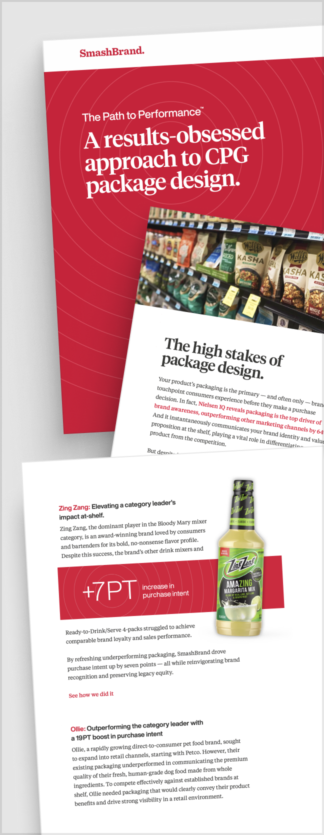
Path to Performance™
Taking a results-obsessed approach to CPG package design.
Discover how SmashBrand’s proprietary process, rooted in scientific principles, informed by data, and validated by your target audience, eliminates the guesswork from package design and delivers guaranteed results.
ChatGPT in Streamlining Operations
One of the more exciting aspects of ChatGPT is its role in essential business operations. We’ve talked about its ability to support customer service, but one of the best ways to use ChatGPT is within your internal organization.
Startups often miss the Important/not-urgent category in Dr. Covey’s four-quadrant framework. Agenda items such as employee handbooks, vendor agreements, and internal newsletters are just a few of the things that once seemed overwhelming for small and mid-cap companies. Still, they can now create these items in a significantly shorter time.
Not only is ChatGPT helpful for top-level executives, but it can also automate routine tasks and reduce the workload of brand managers, sales reps, merchandisers, and more. Having ChatGPT in their back pocket allows them to focus on higher-level tasks and improve communication and operational efficiency.
Like the difference between observability vs. monitoring in DevOps, ChatGPT goes beyond task automation to surface hidden insights, helping teams uncover sentiment trends, workflow gaps, and message effectiveness.
Hiring A Prompt Engineer
The outputs of ChatGPT are only as good as the inputs. While there is much discussion about the jobs this tool will cost society, we rarely hear about the job opportunities it will create.
CPG brands are already building out a ChatGPT-specific role called a “prompt engineer,” whose expertise is in AI chat communication. Smaller brands may need greater profitability to hold such a position, but can leverage this expertise as a freelancer or fractional employee.
Measuring the Success of ChatGPT Implementation
While it’s a fun tool to play with, ChatGPT can become a rabbit hole. Users waste a lot of time on tasks that the human brain handles more efficiently or that are not directly related to the brand’s business operations.
To effectively measure the success of ChatGPT implementation in streamlining operations, CPG brands need to set clear goals and metrics. For example, CPG brands should keep track of and report on ChatGPT’s ability to
- Reduce customer service wait times.
- Improve customer satisfaction scores.
- Increase customer loyalty.
- Improve email conversation rates.
- Streamline internal communication.
Setting these goals and tracking performance data helps CPG brands determine the effectiveness of their ChatGPT implementation and make any necessary adjustments to improve results.
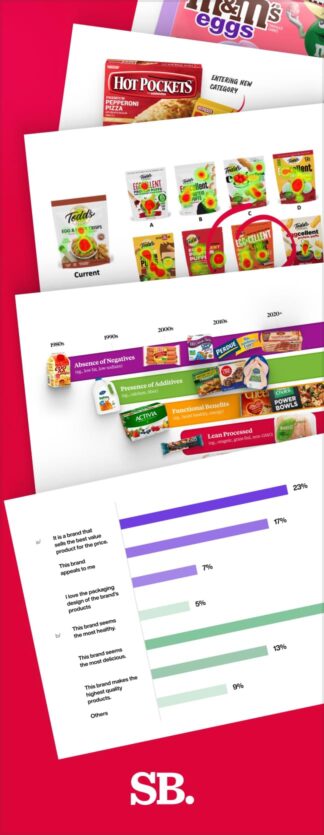
Nice Package
Don’t miss out on our monthly newsletter Nice Package!
Each month, we deliver a data-driven newsletter directly to your inbox, unpacking a critical topic in the FMCG & CPG industry.
"*" indicates required fields
We Guarantee Retail Shelf Performance
Want a best-selling brand? SmashBrand is a brand strategy and packaging design agency that services the FMCG and CPG industries. Whether you are a household name or a challenger brand, we can help you increase retail sales.
Book a time to discuss your project with our team.

Kevin Smith is the founder of SmashBrand, a brand development agency specializing in the CPG and FMCG sectors. Under Kevin's guidance, SmashBrand seamlessly integrates brand strategy, design, and detailed consumer testing, ensuring impactful market outcomes and enhanced sales velocities for its clients.
Key milestones in his career:
Before establishing SmashBrand, Kevin ventured into entrepreneurship with Nutri-Sport at 21. Recognizing the untapped potential in sports nutrition, he rapidly expanded to seven retail locations within a year. This success led to the formation of a distribution company serving all nutrition stores throughout Arizona.
Subsequent ventures included pioneering e-commerce stores and launching Athletic Xtreme, a globally distributed sports nutrition brand. Notably, Athletic Xtreme won BodyBuilding.com's Brand of the Year in 2006 and found its place on the shelves of major retailers, from GNC and Vitamin Shoppe to Walmart successfully exiting in 2014.
Apart from brand milestones, Kevin's journey includes commendable service as a Marine Corps veteran, where he was honored as a DOD Marine of the Year in 2001.
While leading SmashBrand and investing in budding brands, Kevin is committed to mentoring aspiring CPG entrepreneurs. His profound industry knowledge, from grasping retail trends to understanding shelf dynamics, serves as invaluable guidance for brands striving to carve out their niche.
Central to Kevin's approach is a consistent philosophy: Marry actionable, data-centric findings with proven strategies to ensure brands stand out and succeed in retail.
Subscribe to
Nice Package.
SmashBrand’s Nice Package: Stay current with our latest insights
Free Resource.
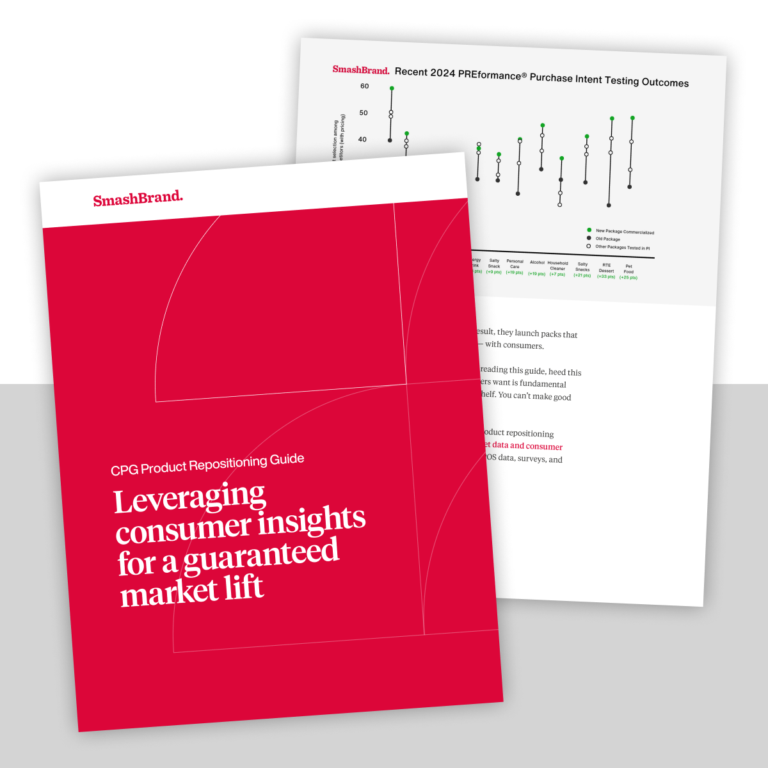
CPG product repositioning guide.
Explore the five undeniable signs your CPG product needs repositioning along with strategies for leveraging consumer insights for a guaranteed market lift.
Download Whitepaper About CPG product repositioning guide.