

Client: I need a new package designed!
Package Designer: I design amazing packaging!
Client: Sold!
[Client and designer skip off into the sunset, hand-in-hand]
Oh, if only it were this easy. Let’s talk about what you should ask packaging design companies before hiring them.
Suppose you want the best packaging for your buck. In that case, you’ll have to ask your potential packaging design company the right questions in advance so that there is as little confusion as possible once the project is underway (granted, there will always be some unforeseeable, but if you’ve clarified most of the major concerns, then you’ll be better able to navigate the surprises once they occur).
Obviously, you’ll want to discuss the project’s scope and determine the pay structure in advance, as well as the time frame and the methods both client and contractor use to work in the most productive manner possible. Once you’ve graduated from the preliminaries and listened to the designer deliver his 10 commandments of product packaging, it’s time to hit him with the big questions. Does he answer each question intelligently, or squirm, take nervous sips of coffee and run from the room in terror? It’ll be exciting either way! Let’s begin!
What other projects have you completed that were similar to mine?
Ideally, you’ll hire a packaging design company with loads and loads of experience with your product and your market. This designer will be aware of relevant packaging trends, industry innovations, market stats, costs, distribution issues and other innumerable potential hiccups and project setbacks.
Of course, suppose the potential designer has little (or zero) experience with your product. In that case, you need to use your super psychic powers to see if the designer understands the fact that there will be unfamiliar areas with which he is therefore willing to do the necessary work and research to deliver a sound concept. The wrong designer is the designer who consistently underestimates the difficulty of a task or cannot admit that he doesn’t know something. Someone who covers up his lack of expertise is someone you don’t want anywhere near your project.
What is the full scope of your services?
Will you need to design new product packaging, or are you looking to rebrand? Will the company offer consultation services? Testing services? Foot massage?
How has your work for other clients translated into higher sales?
This should be an easy one to answer coherently. When a design firm’s work has succeeded in raising the sales or profile of a product, the designers won’t hesitate to tell you, and they may never stop telling you unless they’re muzzled. If the packaging design company rep can’t give you an answer you can actually understand, that will generally mean that their work has failed to generate anything.
I spoke to [name of former client], who said [outraged/blissfully happy client comment here]. How do you respond?
This requires a bit of research. You’ll want to see online public sentiment before committing to an interview with a potential packaging design company, but you’ll also have to pick up the phone and talk to former clients to get the real juice.
Interviewing former clients not only gives you an idea of the packaging design company’s capabilities, work ethic and attitudes through first-person accounts of their experience, but might also give you insight into whether those experiences accurately reflect the situation.
Suppose a packaging design company received a hideous review on Yelp or a similar review site. If you speak to a former embittered client, you might discover that the client was wholly unreasonable, crooked, or even downright insane. However, focusing on strategies to get Yelp reviews from satisfied customers can help counterbalance negative feedback, improving your online reputation and showcasing positive experiences.
How the packaging designer responds emotionally to this question is just as important as what the client actually says. Is he/she genuinely surprised by negative feedback, or is he/she able to reasonably and logically recount the events of the project? Is the designer full of blame or diplomatic about the experience? What did he/she learn? Did a restraining order need to be issued?
How do you see [your product] packaging evolving in the next 10 or so years?
The designer should be bursting with ideas and theories about new technologies and how your product will soon be delivered to the customer via hovercraft. Okay, so the designer doesn’t necessarily have to envision a Jetsons-like future to be well-researched and intelligent. Still, industry knowledge is what you’re looking for with this answer, as well as creativity, ambition and a sincere curiosity about and love for design.
And there’s your initial list with which to work. Play with these questions and develop some of your own that really hone in on your needs. By doing some upfront work like this; you’ll have a much more rewarding experience once you choose your designer.
Data-Driven Brand Development
Want a best-selling brand? SmashBrand is a brand development firm for FMCG and CPG companies. From brand strategy to packaging design testing, our Path To Performance™ process guarantees a retail performance lift. Book a time to discuss your project with our team.
Subscribe to
Nice Package.
SmashBrand’s Nice Package: Stay current with our latest insights
Free Resource.
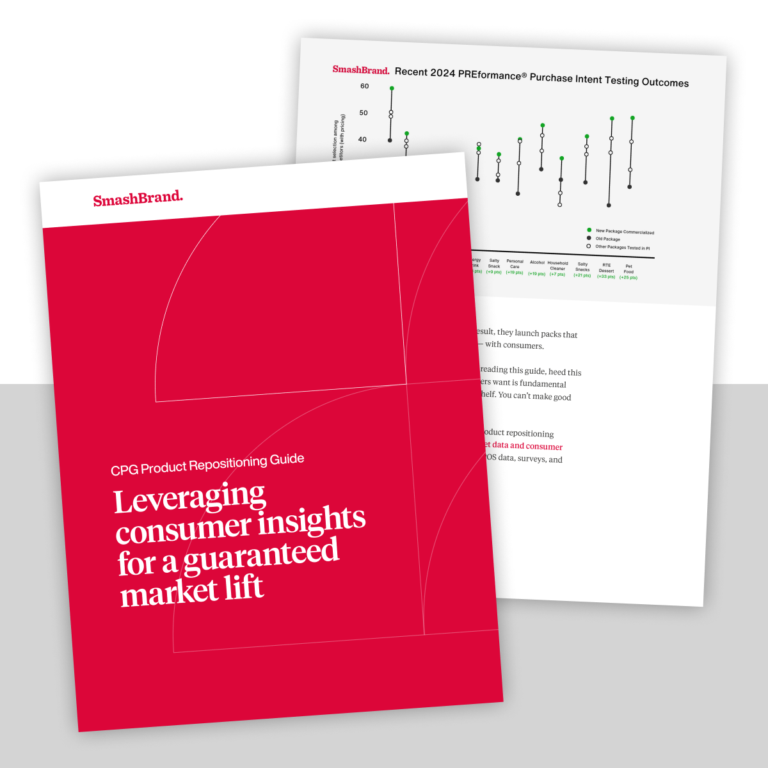
CPG product repositioning guide.
Explore the five undeniable signs your CPG product needs repositioning along with strategies for leveraging consumer insights for a guaranteed market lift.
Download Whitepaper About CPG product repositioning guide.