
 Overview
Ramen is one of the most familiar products in the food world, yet one of the hardest to choose from on the shelf. That’s because consumers don’t evaluate every noodle option. They scan, eliminate, and move on. Most ramen packaging design fails in that moment, and that’s mostly because the packaging doesn’t make the decision clear.
Today’s ramen packaging is built on repetition. The same flavor cues, the same crowded layouts, and the same plastic formats create a wall of indistinguishable options. While other categories, like coffee packaging, have evolved their packaging to signal quality and intent, ramen remains stuck in outdated design systems that blur together and limit how consumers perceive the food.
This article breaks down what actually drives choice in ramen packaging design, how consumers interpret packaging at the shelf, and what designers must do to turn a standard product into one customers choose.
The reality of the ramen category.
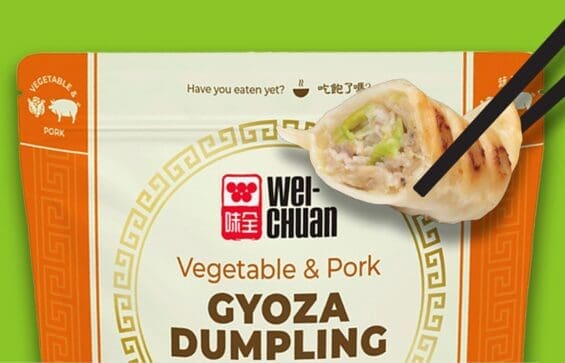
The ramen category is not one market. It is three distinct systems operating at once. Instant packets dominate in terms of price and accessibility. Cup ramen is built for immediacy and convenience. Premium refrigerated products compete on quality and experience. Each format has different expectations for functionality, shelf presence, and product packaging, yet most brands approach them with the same branding ideas.
Consumers also segment ramen in a very specific way. It is either low-cost fast food or an elevated, more authentic experience. There is very little middle ground in how the product is perceived. This makes authenticity and quality signals critical. If the packaging does not clearly communicate where the product sits, consumers are forced to guess.
The category is filled with color, flavor callouts, and attempts at creativity, but most packaging follows the same visual structure. Similar layouts, similar imagery, and similar claims create a wall of repetition. Even when brands introduce interactive elements like a QR code or experiment with shape and functionality, these additions rarely improve clarity.
How consumers actually choose Ramen.
In the ramen category, shoppers don’t usually compare multiple options in detail. They are scanning, filtering, and receiving signals. Brands that win are the ones that reduce decision time, not add to it. The primary purchase drivers are straightforward but often poorly executed in product packaging.
Flavor clarity is the first step. If consumers cannot immediately understand what they are getting, the product is eliminated. Perceived richness and satisfaction follow closely behind. The image on the pack must communicate a complete, fulfilling experience, not just ingredients.
Convenience cues also play a critical role. The format, functionality, and preparation expectations must be clear at a glance. Price anchoring is the final filter, reinforcing whether the product feels worth the cost within the category.
Packaging functions as the primary signal for taste and quality. In most stores, consumers cannot touch or evaluate the product itself. The brand, the image, and the packaging structure must do that work. When these signals are unclear or inconsistent, the product loses the sale before it is even considered
Key purchase drivers in ramen packaging design.
| Purchase Driver | What Consumers Are Looking For | Packaging Signal |
| Flavor Clarity | Immediate understanding of what the product is | Clear flavor naming, strong hierarchy, supporting image |
| Perceived Richness & Satisfaction | A filling, indulgent eating experience | High-quality food image, broth depth, texture cues |
| Convenience & Functionality | Ease of preparation and fit for the moment | Format cues (cup vs packet), prep indicators, portion clarity |
| Price-Value Alignment | Confidence that the product is worth the cost | Material cues, branding, structure, and visual quality |
| Brand Recognition & Trust | Familiarity or credibility at a glance | Consistent branding, color systems, typography |
| Authenticity & Credibility | Signals of cultural or product legitimacy | Ingredient cues, restrained design, and clear origin signals |
| Ease of Decision | Ability to choose quickly without confusion | Strong hierarchy, limited messaging, clean layout |
| Shelf Visibility | Ability to stand out in a crowded environment | Contrast, blocking, distinctive color use |
| Perceived Quality | Confidence in taste and ingredients | Clean design, material feel, ingredient emphasis |
| Relevance to Occasion | Fit for immediate need (quick meal, snack, upgrade) | Messaging, format cues, portion indicators |
The shelf problem.
The ramen shelf is dominated by saturation. Red, yellow, and black are used repeatedly across brands, creating a dense visual field where differentiation is limited. When everything competes the same way, nothing stands out meaningfully.
Most brands rely on the same visual system. Bowl imagery, chopsticks, and exaggerated ingredient explosions are used as default cues. These elements are rooted in tradition, but they have become standardized to the point where they no longer communicate authenticity or quality. Instead, they create repetition.
The result is visual noise. Packaging competes for attention but fails to convert that attention into sales. Without a clear hierarchy, distinct brand assets, and analytics to guide decisions, more design does not improve performance. It slows people down. And in a category defined by speed, that is where brands lose.
Packaging format defines strategy.
Ramen isn’t a single category. It is a set of distinct purchase environments, each with its own expectations, constraints, and decision triggers. Treating all formats the same is one of the fastest ways to underperform on the shelf.
Packet ramen.
Packet ramen operates in the most compressed and competitive space. Limited surface area forces prioritization, yet most packaging attempts to communicate everything at once.
Consumers in this segment are highly price-sensitive, but that does not eliminate the need for clarity. In fact, it increases it. When multiple low-cost options compete side by side, the brand that communicates flavor, value, and recognition fastest wins.
This format demands discipline. Strong hierarchy, immediate flavor clarity, and consistent brand cues are not optional. They are the difference between being chosen and being ignored.
Cup and bowl ramen.
Cup-and-bowl formats shift the context from comparison to immediacy. These products are often chosen quickly, with minimal evaluation, in environments where convenience is the primary driver.
The expanded surface area creates an opportunity, but also a risk. More space often leads to more clutter. Instead of improving communication, it slows it down.
High-performing packaging in this format uses that space to create strong visual blocking. Clear brand presence, simple messaging, and immediate readability matter more than additional claims. The goal is not to say more. It is to make the decision effortless.
Premium Ramen
Premium ramen competes on a different set of expectations. It is not evaluated against the cheapest option. It is evaluated against perceived quality, authenticity, and experience.
This creates an opportunity to move away from category noise, but only if the design is intentional. Many premium brands attempt to simplify but lose clarity in the process. Minimal design without clear communication creates uncertainty, not confidence.
Effective premium packaging signals quality through restraint, structure, and credibility. It must clearly communicate why the product is worth more, without relying on excessive claims or decorative elements.
Ramen as a meal solution in refrigerated and frozen sections.
When ramen moves into refrigerated and frozen sections, the competitive set changes completely. It is no longer compared to other ramen products. It is compared with full-meal solutions.
This shift requires a different packaging strategy.
Refrigerated ramen.
Refrigerated ramen sits alongside fresh meals, prepared foods, and ready-to-cook options. In this context, consumers expect higher quality and greater transparency. Packaging must work harder to build trust. Freshness, ingredient quality, and authenticity become primary drivers.
Visual clutter undermines that trust. Clean design, clear ingredient cues, and thoughtful structure perform better because they reduce uncertainty. Functionality also becomes more important. Packaging needs to support storage, preparation, and handling in a way that reinforces the perception of a complete meal rather than just a noodle product.
Frozen ramen.
Frozen ramen is surrounded by full meals and must communicate quickly within a high-noise environment. Consumers in this space are evaluating both satisfaction and convenience simultaneously. They want to know what they will get, how much it will fill them, and how easy it is to prepare.
Strong food imagery becomes critical, but it must be supported by a clear hierarchy and portion communication. Many frozen products rely on heavy graphics and excessive claims, which slow down decision-making. The brands that perform best simplify. They present a complete, satisfying meal clearly and confidently, without overwhelming the consumer.
The biggest missed opportunity.
Ramen packaging lacks a recognizable system that helps consumers quickly assess quality. Unlike categories such as wine packaging design, where visual cues immediately communicate tier and craftsmanship, ramen relies on fragmented signals that require interpretation. This slows decision-making and shifts focus back to price or familiarity instead of perceived product value.
Flavor messaging has reached saturation.
Flavor descriptors dominate ramen packaging, but they no longer differentiate. Most brands rely on similar language and visual emphasis, which creates overlap rather than distinction. Instead of helping consumers choose, this approach forces them to process redundant information, reducing clarity at the shelf.
Cultural signals lack depth.
References to tradition and authenticity are widely used but rarely developed into meaningful brand assets. Visual shorthand alone does not build trust or credibility. When every product uses similar cues, authenticity becomes implied rather than proven, weakening its impact on purchase decisions.
Ingredient visibility is underleveraged.
Few brands clearly show what is inside the product in a way that builds confidence. Ingredient transparency has the potential to simplify decision-making, yet it is often replaced by stylized visuals or abstract representations. In stronger food packaging design systems, visible ingredients act as proof, not decoration.
Broth and texture are not communicated effectively.
The core eating experience is rarely expressed with clarity. Broth depth, noodle texture, and overall satisfaction are critical to perceived quality, but they are often implied rather than demonstrated. In contrast, categories like crackers packaging design focus on texture and product integrity to reinforce value. Ramen packaging does not consistently translate these sensory attributes into visual signals.
What high-performing ramen packaging requires.
Ramen packaging must establish clarity immediately. A strong visual hierarchy ensures that the most important information is seen first, without competing with secondary elements. Flavor recognition must be instant.
If consumers have to search for it, the product is already at a disadvantage. High-performing packaging serves your customers by removing friction at the very first glance.
Signal quality immediately.
Quality cannot be implied. It must be shown. Ingredient-led cues outperform abstract visuals because they provide proof rather than interpretation. Visible indicators of richness, depth, and authenticity help consumers understand what they are getting without relying on claims.
In a category where trust matters, especially as eco-friendly packaging becomes more relevant, the materials, structure, and presentation all contribute to how the product is perceived. Every element must reinforce confidence.
Build distinctive brand assets.
Consistency is what creates recognition. Ownable color systems, typography, and layout structures allow a brand to stand apart without relying on excess. These assets should work across formats and SKUs, creating a unified presence that is easy to identify in crowded environments.
This is especially critical when designing packaging for moms or family-oriented buyers, where familiarity and trust influence repeat-purchase behavior.
Align design to format.
Each format represents a different communication environment. A packet, a cup, and a refrigerated product do not serve the same purpose, and the packaging design must reflect that. Hierarchy, messaging, and structure should adapt based on how the product is used, stored, and selected.
High-performing packaging does not apply a single system across the board. It adjusts execution while maintaining brand consistency, ensuring that each format performs in its specific context.
Nice Package
Don’t miss out on our monthly newsletter Nice Package!
Each month, we deliver a data-driven newsletter directly to your inbox, unpacking a critical topic in the FMCG & CPG industry.
"*" indicates required fields
Data-driven ramen packaging design that grabs the shopper’s attention.
SmashBrand is a data-driven packaging design agency that specializes in building high-performing systems across structural packaging design, brand identity, and brand architecture. We create packaging that drives real purchase decisions at the shelf, supported by ecommerce assets and brand activation toolkits that ensure consistency across every touchpoint.
Our process integrates strategy, design, and testing to eliminate guesswork. From concept through pre-production services, we validate every decision with real consumers and build scalable systems supported by brand style guides, so your packaging performs before it ever hits the market.

A seasoned veteran in the CPG (Consumer Packaged Goods) industry, Jason Vaught brings a wealth of knowledge and hands-on experience as the director of content and marketing for SmashBrand. His comprehensive role at the forefront of brand communication ensures that CPG brands remain well-informed about the suite of services SmashBrand offers. Furthermore, his insights derived from the company's strategy, design, and testing services are invaluable to brand owners and managers seeking expert guidance.
From his early endeavors in launching a successful sports nutrition brand that gained prominence in significant bodybuilding and fitness retail spaces to his entrepreneurial ventures in kick-starting multiple brick-and-mortar and e-commerce startups across diverse industries, Jason's career is studded with substantial milestones. Notably, he has innovated numerous products later embraced by leading industry brands, showcasing his knack for anticipating market demands and setting trends.
Jason's journey in the CPG industry commenced at age 21. Over the years, he has worn multiple hats, ranging from a manufacturer and retailer to a distributor and brand owner. This multifaceted experience equips him with the rare ability to offer practical advice grounded in real-world expertise. His mission is to guide and support other CPG brand owners, directors, and managers on their path to success.
Subscribe to
Nice Package.
SmashBrand’s Nice Package: Stay current with our latest insights
Free Resource.
CPG product repositioning guide.
Explore the five undeniable signs your CPG product needs repositioning along with strategies for leveraging consumer insights for a guaranteed market lift.
Download Whitepaper About CPG product repositioning guide.