
 Overview
Most CPG brands approach innovation wrong.
That may sound harsh, but the evidence is clear. Traditional innovation processes put packaging design at the end of the development cycle, treating it as an afterthought. But that’s a big problem when you consider that packaging is the only touchpoint that 100% of your consumers will see and interact with. It’s time to flip the script on CPG innovation.
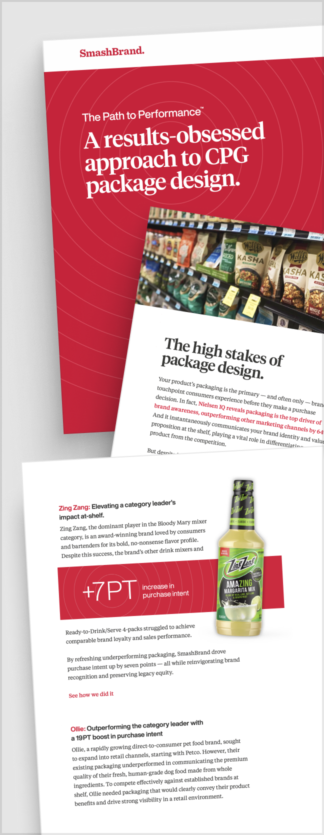
Taking a results-obsessed approach to CPG package design.
Learn how SmashBrand’s proprietary process – rooted in scientific principles, informed by data, and validated by your target audience – takes the guesswork out of package design and delivers guaranteed results.
"*" indicates required fields
The real challenge behind CPG innovation.
When bringing new products to market, the fundamental challenge remains consistent: Will consumers want your product, and are you communicating its value effectively? Conventional approaches to innovation attempt to answer these questions through extensive concept testing, consumer research, and market analysis — often taking a year or more before packaging design even begins.
The biggest problem with his approach is that it majors in the minors. In other words, while you’re perfecting multi-paragraph concept statements that no consumer will ever read, you’re neglecting the most critical element of your product’s success. Remember that your customer will make their purchase decision within seconds of seeing your product on shelf, based primarily on what? Your packaging.
Why traditional innovation processes fall short.
The current state of CPG innovation is largely a product of legacy systems and service providers. Market research companies focus on quantitative testing with words and concepts. Advertising agencies handle the creative elements. Package design firms typically enter the picture last, often treating design as a purely aesthetic exercise rather than a strategic tool for innovation.
This fragmented approach leads to several critical issues:
- Extended timelines due to handoffs between multiple agencies.
- Disconnect between consumer insights and package design.
- Testing that doesn’t reflect real-world purchase decisions.
- Late-stage validation failures that send teams back to square one.
The package-first innovation advantage.
Leading with package design in your innovation process offers several distinct advantages:
1. Speed to market.
By focusing on packaging from the start, you can cut innovation timelines by more than half. When you test and iterate on packaging throughout the development process, you’re constantly optimizing how you communicate with consumers through the medium they’ll actually use to make purchase decisions.
2. Better consumer insights.
Testing with actual package designs rather than concept statements provides more accurate consumer feedback. Bear in mind that people eat with their eyes — showing them beautiful, fully realized package designs (rather than basic renderings or concept statements) gives you much more reliable data about purchase intent and market potential.
3. Efficient resource allocation.
Traditional innovation processes often focus on internal metrics and resource allocation rather than real consumer impact. Package-first innovation, on the other hand, keeps you focused on what matters: creating products that consumers understand, want, and will purchase.
The right way to approach package-first innovation.
To implement a package-first innovation strategy effectively, follow these key principles:
Start with competitive analysis.
Begin by testing competitor packages to establish baseline performance metrics and identify category purchase drivers. This data helps inform your strategy and highlights opportunities in the market.
Test early and often.
Don’t wait until the end of your innovation process to validate your packaging. Test multiple iterations throughout development, making improvements based on consumer feedback at each stage. This ensures that by the time you reach final validation, you’re choosing between winners rather than discovering fundamental flaws.
Consider the complete purchase decision.
Always test your packaging with pricing information and competitive context. Consumers don’t make purchase decisions in a vacuum – neither should your testing process. Your package needs to communicate value and differentiation clearly enough to justify your price point against existing alternatives.
Ask the right questions.
When testing your package design, focus on four key questions:
- What is this product?
- Is it worth the price?
- Would you buy this?
- Is this a brand for you?
If consumers can’t answer these questions quickly and positively, keep iterating until they can.
Making package-first innovation work.
Success with package-first innovation requires three key elements:
1. Integrated teams.
Work with partners who can handle strategy, creative, and testing under one roof. This eliminates handoffs between firms and allows for rapid iteration based on consumer feedback.
2. Data-driven decision-making.
Every design decision should be supported by consumer data. This doesn’t mean sacrificing creativity – it means ensuring your creative choices resonate with your target audience.
3. Agile processes.
Your innovation process should allow for quick pivots based on consumer feedback. This means having the capability to field research, analyze results, and implement changes rapidly.
Beyond innovation.
The package-first approach isn’t limited to new product development. The same principles apply to product renovation, whether you’re updating formulations, refreshing your positioning, or upgrading your package design. The key is always the same: start with the package, test with consumers, and iterate based on feedback.
By adopting a package-first approach to innovation, you can dramatically reduce your development timeline while increasing your chances of market success. In today’s competitive CPG landscape, this could be the advantage you need to stay ahead of the curve.
Interested in learning more about the ways SmashBrand can support innovation at your business? Just reach out.

A seasoned veteran in the CPG (Consumer Packaged Goods) industry, Jason Vaught brings a wealth of knowledge and hands-on experience as the director of content and marketing for SmashBrand. His comprehensive role at the forefront of brand communication ensures that CPG brands remain well-informed about the suite of services SmashBrand offers. Furthermore, his insights derived from the company's strategy, design, and testing services are invaluable to brand owners and managers seeking expert guidance.
From his early endeavors in launching a successful sports nutrition brand that gained prominence in significant bodybuilding and fitness retail spaces to his entrepreneurial ventures in kick-starting multiple brick-and-mortar and e-commerce startups across diverse industries, Jason's career is studded with substantial milestones. Notably, he has innovated numerous products later embraced by leading industry brands, showcasing his knack for anticipating market demands and setting trends.
Jason's journey in the CPG industry commenced at age 21. Over the years, he has worn multiple hats, ranging from a manufacturer and retailer to a distributor and brand owner. This multifaceted experience equips him with the rare ability to offer practical advice grounded in real-world expertise. His mission is to guide and support other CPG brand owners, directors, and managers on their path to success.
Subscribe to
Nice Package.
SmashBrand’s Nice Package: Stay current with our latest insights
Free Resource.

CPG product repositioning guide.
Explore the five undeniable signs your CPG product needs repositioning along with strategies for leveraging consumer insights for a guaranteed market lift.
Download Whitepaper About CPG product repositioning guide.