
 Overview
What is a brand?
A brand is a promise. It’s the signal that tells a consumer what to expect.
Break that promise, and you break the purchase.
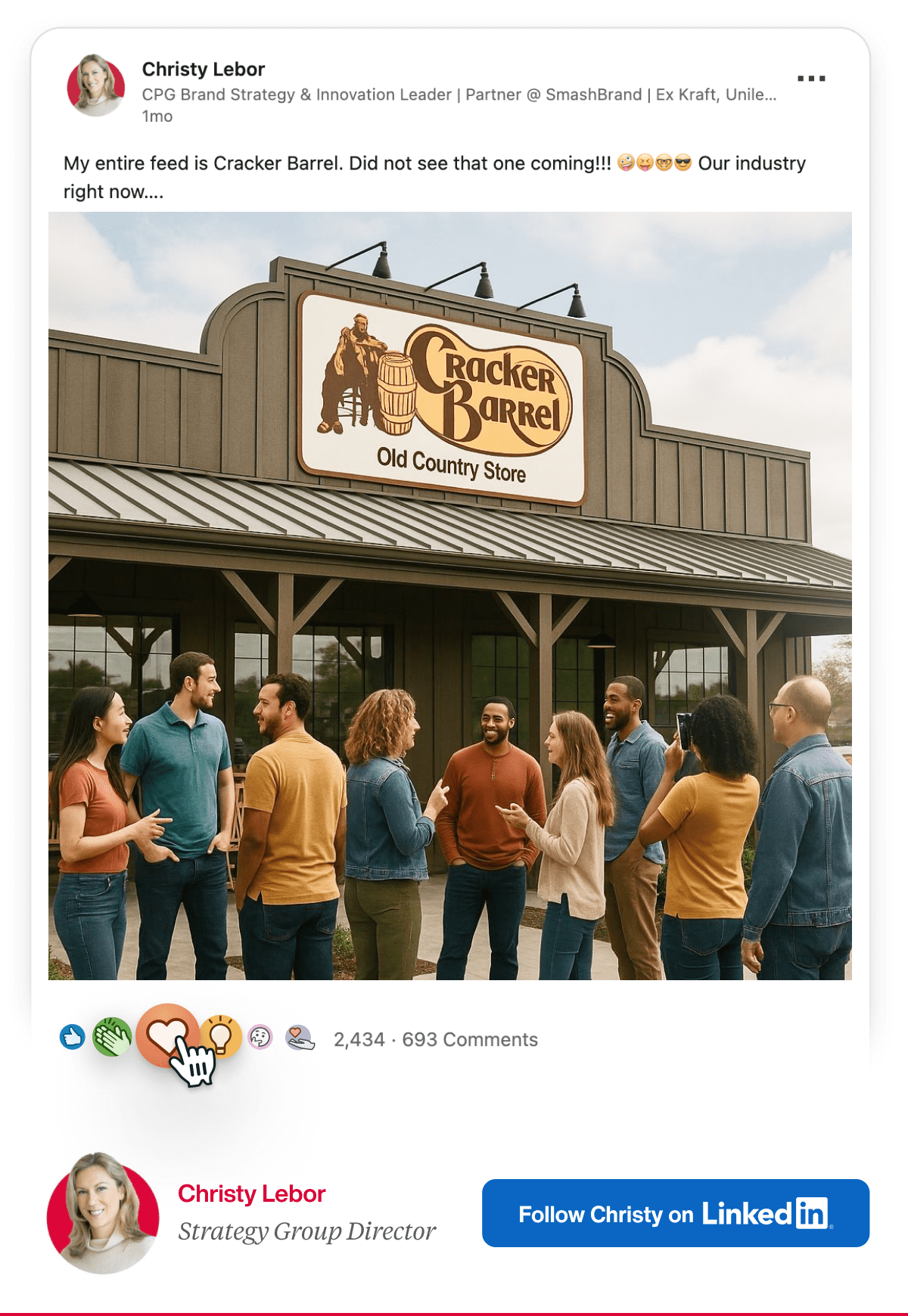
Cracker Barrel’s branding misstep sparked plenty of hot takes, especially on LinkedIn, but here’s the real takeaway: this wasn’t about fonts or aesthetics. It was about losing the buyer. Modernization without strategy and testing doesn’t evolve your brand. It erodes it.
Whether you’re overhauling identity, refreshing store environments, or redesigning packaging, the core question stays the same:
Are we evolving the promise or erasing it?
When Modernization Breaks the Buyer Connection.
When Cracker Barrel “cleaned up” its logo, it stripped away its visual identity, debuting a generic, minimalist mark. Core customers saw this move as abandonment, not improvement. As best we could discern from press and industry chatter, it appears that Cracker Barrel tested its new logo only by including it in a limited four-store renovation test.
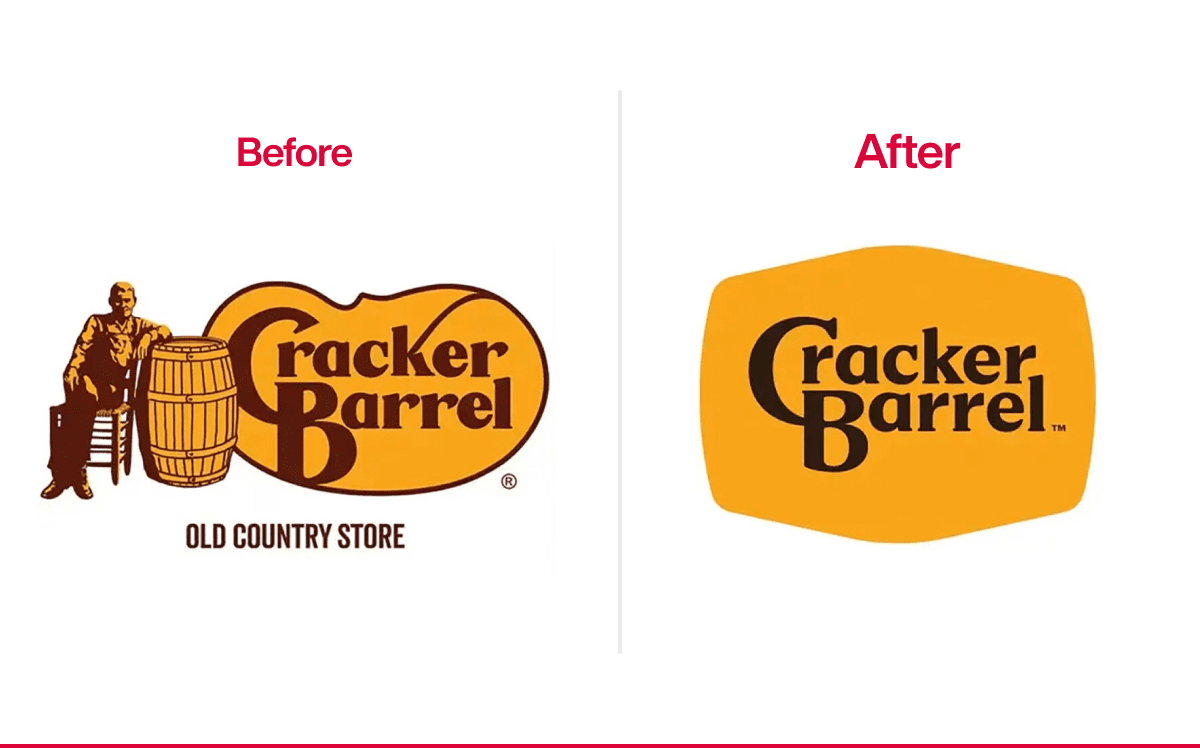
In CPG, design, environment, and product experience all reinforce a single promise. While they aimed to evolve the brand, they failed to hit the target, confusing consumers and the industry as a whole. This is the risk you take when there’s no valid “high n size” quantitative testing.
Design Is Not Decoration.
Most agencies treat rebrands like art projects, showcasing new fonts, clean mockups, and surface-level polish. But you must delve much deeper and be purpose-driven in your design. Brands live in the hearts and minds of your consumers, and when you change it, you had better make sure it is right.
Your identity signals what your product stands for. When you change it without understanding the implications, you’re asking the consumer to do the work of re-learning. Cracker Barrel assumed its most valuable current customers would remain loyal, while the company pursued new users with an ambitious growth plan. They were wrong.
Here’s what Cracker Barrel got wrong and what you can’t afford to repeat:
- They swapped out their equities.
- They are designed for outliers.
- They tested the logo only at four stores (and, who says testing a logo in a store is the right way to begin with?)
They gambled, and they lost.
Start With the Brief. Or Don’t Start.
Smart brands start with data. That’s why our Path to Performance™ framework begins with a data-driven creative brief, not an art-class wishlist. We build it using:
- Category Baseline Test – to define what drives choice in your space
- Pack Words™ Test – to know exactly what messages win at shelf
- Purchase Drivers & PT Deltas – to identify what must never be lost
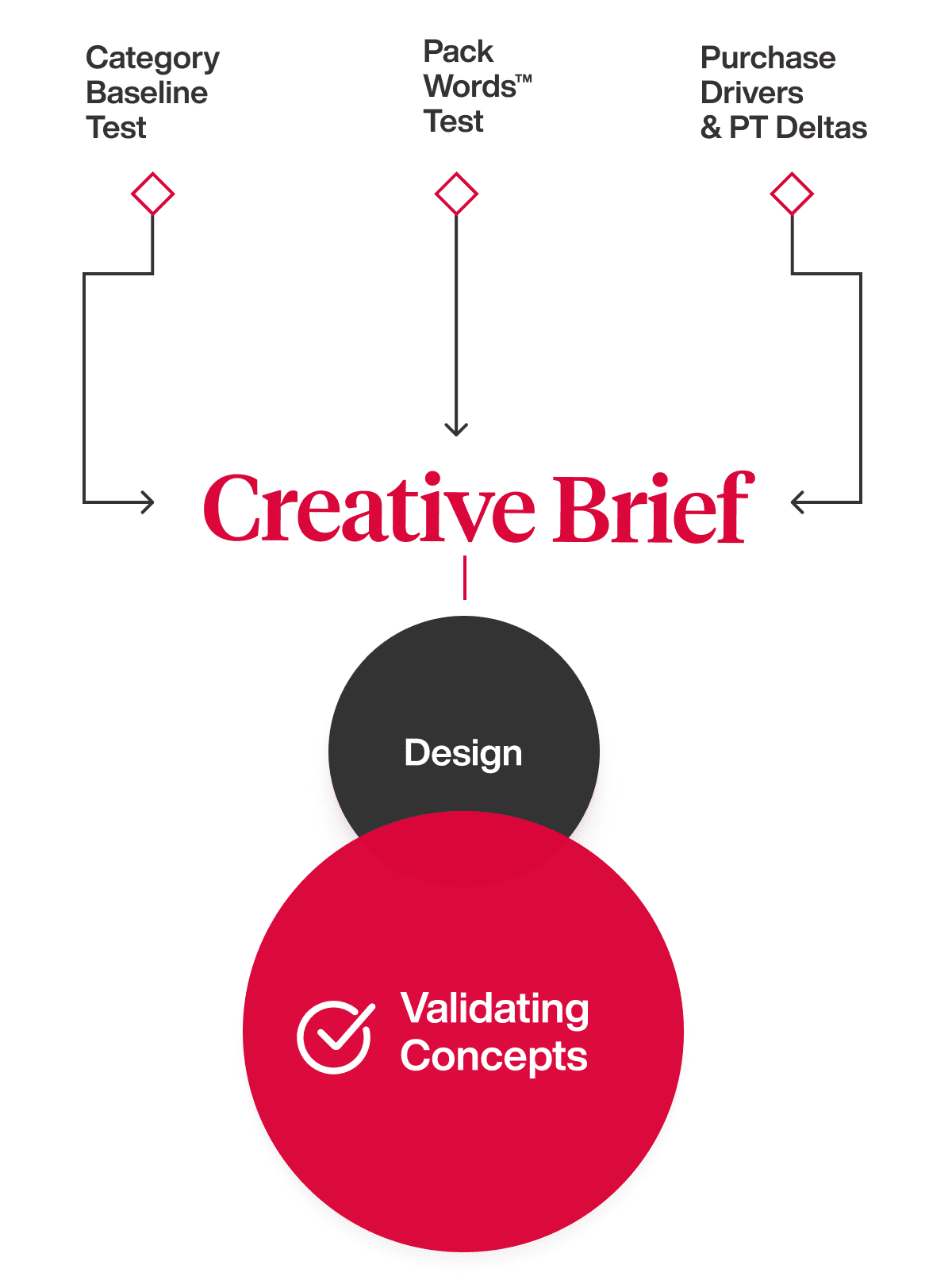
We capture all this data, specifically with category-heavy and medium buyers, and we pay special attention to your brand’s current consumers. The brief isn’t just strategy speak; it’s your protection against ruining your reputation. It defines what stays, what can stretch, and what will break the buy if you mess with it.
Test Before You Stretch.
Cracker Barrel’s four-store “test” wasn’t testing, it was marketing theater. In CPG, real testing protects your bottom line.
- Isolate variables – Don’t overhaul food, ops, and branding in one go.
- Use representative audiences – Include HML segments across geos.
- Measure real KPIs – Recognition. Equity retention. Purchase lift. Speed to understand.
- Stage the sequence – Qual to diagnose, quant to validate, pilot to confirm.
- Set no-go thresholds – If equity or intent falls, pull the plug.

What Is HML?
HML segments your consumers into Heavy, Medium, and Light users.
Heavy users drive the majority of volume. Mediums have growth potential.
Lights contribute little but still matter. Design to keep heavy users,
increase the buy rate of mediums, and don’t “turn off” the rest –
the light users who buy only occasionally.
Don’t Forget Who Pays the Bills.
Cracker Barrel designed for the wrong end of their user base. In CPG, HML users are not equal. Heavies drive revenue. Design for them.
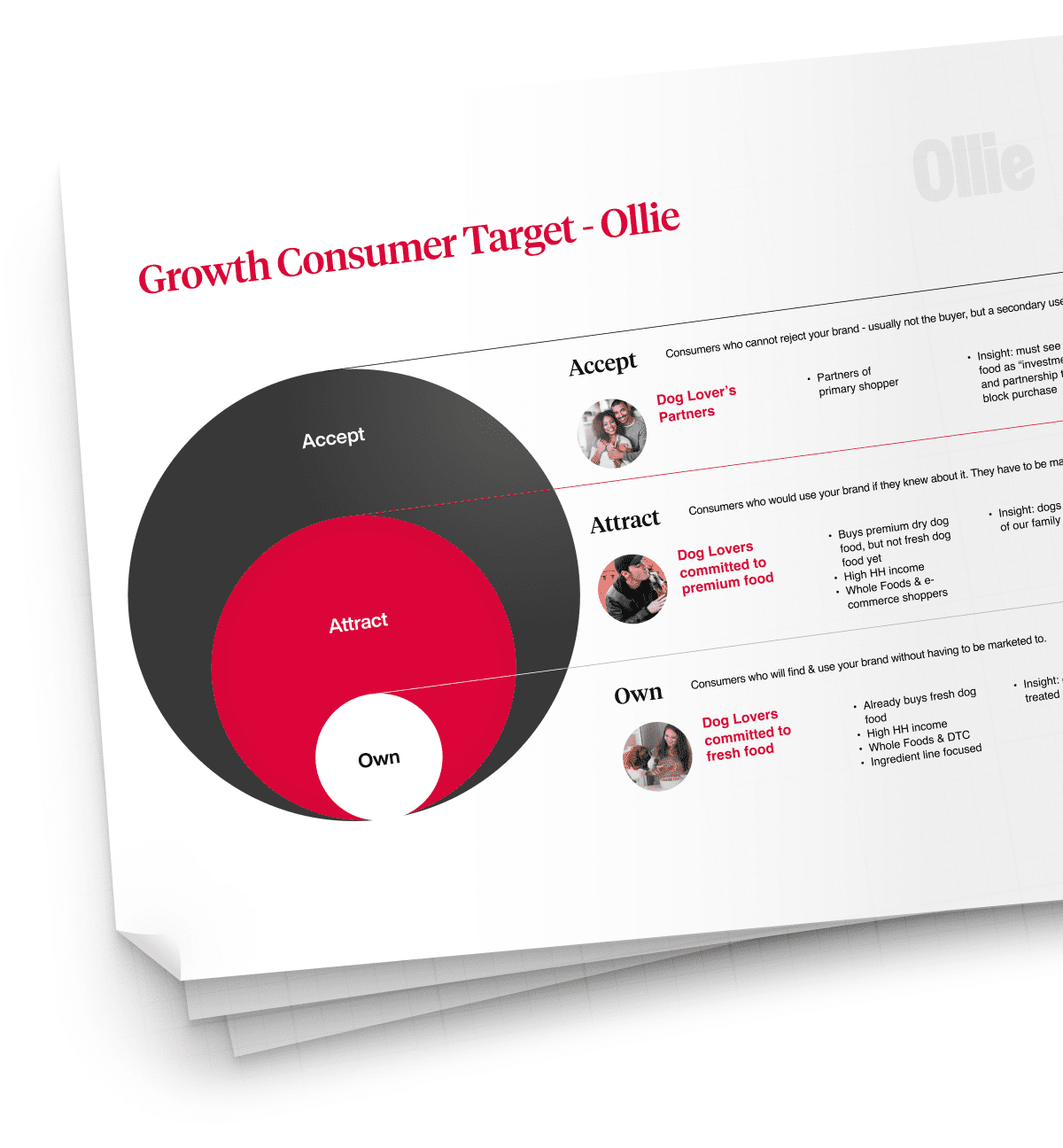
You need to keep your heavies, migrate your mediums, and avoid alienating your lights. This is our Attract, Accept, Bullseye model in action. Don’t sacrifice your core volume to chase hypothetical buyers, especially those whose needs are in direct opposition to your most valuable consumers.
The Anti-Cracker Barrel Playbook
Here’s how we protect your brand while positioning for growth:
Define the Objective
Start with the job to be done. Retain the core. Attract new segments.
Signal premium cues. But fix ops and product quality first because
design can’t outrun delivery.
Map the Equities
What drives recognition? What can be evolved? What’s non-negotiable?
Identify and protect your brand’s code through testing.
Align with Constraints
Speed, cost, ops, channels. Test your plans against reality.
A strategy that can’t ship isn’t a strategy.
Test for Decisions
Measure what matters: recognition, fit to brief, value cues, and
purchase intent. Use real shoppers. Don’t rely on internal taste.
Build the Rollout Plan
Stage the evolution. Prioritize moves that deliver impact with minimal risk.
Have contingency plans for everything.
Still Want to Stretch? Use a Sandbox.
Cracker Barrel wanted to attract new, lighter users without alienating its loyal base but it tried to do it by changing the core identity in all 660 restaurants at once. By skipping a true sandbox, the brand effectively bet the farm on a single aesthetic pivot.
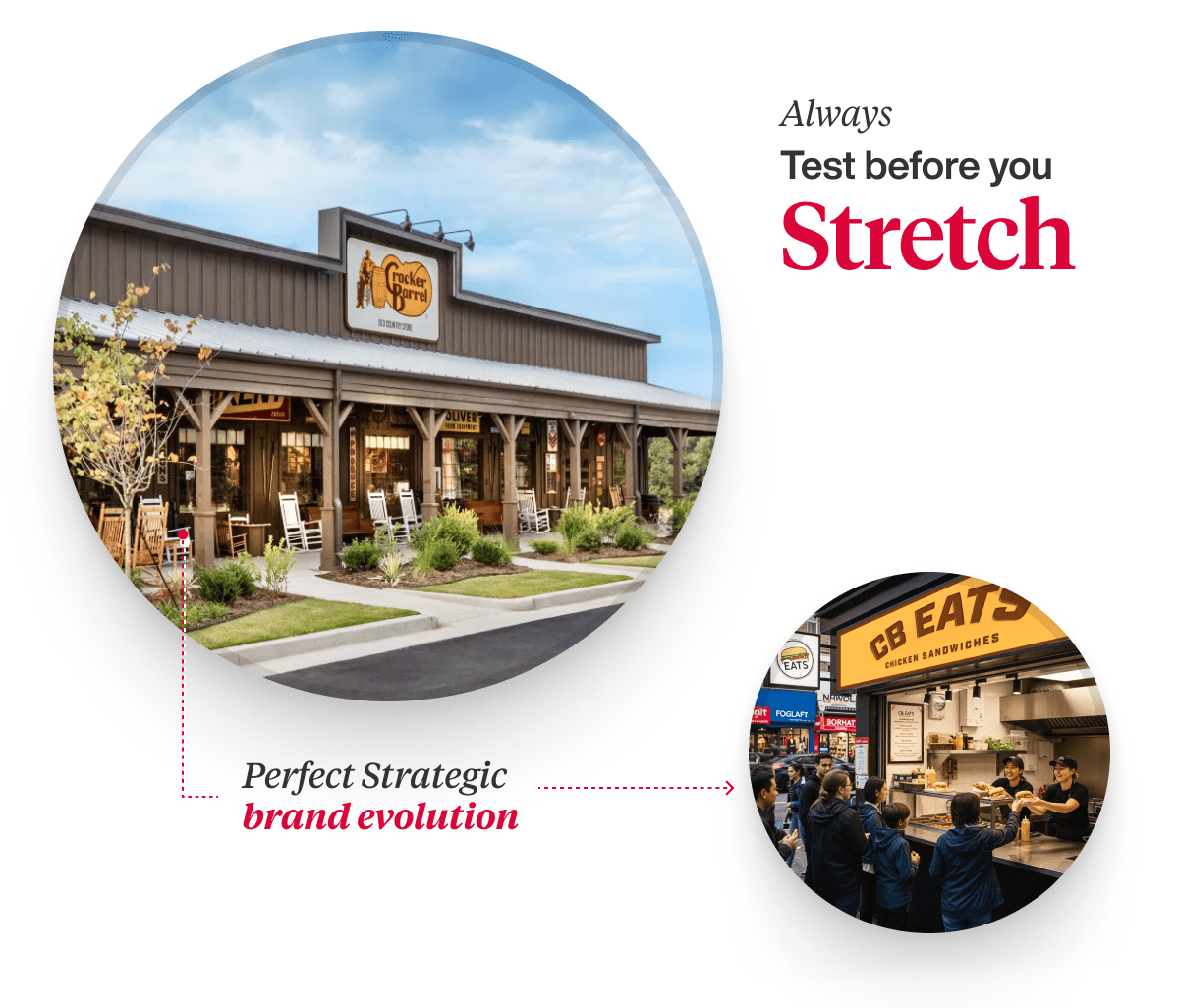
A safer path is to sandbox the risk: create a sub-brand, test a modernized offer or environment in a clearly differentiated concept, and learn before touching the mothership. Christy (half joking) suggested a hypothetical new restaurant concept that Cracker Barrel could have launched to attract new users. She called it “CB Eats” — a fresh, faster take on home-style cooking under the Cracker Barrel umbrella.
This idea of launching a new restaurant concept – CB Eats – could allow new customers to try a modern offshoot that benefits from the credibility of core Cracker Barrel’s homestyle cooking, and the restaurant group would not have had to touch core Cracker Barrel much beyond a light touch up of the interior and perhaps a slight “clean up” of their current logo.
That’s how you leverage existing brand equity to court new audiences without rewriting your core promise. Evolve the parent. Experiment in the sandbox.
That’s how you leverage existing brand equity to court new audiences without rewriting your core promise. Evolve the parent. Experiment in the sandbox.
Remember.
Cracker Barrel went from recognizable to irrelevant.
Don’t follow.
Write a data-driven brief. Test like the stakes are real.
Evolve the brand without losing the buyer.
At SmashBrand, we never guess.
- We brief with data.
- We validate before we roll.
- We keep your current consumers while evolving to welcome the new.

A seasoned veteran in the CPG (Consumer Packaged Goods) industry, Jason Vaught brings a wealth of knowledge and hands-on experience as the director of content and marketing for SmashBrand. His comprehensive role at the forefront of brand communication ensures that CPG brands remain well-informed about the suite of services SmashBrand offers. Furthermore, his insights derived from the company's strategy, design, and testing services are invaluable to brand owners and managers seeking expert guidance.
From his early endeavors in launching a successful sports nutrition brand that gained prominence in significant bodybuilding and fitness retail spaces to his entrepreneurial ventures in kick-starting multiple brick-and-mortar and e-commerce startups across diverse industries, Jason's career is studded with substantial milestones. Notably, he has innovated numerous products later embraced by leading industry brands, showcasing his knack for anticipating market demands and setting trends.
Jason's journey in the CPG industry commenced at age 21. Over the years, he has worn multiple hats, ranging from a manufacturer and retailer to a distributor and brand owner. This multifaceted experience equips him with the rare ability to offer practical advice grounded in real-world expertise. His mission is to guide and support other CPG brand owners, directors, and managers on their path to success.
Subscribe to
Nice Package.
SmashBrand’s Nice Package: Stay current with our latest insights
Free Resource.
CPG product repositioning guide.
Explore the five undeniable signs your CPG product needs repositioning along with strategies for leveraging consumer insights for a guaranteed market lift.
Download Whitepaper About CPG product repositioning guide.