
 Overview
Price Pack Architecture may not be the sexiest part of brand building, but when done right, it’s one of the most effective levers for increasing trial, improving velocity, and unlocking new retail doors. In fact, it might be the lowest-hanging fruit in your entire portfolio.
Whether you’re scaling into club stores, launching into mass, or optimizing SKUs for ecommerce, there’s a common question that makes or breaks your retail success:
Why price pack architecture matters more than that 4th flavor.
Most brands think of their portfolio in two dimensions: product format (bar, gummy, drink) and flavor. But the third and often overlooked dimension is size and price point. And that’s where most assortment problems start.
- If your trial size is too big, consumers may never try it.
- If your value pack isn’t scaled properly, your margins disappear.
- If your core SKU misses the magic price point, you get kicked off the shelf.
The importance of a TURF analysis.
Big brands with big budgets use statistical modeling and elasticity curves to dial in the perfect SKU mix. Challenger brands and startups may not have access to this kind of historical data, or the six-figure budget to match.
So in our Path To Performance™ process use something smarter: TURF Analysis.

It’s a simulation that tests multiple scenarios to determine the ideal SKU lineup for your next retail expansion. Not just the best one, but the next-best, and the next-best across a range of contingencies.
- If you can only launch one SKU, which gives you the most reach?
- If your second-best option disappears, what should replace it?
- Which SKU drives the most unduplicated volume across occasions?
We’ve used TURF to answer these exact questions for clients in alternative milk, hydration, and ready-to-drink cocktails. And the insights always surprise us.
For example, we’ve seen surprising data on how double chocolate flavor (in addition to chocolate) beats out strawberry.
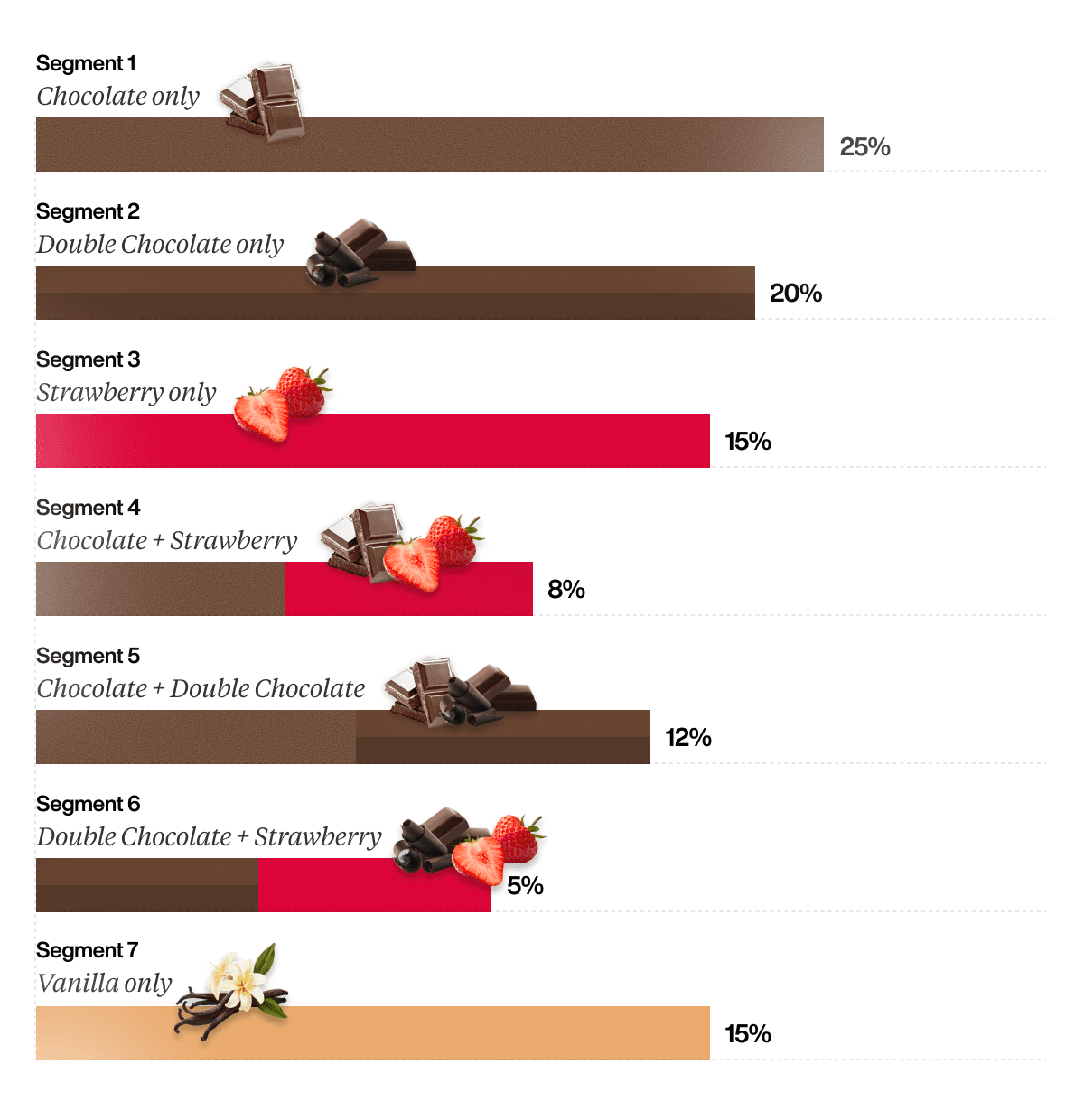
TURF isn’t just for flavor optimization. It works for sizes, claims, formats—even innovation pipelines. And while it’s not a full elasticity model, it gives you a data-backed roadmap for what to launch, when, and why.
The Assortment Optimization Playbook.
Here’s how we help you move from guesswork to strategic SKU decisions:
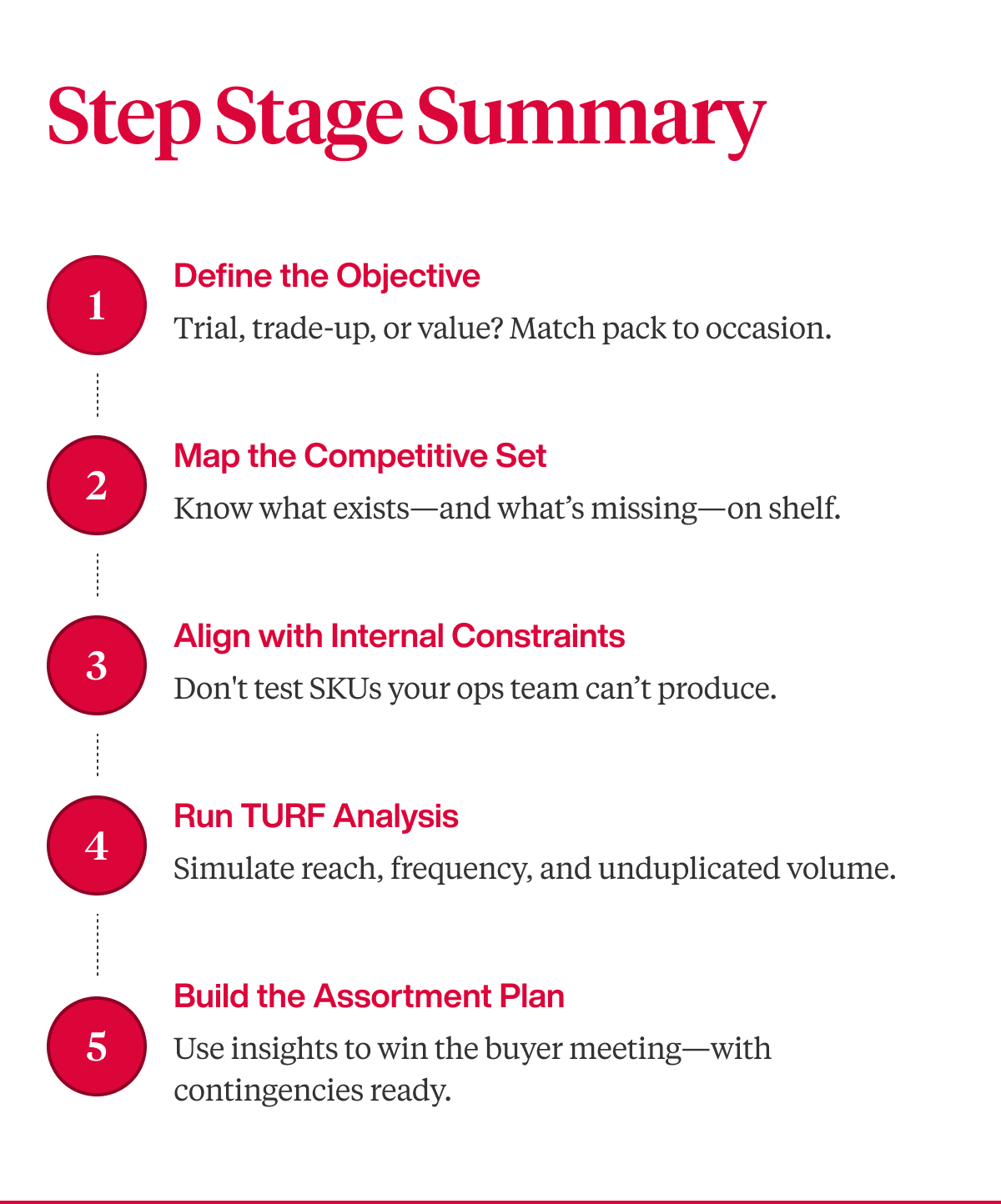
1. Define the objective
Start by clarifying the goal of your new pack, whether it’s designed for trial, trade-up, or value. Consider the channel: is it aimed at ecommerce, convenience stores, or club channels? Your assortment should mirror the usage occasion, purchase mindset, and price sensitivity of your target customer. Think of it as knowing the game you’re playing: whether you’re launching a lunchbox SKU, a family-size club pack, or a refreshment ideal for a meeting.
2. Map the competitive set
Next, conduct a thorough audit of your category. Identify which pack sizes dominate the shelf, where competitors are priced, and what gaps exist. This competitive set analysis will help you derive the right price pack architecture, ensuring your offerings fill the unmet needs of the market.
3. Align with internal constraints
Even the best strategy falters if your production capabilities can’t keep up. Before testing, confirm that the SKU options make sense given your cost structure, margins, and operational feasibility. This alignment ensures that your ideas are not only innovative but also producible and profitable.
4. Run TURF analysis
With feasible SKUs identified, it’s time for scenario planning at scale. By simulating real-world consumer choices across thousands of responses, TURF Analysis identifies your optimal lineup, highlighting which SKU would deliver the maximum unduplicated reach and frequency. It’s about answering critical questions—for example, if you could only launch one SKU, which would best drive reach, and what would be the next best option if that one falls through.
5. Build the assortment plan
Finally, integrate the insights from your TURF analysis into a solid plan that you can confidently present to buyers. When pushed back on a preferred SKU, you have alternative options ready, ensuring dynamic and data-backed conversations at the point of sale.
Remember this
The bottom line is, you don’t need a $100K elasticity model to get this right.
You just need better inputs and smarter testing. TURF is how we help our clients get there, and price pack architecture is what makes it count.


A seasoned veteran in the CPG (Consumer Packaged Goods) industry, Jason Vaught brings a wealth of knowledge and hands-on experience as the director of content and marketing for SmashBrand. His comprehensive role at the forefront of brand communication ensures that CPG brands remain well-informed about the suite of services SmashBrand offers. Furthermore, his insights derived from the company's strategy, design, and testing services are invaluable to brand owners and managers seeking expert guidance.
From his early endeavors in launching a successful sports nutrition brand that gained prominence in significant bodybuilding and fitness retail spaces to his entrepreneurial ventures in kick-starting multiple brick-and-mortar and e-commerce startups across diverse industries, Jason's career is studded with substantial milestones. Notably, he has innovated numerous products later embraced by leading industry brands, showcasing his knack for anticipating market demands and setting trends.
Jason's journey in the CPG industry commenced at age 21. Over the years, he has worn multiple hats, ranging from a manufacturer and retailer to a distributor and brand owner. This multifaceted experience equips him with the rare ability to offer practical advice grounded in real-world expertise. His mission is to guide and support other CPG brand owners, directors, and managers on their path to success.
Subscribe to
Nice Package.
SmashBrand’s Nice Package: Stay current with our latest insights
Free Resource.
CPG product repositioning guide.
Explore the five undeniable signs your CPG product needs repositioning along with strategies for leveraging consumer insights for a guaranteed market lift.
Download Whitepaper About CPG product repositioning guide.