
 Overview
The margin for repositioning an established brand identity is too thin. Being wrong about brand repositioning isn’t just a misstep; it’s a million-dollar mistake. Brand repositioning failures have derailed promising products, shattered consumer trust, and left companies scrambling to repair their brand identity. Even a well-funded brand strategy can fall flat if it overlooks the nuances of brand positioning or struggles to execute a rebranding effort effectively.
The road to successful brand repositioning is littered with failures, yet it’s also where market domination begins. Winning requires more than ambition; it demands a clear, data-driven plan that connects repositioning to what consumers truly value. The failures are lessons. This is where you learn how not to be one.

Common reasons for brand repositioning failures.
Brand repositioning failures often stem from rushed decisions or neglecting the fundamentals of a strong brand identity. A poorly planned rebrand, such as releasing a new logo without thorough market research, leads to branding mistakes that weaken brand recognition. A misaligned brand position and a disconnected marketing strategy only amplify the fallout.
The following are some of the main reasons for brand repositioning failures:
Misunderstanding consumer needs.
A flawed brand repositioning strategy often begins by ignoring the nuances of consumer preferences, as seen in Aunt Jemima’s rebrand to Pearl Milling Company. While the move away from racist imagery was widely applauded, the new identity struggled to resonate.
Many consumers felt “Pearl Milling Company” lacked authenticity, sounding more like a placeholder than a genuine brand. The rebranding process overlooked the emotional connection and brand equity associated with the original name, leading some to seek out the old Aunt Jemima packaging actively.
This misstep highlights a failure to craft a product repositioning strategy that maintains brand awareness and loyalty. Without anchoring the brand messaging in cultural progress and consumer trust, the tangible repositioning created a disconnect. To succeed in company repositioning, understanding the intersection of societal trends and consumer sentiment is crucial for preserving loyalty and market share.
Ignoring core brand values.
Neglecting core values during a rebranding project can quickly alienate loyal customers and disrupt their emotional connection with a product. Tropicana’s 2009 redesign is a textbook example. The brand replaced its iconic orange-with-a-straw imagery with a minimalist glass of orange juice, an unfortunate move that eroded brand perception and customer experience. The new design, meant to modernize, failed to resonate, and sales dropped by 20% within two months—a roughly $33 million loss.
Tropicana overlooked its brand purpose by focusing on “shelf standout” rather than deeply rooted brand elements or consumer preferences. The result? A confused brand messaging that left customers disconnected. This misstep underscores the importance of aligning brand experience with consumer expectations while staying true to the brand’s essence to avoid costly failures.
Inconsistent execution across channels.
Inconsistent execution across channels is a silent brand killer in repositioning strategies. Coca-Cola Life, launched with a green label and natural claims, perfectly illustrates this pitfall. The goal? Reposition Coca-Cola for health-conscious consumers by leveraging market trends favoring “natural” products.
The product itself falls short of its promise. While marketed as “healthier,” a 500ml bottle still contained 34g of sugar—exceeding the World Health Organization’s recommended daily intake. Confusing consumer expectations further eroded trust and created backlash.
This underscores a critical lesson for CPG brand managers: repositioning strategies require aligned branding efforts. From packaging to messaging, inconsistency tarnishes the brand image and negates any competitive advantage, undermining the repositioning’s potential.
Failing to differentiate from competitors.
When a brand fails to establish a unique value proposition, repositioning efforts risk blending into the noise of the competitive landscape. For instance, Weight Watchers’ shift to WW aimed to tap into the growing wellness trend by moving away from its weight-loss roots. However, the vague brand messaging diluted its strong brand identity, alienating loyal customers who valued its focus on weight management.
By abandoning its distinct position in favor of broader wellness, WW competed with established lifestyle brands without a clear edge. Membership declined, as the repositioning neither resonated with existing users nor attracted a new audience. This illustrates the critical importance of differentiation in brand repositioning—without it, brands lose their impact, relevance, and market position.
Poor timing or market conditions.
Launching a brand repositioning during economic challenges often dooms even well-intentioned efforts. A notable example is Beyond Meat’s entry into the jerky market. Positioned as a brand extension, the product aimed to capitalize on the growing trend of health consciousness. But the timing was a critical misstep. During rising inflation and economic uncertainty, the jerky’s premium pricing clashed with customer budgets, undermining its accessibility and appeal.
Beyond Meat struggled to align its brand promise of sustainable, plant-based alternatives with consumer expectations for the jerky segment, as the product was perceived as overly processed. This disconnect diluted the brand experience and weakened the trust built through its core offerings. The product floundered instead of achieving a successful rebrand, highlighting how mismatched timing and market conditions can erode credibility and market impact.
The financial and brand equity costs of repositioning failures.
Repositioning a brand is a high-stakes gamble. A successful rebrand can redefine a company’s trajectory, while failure leaves wasted resources, fractured trust, and lost opportunities behind. Every misstep in a repositioning strategy—from a poorly executed logo redesign to overlooking evolving market trends—adds up. For consumer packaged goods, where competition is razor-sharp, the margin for error slows.
The damage isn’t just financial; it’s existential. A failed attempt to update your brand image or shift perception can alienate loyal customers while confusing new ones. Worse, abandoning core elements, like an original logo with sentimental value, undermines emotional connections built over years of brand development.
Loss of brand equity.
A failed repositioning strategy hurts sales and undermines the very foundation of your brand’s value. It sends mixed signals when it misses the mark, confusing consumers about your brand image.
Trust, built over years of consistent messaging and emotional connection, can erode almost overnight. The fallout? A diminished ability to command loyalty or premium pricing, a core pillar of brand equity.
A misstep like abandoning a beloved original logo or introducing a logo redesign that fails to resonate compounds the damage. The perception of authenticity and reliability fades, making it harder to recover consumer trust or stand out in a market saturated with competitors capitalizing on the latest market trends.
Rebuilding equity after a failed repositioning is costly and uncertain. Once brand value is diluted, regaining that foothold requires significant investment in brand development, consumer outreach, and time. And even then, success is far from guaranteed.
Revenue decline.
The significant cost of implementing a repositioning strategy—from research to a complete logo redesign—becomes even more burdensome when paired with declining sales. Confused or alienated consumers, unable to connect with the new brand image, often look to competitors, leading to an immediate dip in revenue.
In CPG, where market trends shift rapidly, a failed rebrand leaves companies scrambling to recover lost market share. Profitability takes a double hit—from declining sales and the ongoing costs of brand development initiatives required to undo the damage. Repositioning without a clear value proposition doesn’t just stagnate growth; it creates a downward spiral that can take years to reverse, if it’s reversible at all.
Increased competition.
When a repositioning strategy fails, it does more than damage your brand image—it creates an open invitation for competitors to swoop in. Disillusioned customers, left confused or disconnected, are quick to seek alternatives.
This shift amplifies revenue losses and bolsters the presence of rivals who step in to meet unmet needs or leverage gaps in brand development. A muddled messaging weakens your foothold, giving competitors an edge to establish more substantial brand positions. With no shortage of agile brands ready to claim your lost market share, recovery becomes an uphill battle.
Customer attrition.
A failed repositioning strategy risks alienating customers who have historically championed the brand. Loyal customers, often the backbone of a brand’s success, may feel disconnected when the brand image or promise deviates too far from what they value or expect.
This disconnect often stems from tone, visual identity, or messaging changes that don’t align with customer expectations or preferences.
When attrition begins, it doesn’t just represent a lost sale—it signals a breach of trust. Discontented customers may vocalize their dissatisfaction, further damaging the brand’s reputation.
Worse, replacing them comes at a premium; attracting new customers can cost five times as much as retaining existing ones. As this exodus snowballs, the financial burden of lost revenue and increased marketing spending compounds
Case studies of brand repositioning failures.
Here are some of the famous brand repositioning and rebranding failures that highlight the risks associated with a failed strategy and its consequences:
Hershey’s logo redesign failure
Hershey sought to modernize its corporate logo to represent its diverse portfolio of confectionery products better and align with contemporary design trends. The updated design transitioned from traditional three-dimensional block lettering to a simplified, flat, two-dimensional logo. The logo also introduced an image of an unwrapped Hershey’s Kiss as part of the branding.
What went wrong?
-
- Unintended Visual Associations: The newly stylized Kiss icon was meant to reinforce brand recognition. Still, its shape and design reminded many consumers of a widely recognized emoji used to depict feces. This association sparked widespread ridicule on social media and public platforms, undermining the brand’s sophisticated intent.
-
- Loss of Iconic Branding Elements: By abandoning the dimensionality of the older logo, Hershey lost the visual weight and charm associated with its traditional branding. Consumers felt the redesign lacked the warmth and nostalgic appeal typically associated with Hershey products.
-
- Negative Public Perception: The rebranding effort was met with widespread criticism, with many calling the redesign a “chocolate mess.” The backlash highlighted the risks of significant brand updates when they diverge too far from established consumer expectations.
Burger King’s satisfies failure.
Burger King launched Satisfries, a healthier alternative to traditional French fries. The fries featured 20% fewer calories and 25% less fat. A special batter absorbed less oil, positioning them as a fast-food option for health-conscious consumers. But, the product was discontinued in most outlets within a year due to poor reception.
Key challenges
-
- Mismatch with Consumer Expectations: Burger King’s primary customer base visits for affordable, indulgent fast food—not healthy options. Fries, often considered a guilty pleasure, were perceived as incompatible with a low-calorie product.
-
- Confusing Marketing: “Satisfries” and its purpose were not effectively communicated. Consumers struggled to understand the benefits of regular fries and why they should pay a premium.
-
- Brand Stigma: Health-conscious diners avoid fast-food chains like Burger King, making it difficult to attract this demographic. At the same time, regular customers do not prioritize calorie counts, reducing interest in Satisfries.
- Product Confusion: Satisfries competed directly with Burger King’s regular fries, resulting in customer indecision and cannibalization of the existing product line. Many franchise owners opted not to carry the new item.
The importance of integrated testing in brand repositioning.
Repositioning a brand is high-stakes. Without the proper checks, it’s easy to miss the mark. Consider the numerous rebranding failures and unsuccessful branding attempts.
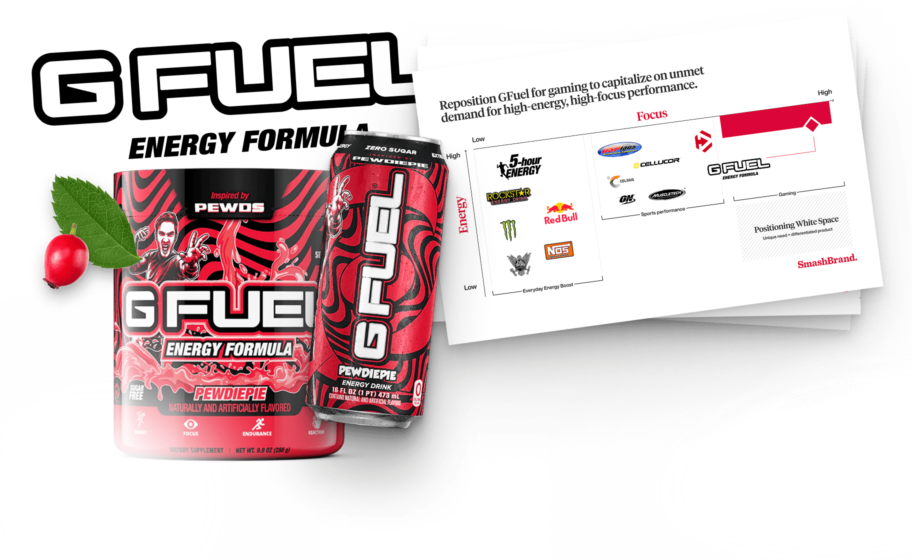
At SmashBrand, we treat testing as a built-in safeguard, not a final step. Our Performance Stage-Gate Process integrates consumer testing at every critical decision point, reducing risk and driving confident execution.
- Consumer-First Design: Every decision is grounded in real purchase behavior, not assumptions. This avoids the trap that brands that failed to upgrade fall into, rebranding without relevance.
- Iterative Testing: We don’t guess. We test messaging, pack design, and shelf presence against real-world conditions. That’s how business repositioning avoids expensive missteps.
- Contextual Testing: Testing in simulated retail environments ensures the final design not only looks good, but also wins against competitors. This is what separates successful brand repositioning examples from noise.
- Performance-Based Redesign: If it doesn’t perform, we redesign at our cost. That’s not theory. It’s the difference between brands that repositioned with success and those that didn’t.
Because the only thing riskier than rebranding is doing it without proof.
Nice Package
Don’t miss out on our monthly newsletter Nice Package!
Each month, we deliver a data-driven newsletter directly to your inbox, unpacking a critical topic in the FMCG & CPG industry.
"*" indicates required fields
Data-driven brand repositioning for low risk and maximum reward
If you are looking for an agency that can help you define and execute new positioning that attracts more potential customers, we can help. SmashBrand is a brand development agency for CPG brands. Our PathToPerformance™ process guarantees a performance lift.
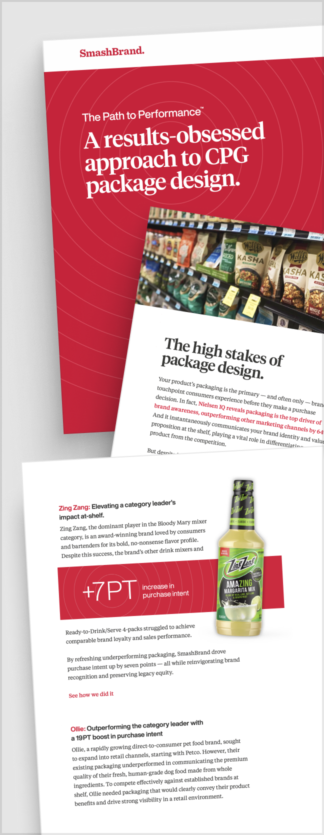
Path to Performance™
Taking a results-obsessed approach to CPG package design.
Discover how SmashBrand’s proprietary process, rooted in scientific principles, informed by data, and validated by your target audience, eliminates the guesswork from package design and delivers guaranteed results.
"*" indicates required fields
Frequently asked questions about brand repositioning
What is brand repositioning?
Brand repositioning is a strategic shift in how a brand is perceived both internally and in the market. It helps companies adapt to changing consumer needs, re-engage core segments, and create distance from competitors. Whether it’s product repositioning, company repositioning, or a complete identity overhaul, it often involves changes to messaging, design, and go-to-market strategy.
Many brands that have repositioned themselves have leveraged it to unlock new relevance and growth. However, there are just as many examples of brand repositioning that ended in brand failure. The difference? Clarity, execution, and knowing your audience.
What are early warning signs that a repositioning is not resonating?
Watch for these red flags:
- Loss of brand loyalty: When your existing customers disengage, it’s a sign the new direction is breaking trust, not building it.
- Confused messaging: If consumers misinterpret your brand promise, you’re not just missing clarity, you’re creating friction.
- Sales drop in core segments: Declining revenue from your base points to deeper branding issues, indicating that you may be targeting the wrong audience.
- Support spikes: An uptick in complaints or inquiries typically indicates that the repositioning raised more questions than it answered.
Repositioning should fuel brand growth, not dilute it. If these issues arise early, it’s time to reassess your brand architecture and plan a successful brand pivot before the damage becomes permanent.
How can I pivot if a repositioning strategy begins to fail?
Not every repositioning effort sticks on the first try. When it starts to miss the mark, a fast, structured pivot is the only way forward.
Start with the data. Dig into what’s broken in messaging, execution, or market fit. Effective brand research will distinguish a temporary dip from poor branding.
Next, go back to your target market. What’s changed? What didn’t land? Utilize brand education and consumer feedback to align your value proposition with what they genuinely care about.
Update your branding strategy insider playbook. Tweak your voice, refine positioning, and apply a focused brand refresh that maintains consistency.
From there, apply iterative testing through digital marketing channels to dial in what works. Engage your internal teams and partners early—alignment accelerates a successful repositioning.
Track short-term KPIs and stay prepared to make adjustments as needed. Whether it’s a corporate shift or a personal branding pivot, success lives in the speed of your response.
Frequently Asked Questions

A seasoned veteran in the CPG (Consumer Packaged Goods) industry, Jason Vaught brings a wealth of knowledge and hands-on experience as the director of content and marketing for SmashBrand. His comprehensive role at the forefront of brand communication ensures that CPG brands remain well-informed about the suite of services SmashBrand offers. Furthermore, his insights derived from the company's strategy, design, and testing services are invaluable to brand owners and managers seeking expert guidance.
From his early endeavors in launching a successful sports nutrition brand that gained prominence in significant bodybuilding and fitness retail spaces to his entrepreneurial ventures in kick-starting multiple brick-and-mortar and e-commerce startups across diverse industries, Jason's career is studded with substantial milestones. Notably, he has innovated numerous products later embraced by leading industry brands, showcasing his knack for anticipating market demands and setting trends.
Jason's journey in the CPG industry commenced at age 21. Over the years, he has worn multiple hats, ranging from a manufacturer and retailer to a distributor and brand owner. This multifaceted experience equips him with the rare ability to offer practical advice grounded in real-world expertise. His mission is to guide and support other CPG brand owners, directors, and managers on their path to success.
Subscribe to
Nice Package.
SmashBrand’s Nice Package: Stay current with our latest insights
Free Resource.
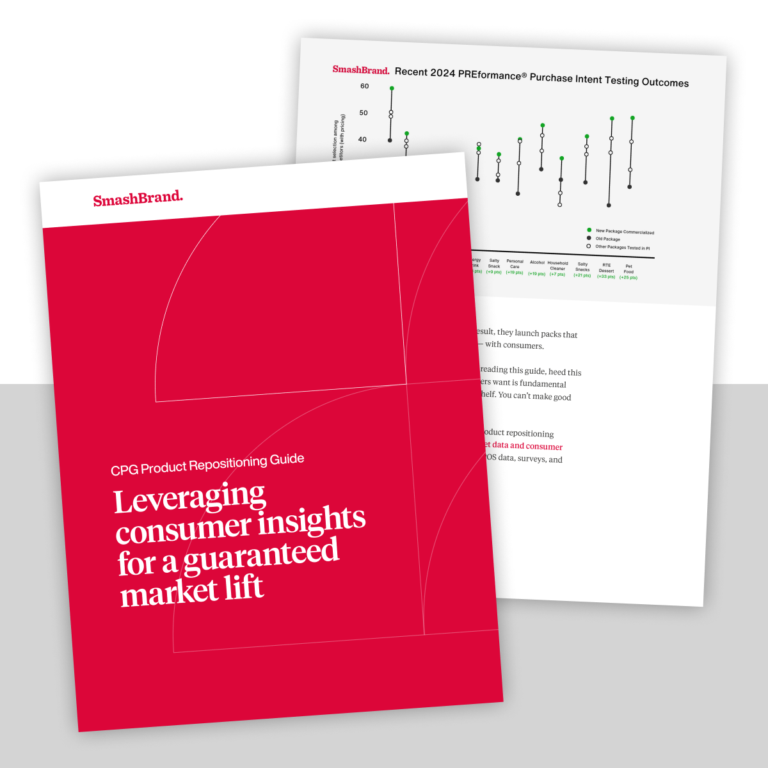
CPG product repositioning guide.
Explore the five undeniable signs your CPG product needs repositioning along with strategies for leveraging consumer insights for a guaranteed market lift.
Download Whitepaper About CPG product repositioning guide.