

Generation Z (cheekily referred to as “Zoomers”) is a demographic of consumers born in or after 1997, putting the age range of Gen Z’ers between 0 and 23. When you hear someone grumbling about “kids these days,” you can at this point they’re referring to Gen Z.
But what makes this demographic so different from Millennials or Gen X’ers?
On average, the Gen Z population has just reached adulthood. While the median age is technically adulthood, their income is still young and hasn’t yet reached maturity.
And though researchers are still defining this cohort, we know a few things about them. Gen Z has access to more education and is more diverse than previous generations, with political preferences for progressive acceptance and multiculturalism. We also know that this is the most digitally-connected demographic to walk the planet, with many Gen Z’ers born with a smartphone in hand. This group grew up alongside the internet, YouTube, and social media, with all the benefits and drawbacks.
As we’ll review, this deluge of technology is shaping the driving forces behind Generation Z’s purchasing behaviors. We will discuss how consumer packaged goods (CPG) manufacturers can craft their product packaging designs to meet this market’s needs.
What Does the Youngest Generation Value?
As always, discussions on packaging design must begin with an assessment of the audience in question. What drives Generation Z at the point of purchase? Who influences their decisions? And what can retailers do to grab their attention?
Let’s return to the technology aspect for a moment. It’s no secret that Generation Z lives in a world of digital access, freedom of choice, and endless content. Unlike past generations, Generation Z was born into a world already inundated with digital media. They’re used to seeing ads, sponsored posts, and social influencer-based promotions as a matter of course.
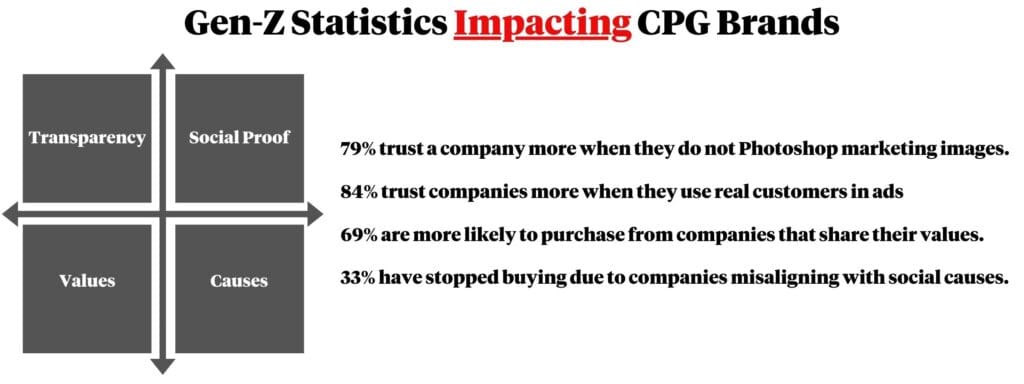
This generation values authenticity over curation. Gen Z’ers are used to companies trying to serve content that “we think you’ll like” and aren’t impressed by the transparent sales pitch. Instead, Generation Z values authentic, transparent messaging that speaks to their values. From a few data points published by Ad Age, we get some interesting insights into this demographic’s preference for honesty:
- 79% trust a company more when they do not Photoshop marketing images.
- 84% trust companies more when they use real customers in ads.
Like their older Millennial counterparts, Gen Z’ers prefer to align themselves with brands that share their values:
- 69% are more likely to purchase from companies that share their values.
- 33% have stopped buying from companies that contribute to causes the customer disagrees with.
With these details in mind, we can look at how product manufacturers can work these elements into their retail packaging.
Who Is The Gen Z Consumer Listening To?
Where millennials make many decisions based on a-list celebrities, Gen z shoppers are more inclined to decide based on influencers and friends on social media. Therefore, brand loyalty comes from another person. If the influencer’s recommendations shift, there’s a chance you will lose this gen z consumer.
The way to address this is by embracing the third-party introduction but moving to a direct consumer relationship. Involvement in their interests and ambitions helps to strengthen the bond between the brand and the consumer.
Addressing Generation Z Through Packaging Design
The defining features of Gen Z may be their preference for authenticity, and packaging design should reflect that.
As you’ve done your Millennial-focused marketing, look for opportunities to share details about your brand’s story, challenges, and background. The more unique and gritty your background is, the better. Zoomers will see straight through a glossy marketing “brand story,” so it’s crucial to tap into the passion behind your brand. Sandy Saputo, CMO of Kendo Brands succinctly lays out this idea:
“The best way to break through with inclusive marketing is to share authentic stories that are rooted in culture and are emotionally meaningful to the consumers you serve.”
Generation Z is an inspired bunch eager to impact the world. Get them on board and let them share in your brand’s passion for change.
Representation
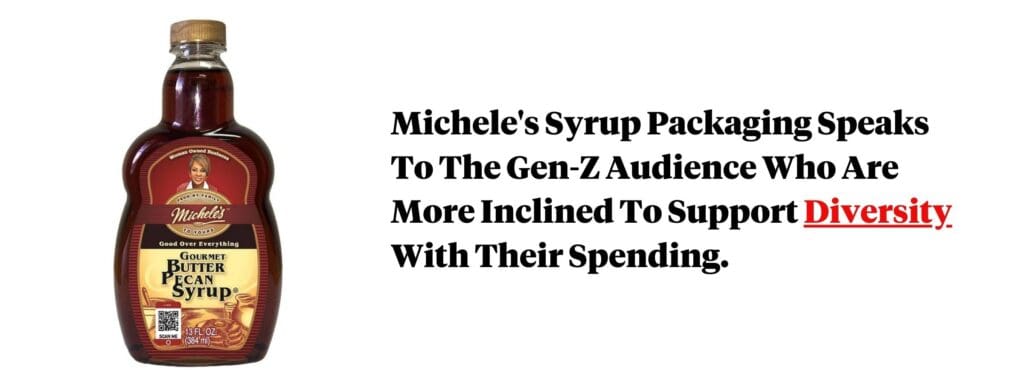
Another defining feature of Gen Z is the push to give everyone a seat at the table. Companies will more easily engage with Generation Z when their marketing messaging shows a commitment to representing diversity. Of course, you don’t need to build your entire messaging strategy around the idea as long as it’s displayed clearly in your packaging design.
For example, the popular syrup brand Michele’s displays its heritage front and center on the syrup bottle. The packaging design lets everyone know the brand is woman-owned and founded by an African-American entrepreneur. It’s a simple touch, only one line of copy on the label – but it speaks volumes to customers paying attention, and you can bet that Generation Z is listening.
Environmental Care
Like their Millennial predecessors, Gen Z’ers are hungry for a better world, with much of their attention given to the environment. In a survey of over 10,000 Gen Z’ers across 22 countries, 41% agreed that climate change was the most crucial issue in the world today. Companies targeting Z’ers should keep this in mind as they put together their packaging.
Best practices for environmentally-friendly sustainable packaging design apply here. Minimize packaging elements, shift to recyclable components, ditch plastics, and encourage shoppers to reuse packaging materials. And while you’re at it, make these efforts visible in your design’s layout.
Generation Z’ers will appreciate knowing your commitment to the environment – but don’t expect them to thank you for it. Another feature of this generation is how they watch supermassive companies pollute the environment in the face of climate change warnings. As a result, business claims about sustainability resonate and may encourage greater purchase intent among Gen Z’ers.
Given the importance of climate change for Generation Z’s future, treat these efforts as a “well, duh” strategy rather than a specific selling point.
Personalization
Whereas branding inclined Generation X and Millennials to pull products off the shelf, young consumers are looking for a personalized experience. How does this product speak to me? Does the product solve my problem or make my life easier? In this way, the younger generation acts more mature than their age suggests.
Even though they may be younger consumers, they still desire a feeling of luxury in packaging only; the meaning of luxury isn’t about having the most fame and flamboyance but what steps the company takes in its product design to command a higher price.
Minimalism
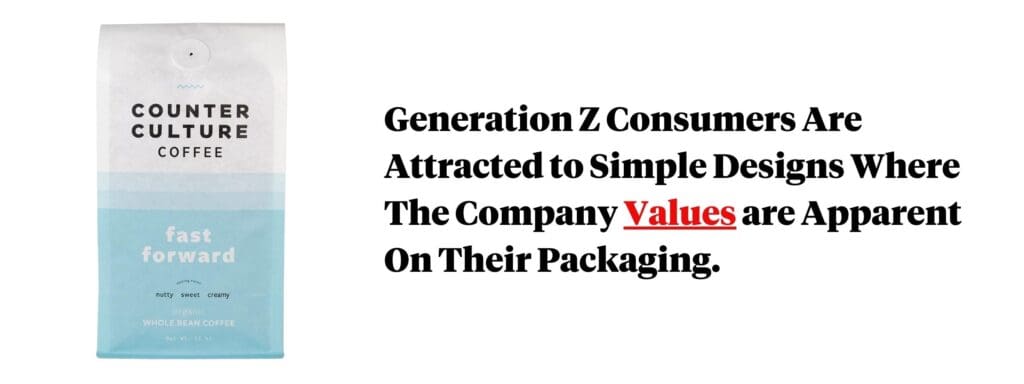
If we’re being honest, we can all look back on our past and see how we were wild and reckless in our younger years. So we might assume that Generation Z product packaging should have a level of expression. There is an expression, but it is the intentional expression of less rather than more.
Minimalist packaging design doesn’t mean a blank canvas. It means white space for the most impactful messaging to resonate. The younger audience fitting into this consumer group embraces the minimalistic packaging trends in categories such as coffee, apparel, and alcohol.
Reaching Generation Z With Authentic, Inspirational Messaging
Generation Z shares many of the same values as Millennials, but like every generation, there are slight variances that warrant closer attention. Gen Z’ers are more diverse, educated, and technologically savvy than any other generation – and packaging design needs to reflect these components. Keep your focus on clear, authentic messaging that shares details about your company’s struggle, how you’ve worked toward inclusion, and your sustainability efforts. Keep these benefits at the forefront of your design, and you’ll break through Gen Z’s resistance to advertising and earn a place in their lives.
Generation Z Packaging Design
Are you a CPG brand looking to attract Gen Z’ers? We can help. Through our strategic design process, we perform packaging design testing to determine the impact your packaging has on the desired audience. Book a time to learn more about our packaging design process and how we can help capture more of the younger generation’s market share.
Subscribe to
Nice Package.
SmashBrand’s Nice Package: Stay current with our latest insights
Free Resource.

CPG product repositioning guide.
Explore the five undeniable signs your CPG product needs repositioning along with strategies for leveraging consumer insights for a guaranteed market lift.
Download Whitepaper About CPG product repositioning guide.