
 Overview
When packaging design fails to communicate clearly, differentiate in search, or set accurate expectations, Amazon simply exposes it faster. What looks like a logistics issue is often the result of design choices, front panels that don’t read at thumbnail, claims that don’t hold up under scrutiny, or structures that weren’t designed for the realities of Amazon’s environment. The outcome is the same: packaging design quietly costing you sales.
Amazon packaging operates inside a complex system that most brands underestimate. Amazon FBA prep service must consider FBA compliance, packaging durability, damage thresholds, and to the nuances of Frustration Free packaging, there’s a web of requirements that quietly shape what your customer receives, and how they experience your product.
If your packaging wasn’t designed with these variables in mind, it’s not just a missed detail. It’s a performance gap. This article unpacks how Amazon packaging actually works, where it tends to break down, and what it takes to design packaging that drives real results. Because in ecommerce, your pack doesn’t sit on a shelf, it arrives in a box. And if that box fails to deliver, so will everything else.
Amazon is a search algorithm with packaging rules.
Amazon isn’t just an ecommerce store; it’s a decision engine. Every day, shoppers browse; they filter, compare, and make snap judgments based on thumbnail images and limited product data. That shift fundamentally changes how packaging needs to perform.
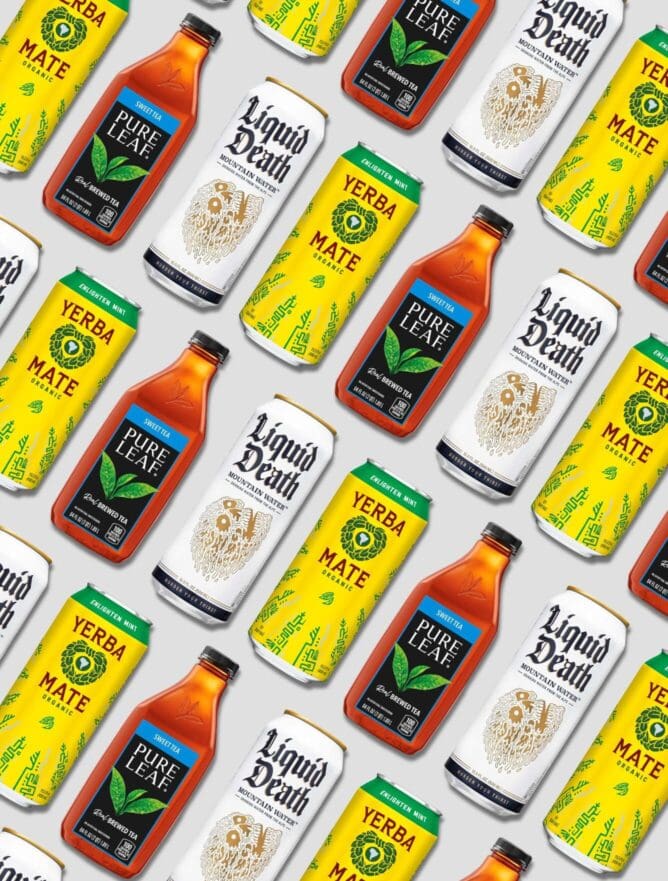
When your product shows up on a results page, it’s inside a grid. Surrounded by a sea of near-identical options, the pack is reduced to a few pixels and a split-second impression. This is where your product packaging must work extra efficiently. Visual hierarchy, message clarity, and claim legibility are non-negotiables. If your claims disappear in a thumbnail or your colors don’t differentiate, your product will too.
And behind the scenes, Amazon’s packaging requirements shape that moment more than most brands realize. FBA compliance, prep requirements, and structural constraints impact how your product is packed, shipped, and ultimately presented to the customer. Once it’s in the system, the experience is set.
The problem is that most brands design for the shelf and retrofit that design for Amazon. In doing so, they overlook how Amazon’s environment changes how packaging design is seen and judged.
On Amazon, design must perform at thumbnail, under zoom, and across variants; otherwise, it suppresses clicks, creates confusion, and drives returns. Those outcomes feed the algorithm, which is why on Amazon, packaging design directly affects visibility and sales.
The Amazon-exclusive purchase drivers you can’t afford to miss.
Amazon doesn’t follow traditional shopping behavior. It creates its own. There are no pauses, no second glances, no time to walk the aisle and engage. Shoppers move fast, guided by algorithms and constrained by limited context.
Thumbnail legibility & scroll-stopping power.
In the Amazon grid, your packaging has two seconds and about 200 pixels to make an impression. If shoppers can’t immediately understand what the product is, why it matters, or how it’s different, they keep scrolling. The stakes are high: if your pack doesn’t earn the click, it won’t have a chance to convert.
Too many brands design packaging to pass compliance checks, Amazon FBA prep requirements, approved materials, and frustration free packaging, but miss the bigger picture. None of that matters if the pack isn’t designed to win the click first. Amazon’s algorithm rewards engagement, not packaging compliance.
That moment is shaped long before a product ships. It starts with the assets loaded into Seller Central, the choices made around structure and claims, and whether the pack holds up in thumbnail form. If your design doesn’t drive engagement at the top of the funnel, every other investment down the line falls flat.
Algorithmic click-through influence.
The design choices you make, color, structure, claims, and clarity, directly impact your click-through rate. And Amazon’s algorithm watches that metric closely. When a pack fails to generate engagement, it’s a signal to the algorithm that your product isn’t relevant.
Over time, this can push your listing lower in search results, reducing visibility no matter how much you invest in ads or how well your fulfillment metrics look on paper.
This is why packaging must be engineered for both compliance and conversion. Meeting Amazon FBA packaging requirements is table stakes, but proper packaging also needs to grab attention, survive the scroll, and drive interaction.
Without this, even a perfectly prepped product will underperform. As an Amazon seller, you’re operating in a closed-loop system. Everything from how Amazon ships, to what’s uploaded in Amazon Seller Central, to how your product survives fulfillment affects your outcome.
Zoom-based claim verification.
On Amazon, shoppers replace physical inspection with Zoom. They enlarge packaging to validate claims, confirm safety language, and understand usage, especially for products that fall near restricted product guidelines.
If claims don’t hold up under magnification, trust erodes fast. Details like the Amazon barcode, instructions, or warnings must be legible and accurate, because once a shipment leaves an Amazon fulfillment center, there’s no second chance to clarify.
Review-dependent trust formation.
Amazon reviews serve as real-time fact-checks of packaging promises. Overstated claims or unclear instructions often appear verbatim in reviews, damaging conversions and long-term Amazon growth.
This is especially true for Amazon Business and Amazon Fresh shoppers, who expect reliability. Packaging must align with reality, what’s inside the shipping box, how it performs, and how it’s described, because reviews quickly expose gaps.
Single-click variant accuracy.
Amazon is a one-click environment. If a shopper selects the wrong variant, the result is a return, a refund, and often a negative review. Clear variant communication on-pack matters because FBA sellers don’t control the post-purchase experience.
Errors cascade through FBA shipment, shipping label, and box content information, ultimately hurting ranking and increasing costs across every Amazon fulfillment cycle.
Damage resistance across fulfillment.
Amazon’s logistics chain is unforgiving. Products move through automated systems, mixed shipments, and multiple handoffs inside an Amazon fulfillment center. Weak structures, poor packing material, or fragile plastic packaging lead to dents, leaks, and breakage.
Shoppers experience this as low quality, even if the product works. Durable Amazon FBA boxes and innovative delivery packaging reduce returns and complaints tied to shipping damage.
Search-grid visual differentiation.
Amazon search results present 40–60 products at once. Packaging must visually stand out in that grid, not just look good on its own. Color, structure, and brand assets must cut through at thumbnail size, regardless of plastic delivery packaging norms or category clutter. If it blends in, it’s skipped, no matter how compliant it is with Amazon’s requirements or how optimized the listing appears.
Hero image conversion power.
The hero image is the single most crucial element of Amazon packaging. It sets expectations before the product is even added to a shipping box. Whether part of a broader product packaging program or a standalone SKU, the hero image must clearly represent what arrives, how it’s packaged, and what problem it solves without adding unnecessary packaging waste. For any FBA seller, this image determines whether the click happens at all.
Where Amazon product packaging typically fails (and costs you sales).
Most Amazon packaging failures don’t come from ignoring the rules. They come from designing to meet Amazon’s requirements rather than planning to perform within them. When packaging decisions are made in isolation, without pressure-testing how they behave in search, fulfillment, and reviews, sales erosion is almost guaranteed.
Below are the failure points we see most often across household categories.
Claims based on internal preference.
Teams often choose claims because they feel differentiated internally, not because shoppers care. On Amazon, this shows up fast, especially for products adjacent to restricted products, where shoppers scrutinize claims more closely. When claims don’t align with real shopper priorities, conversion drops, and reviews call it out. Compliance doesn’t protect you here. Performance does.
Variant systems that fail in small-scale digital environments.
A variant architecture that works in retail often collapses on Amazon. Color cues are too subtle. Size or scent indicators get lost. One wrong click leads to returns, review damage, and unnecessary Amazon FBA shipments back through the system. Over time, poor variant clarity creates bloated inventory and rising costs, especially when layered with additional Amazon packaging or relabeling fixes.
Packaging that blends into competitive color clusters.
Amazon search grids punish sameness. Categories like cleaning, fragrance, and décor are flooded with similar color palettes. Packaging that follows category norms instead of breaking them disappears visually, even if it’s beautifully designed. This directly impacts Amazon ads efficiency, because no amount of spend fixes a pack that can’t be seen.
Category-Specific Failure Patterns We See Repeatedly
- Cleaning / Fragrance: Leakage, over-claims, poor sealing during shipping
- Bathroom Accessories: Lightweight structures that feel disposable on arrival
- Décor: Aesthetic-first design with unclear functional value
- Fire Logs: Safety messaging minimized to make room for branding
In every case, packaging technically meets Amazon’s guidelines, but fails where it matters: shopper confidence, clarity, and performance.
The cost of poor packaging on Amazon.
Poor packaging on Amazon fails in sequence. A front panel that’s unclear or misleading lowers click-through. A confusing variant or damaged delivery leads to returns. Reviews are starting to call out issues that packaging should have prevented.
Amazon’s system reads all of this as a sign of declining relevance and reliability, and rankings slip accordingly. What looks like a creative or structural miss quickly becomes a visibility problem because the algorithm doesn’t distinguish between packaging and performance.
Amazon rewards clarity because clarity reduces friction. When packaging clearly communicates what the product is, how it works, and which version the shopper is buying, conversion improves, and post-purchase issues decline. Ambiguity does the opposite. It creates hesitation, mis-clicks, and disappointment.
The financial impact compounds quickly. Refunds and return shipping eat into the margin. Conversion drops force higher spend, driving CPC inflation to maintain traffic. Inventory turns slower as returned units cycle back through the system. In household goods, this erosion happens faster than in premium categories because shoppers aren’t buying aspiration; they’re purchasing utility.
The only reliable path to packaging that wins on Amazon.
The only reliable way to win on Amazon is to remove opinion from the process. Internal debates about what should work are replaced by consumer-driven claim validation and testing of which benefits actually trigger clicks, confidence, and conversion. We, at SmashBrand, start by identifying the claims shoppers respond to in real Amazon contexts.
From there, Evidence-Based Design translates those proven drivers into packaging built for how people actually shop: scanning thumbnails, zooming for proof, comparing side-by-side, and deciding fast. Design choices are made to perform in those moments, not to impress in a presentation.
Critically, everything is tested in realistic environments that mirror Amazon’s search grid, so results predict real behavior, not hypothetical feedback. The outcome is a scalable packaging system engineered to work across hero images, zoom views, tiles, A+ content, and eventual retail extension.
Data-driven Amazon product packaging design for maximum performance.
SmashBrand is a data-driven packaging design agency specializing in Amazon packaging, built to help brands win where clarity, speed, and performance matter most. We design to convert within Amazon’s search grid, under its fulfillment realities, and in defiance of its algorithmic rules.
We do it by replacing guesswork with evidence. We identify the claims shoppers actually respond to, design packaging around real Amazon behaviors, and test it in environments that mirror how people scan, zoom, and compare. Every system we build is engineered to scale, so packaging performs before it ever launches, not after it fails.

A seasoned veteran in the CPG (Consumer Packaged Goods) industry, Jason Vaught brings a wealth of knowledge and hands-on experience as the director of content and marketing for SmashBrand. His comprehensive role at the forefront of brand communication ensures that CPG brands remain well-informed about the suite of services SmashBrand offers. Furthermore, his insights derived from the company's strategy, design, and testing services are invaluable to brand owners and managers seeking expert guidance.
From his early endeavors in launching a successful sports nutrition brand that gained prominence in significant bodybuilding and fitness retail spaces to his entrepreneurial ventures in kick-starting multiple brick-and-mortar and e-commerce startups across diverse industries, Jason's career is studded with substantial milestones. Notably, he has innovated numerous products later embraced by leading industry brands, showcasing his knack for anticipating market demands and setting trends.
Jason's journey in the CPG industry commenced at age 21. Over the years, he has worn multiple hats, ranging from a manufacturer and retailer to a distributor and brand owner. This multifaceted experience equips him with the rare ability to offer practical advice grounded in real-world expertise. His mission is to guide and support other CPG brand owners, directors, and managers on their path to success.
Subscribe to
Nice Package.
SmashBrand’s Nice Package: Stay current with our latest insights
Free Resource.

CPG product repositioning guide.
Explore the five undeniable signs your CPG product needs repositioning along with strategies for leveraging consumer insights for a guaranteed market lift.
Download Whitepaper About CPG product repositioning guide.