
 Overview
Nielsen BASES found that innovations launched before they were ready failed in market 80% of the time. Readiness is not a formulation problem. It is not a timeline problem. Innovations die on the shelf for one reason. Somebody moved forward without answering one of the following six questions.
What is it?
Know what occasion the product serves. Know what it replaces in the cart. The answer determines which products you compete against, which shelf it lands on, and how much room the category leaves you to grow.
A narrow frame produces a narrow ceiling. Take the largest frame your product can credibly occupy.
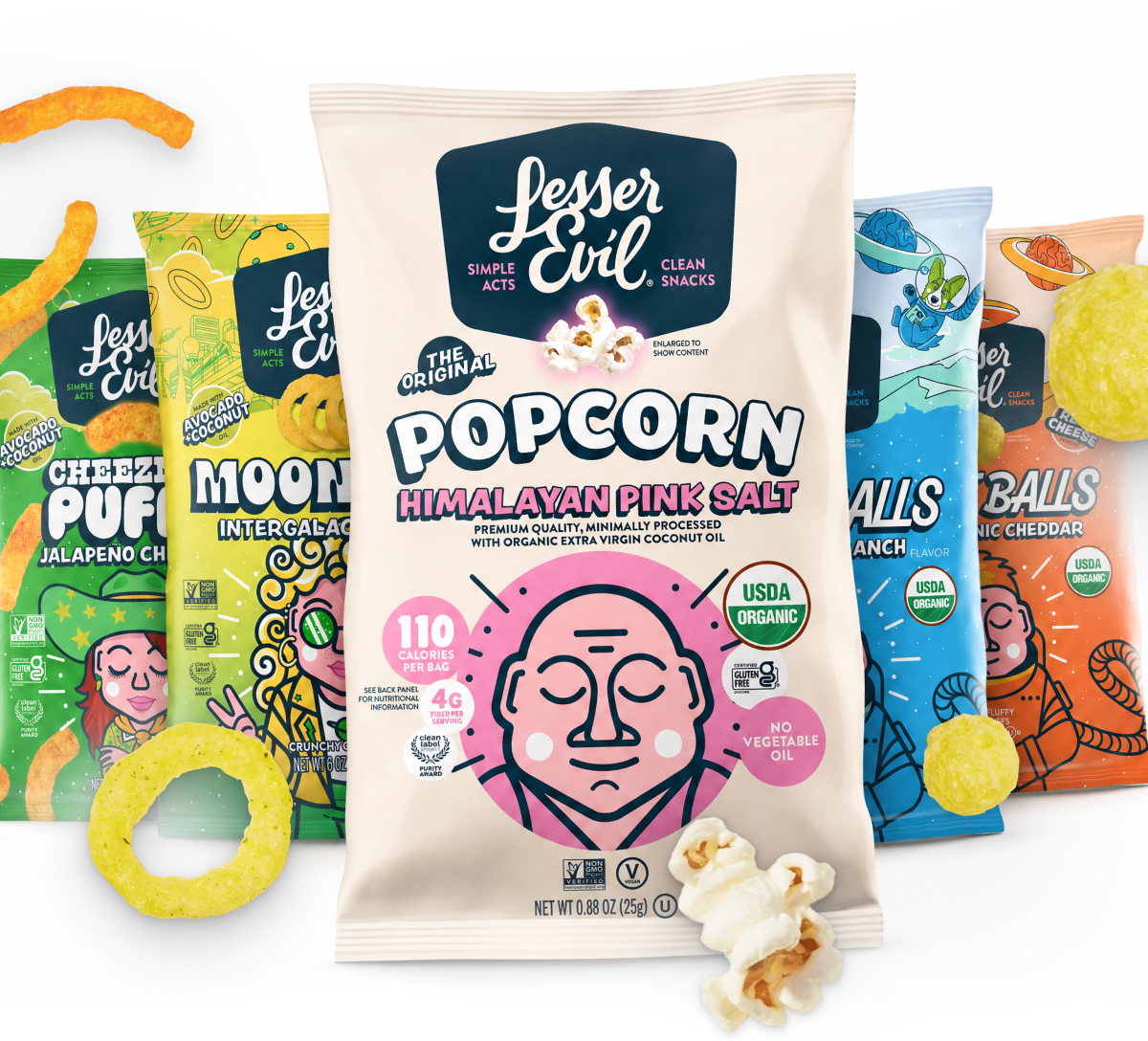
While popcorn may be the anchor category, LesserEvil defined itself as a healthy snack brand. That decision keeps crackers, croutons, salad toppers, and protein all on the table.
Why is it better?
Your point of difference has to be sharp enough that a shopper repeats it back. Nielsen found that 85% of new CPG products fail within two years. Most got tried once. They never got bought again.
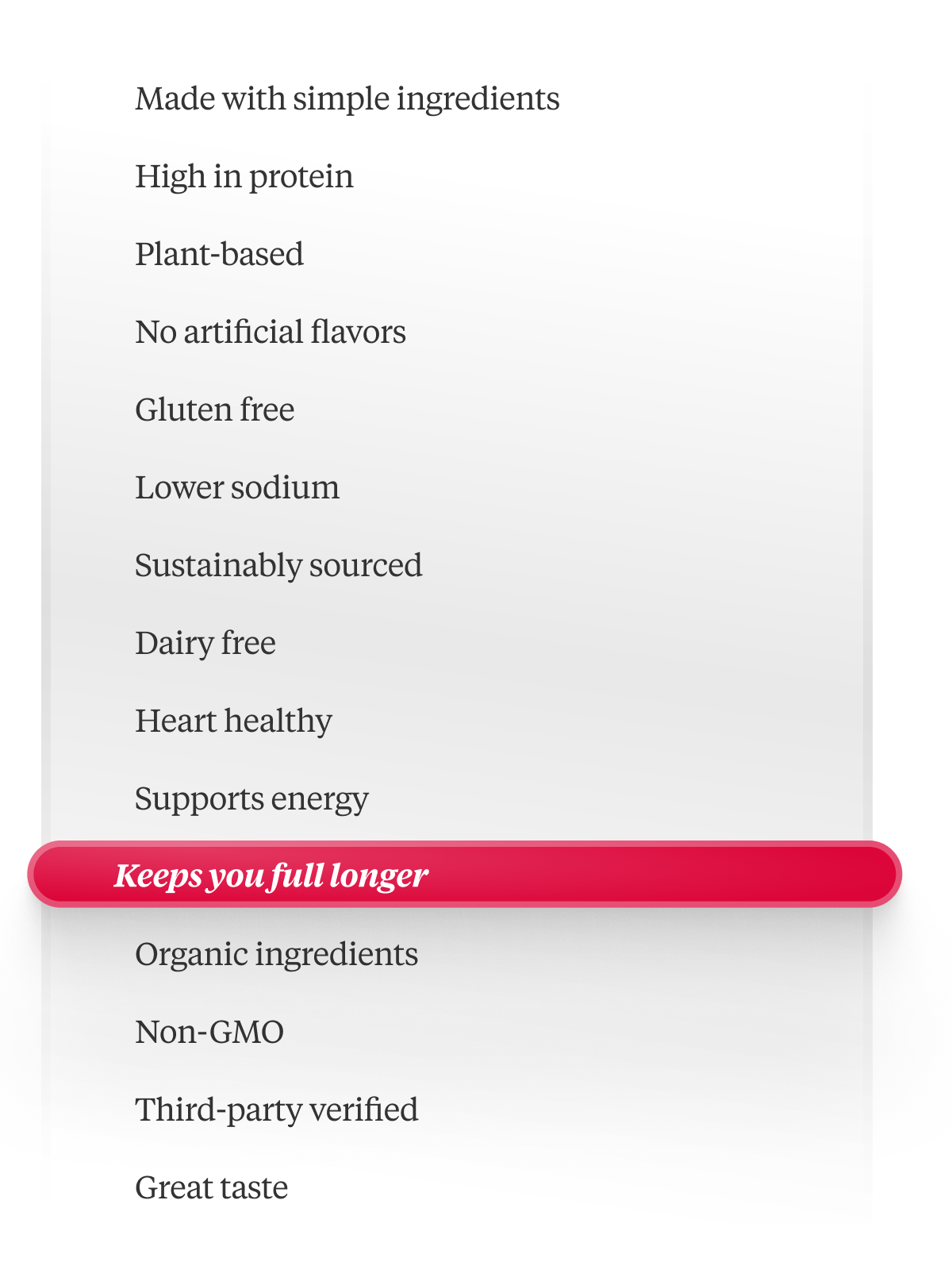
A weak point of difference explains most of that. Brands can list fifteen advantages. Consumers absorb one, maybe two. Pick the claim that carries the product and prove it.
Does the brand belong here?
Equity travels in some directions and not others. Test whether the association consumers already hold does its work once the product changes. When it does, the extension reads as obvious on sight. When it does not, you are launching an unfamiliar product wearing a familiar name.
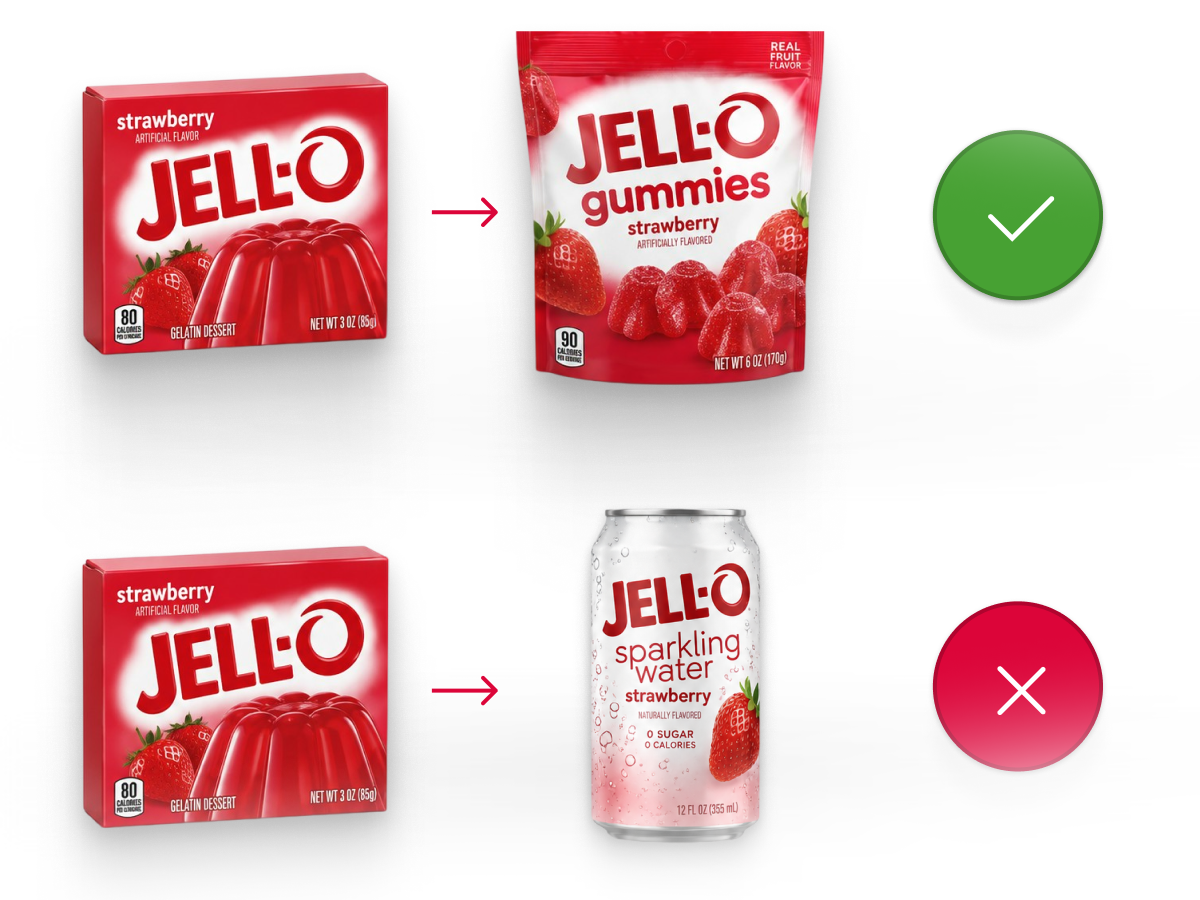
Jell-O gummy candy works. The texture association transfers and the product stops pretending to be anything other than candy. Starburst jelly beans work for the same reason. Flavored sparkling water under either name is a longer reach.
What is the pricing relative to others?
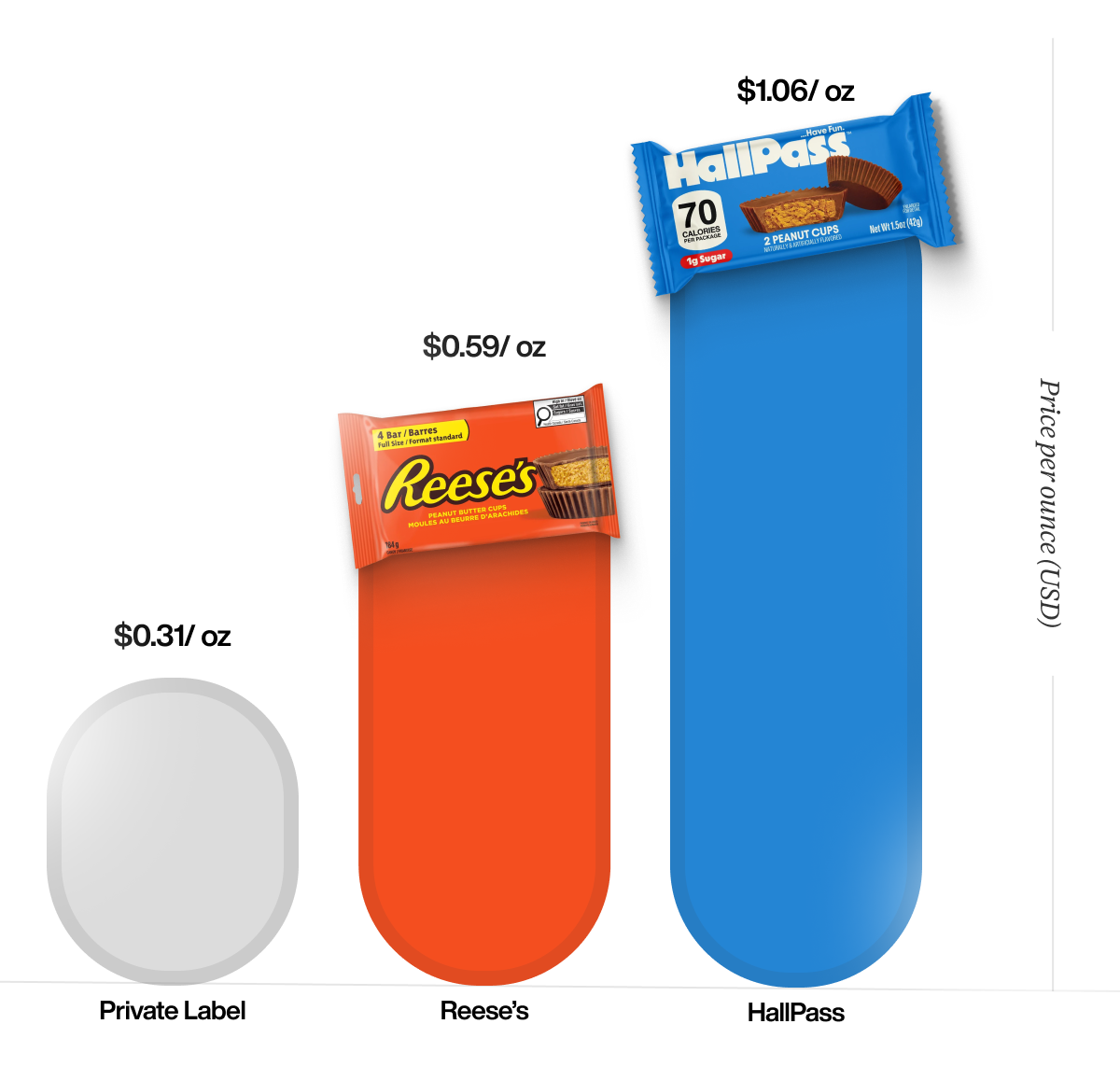
At launch, you orient to two reference points. Private label and the leading national brand. Every dollar of distance from that national brand costs volume, and the premium holds only when your point of difference justifies it in the aisle. Go too far the other way and a price that raises doubt about quality kills the product before anyone tries it.
HallPass is the case worth watching. A lower-calorie candy priced at a premium to the category staple raises a question you want answered before launch. Is the difference big enough to move someone off a brand they have bought their whole life?
What is the business side?
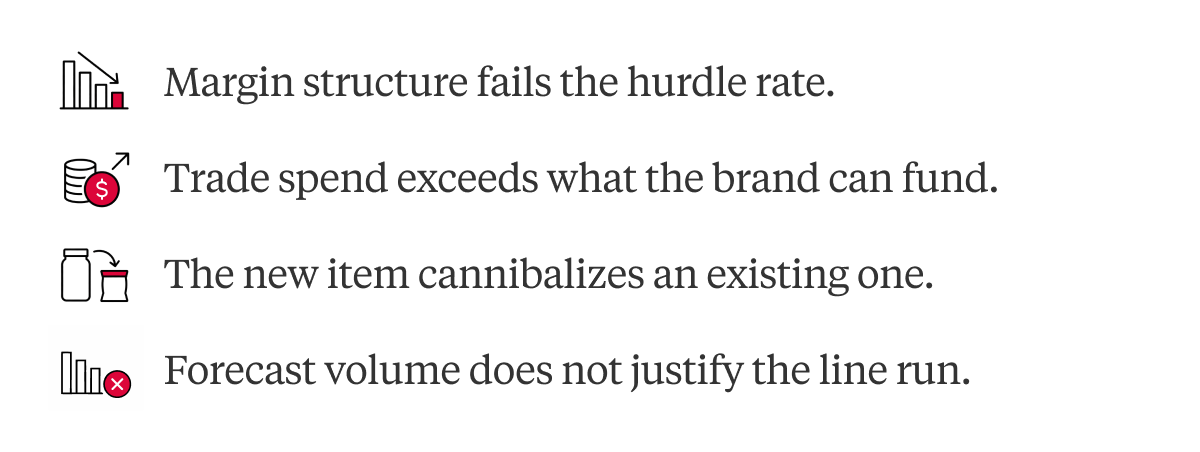
A consumer may want the product. That does not mean the business can carry it. Margin targets, trade budgets, portfolio overlap and forecast volume all get decided away from the shopper, and any one of them sinks a launch that tested well.
Ask what has to be true internally before you build. The answers arrive faster than a failed launch does.
How hard is it to win this category?
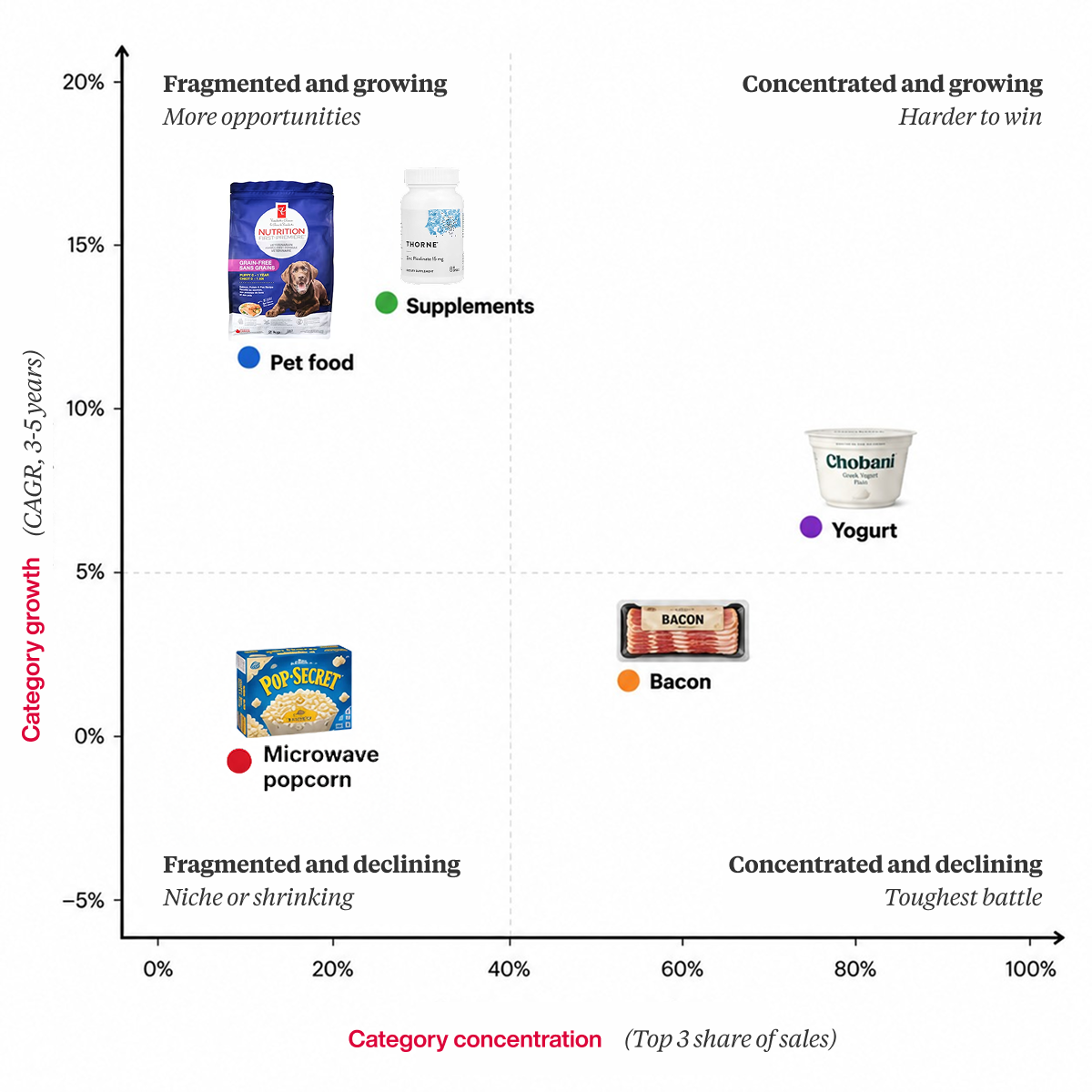
Category attractiveness and competitive difficulty often get confused. Read both. BCG found that 76% of product launches fail outright, and two-thirds never reach 10,000 units. Structure explains the gap.
Look at concentration, private label share, how much volume moves on a deal, and what it costs to get noticed.
Yogurt is a fight over a static pie against national brands with real budgets. Bacon moves on promotion and swings with commodity pork. Microwave popcorn is shrinking.
Supplements and pet food run the other direction. New consumers arrive constantly. Churn is high, margins are healthy, no single player dominates, and private label share is still low. Specialty retail gives you a beachhead before you pitch grocery.
Answer them before you build.
None of these six require a lab or a year. They require somebody in the room willing to ask them out loud, while the answer can still change the product. Most teams ask them after launch, when the answer is a postmortem instead of a decision.
Our Innovation practice answers them earlier. Brand Stretch tells you whether your equity travels. Price Optimizer sets the number against private label and the national brand. Idea Screener kills weak concepts before R&D spend, and Category Baseline tells you what the aisle actually rewards.
No guesswork. Only answers you can point to.

A seasoned veteran in the CPG (Consumer Packaged Goods) industry, Jason Vaught brings a wealth of knowledge and hands-on experience as the director of content and marketing for SmashBrand. His comprehensive role at the forefront of brand communication ensures that CPG brands remain well-informed about the suite of services SmashBrand offers. Furthermore, his insights derived from the company's strategy, design, and testing services are invaluable to brand owners and managers seeking expert guidance.
From his early endeavors in launching a successful sports nutrition brand that gained prominence in significant bodybuilding and fitness retail spaces to his entrepreneurial ventures in kick-starting multiple brick-and-mortar and e-commerce startups across diverse industries, Jason's career is studded with substantial milestones. Notably, he has innovated numerous products later embraced by leading industry brands, showcasing his knack for anticipating market demands and setting trends.
Jason's journey in the CPG industry commenced at age 21. Over the years, he has worn multiple hats, ranging from a manufacturer and retailer to a distributor and brand owner. This multifaceted experience equips him with the rare ability to offer practical advice grounded in real-world expertise. His mission is to guide and support other CPG brand owners, directors, and managers on their path to success.
Subscribe to
Nice Package.
SmashBrand’s Nice Package: Stay current with our latest insights
Free Resource.
CPG product repositioning guide.
Explore the five undeniable signs your CPG product needs repositioning along with strategies for leveraging consumer insights for a guaranteed market lift.
Download Whitepaper About CPG product repositioning guide.