
 Overview
As with every other product category, branding is essential for fast-moving consumer goods. However, there are distinctions in FMCG branding compared to traditional CPG products. Understanding the specifics of FMCG branding will help your brand stand out and achieve greater memorability than the competition.
With a robust brand strategy that leverages the right FMCG branding tactics, challenger brands can compete and become FMCG category disruptors.
However, creating a successful strategy for an FMCG brand can be daunting. The weightiness of the work stems from the many variables that come into play when developing a “branded” development and FMCG marketing strategy for a new brand.
In this article, we break down the FMCG branding process into small, easy-to-follow steps. Our process makes it easy for new FMCG companies to enter competitive markets and thrive in a world of already-established brands.
So without any further ado, let’s get into it and explore the secrets of branding for fast-moving consumer goods.

The Fundamentals of FMCG Branding
FMCG branding refers to marketing the brand name and its value throughout every visual and auditory mention of the brand
A good FMCG branding strategy emotionally engages consumers, reaching a place in their psyche that will positively influence consumer decision-making in the moment and during future shopping occurrences.
Strong FMCG branding encourages consumer confidence that they are investing in the right product. It also helps make a company prosperous even in its initial go-to-market launch.
In simple terms, FMCG branding is about introducing an FMCG company and its products to the target market uniquely and compellingly, which may seem easy, but many factors are involved.
Elements Of The FMCG Branding Strategy
Branding and marketing are both art and science, and when combined, they can take a newly established business from scratch to an absolute empire. However, making the right strategy can be challenging and time-consuming.
Brands must consider various key elements when formulating and launching a successful FMCG branding strategy.
Here are some key elements vital to taking new FMCG companies to the next level.
Define Brand Values
The first and most crucial element in devising a successful FMCG marketing strategy is defining brand values. Since FMCG products are low-priced, sold quickly, and have a short shelf life, brand values play a vital role in differentiating FMCG products from competitors.
Brand values are the core beliefs and principles a brand stands for, which are hopefully aligned with the target market’s values. Brand values include a range of emotionally engaging efforts, from sustainability to dependability. When the company and consumer brand values align, the result strengthens brand loyalty once it is successfully communicated to potential customers.
Brand values help FMCG companies connect deeply with their customers. It also helps make the company and its products stand out from an overcrowded market. It creates new opportunities and generates more sales and revenue.
Market Research
Whether big or small, FMCG market research is essential to the brand strategy; view it as the backbone of FMCG marketing.
Detailed market research and analysis can help FMCG companies understand their target audience from various angles. It helps learn about consumer behavior across different markets and then adopt a successful strategy aligned with consumer preferences.
Apart from understanding consumer behavior, companies can also learn more about their competitors. As a result, they can explore their competitors’ strategies and perform gap analyses.
It allows them to fill the gaps with new products and services and stay ahead of the competition.
When it comes to conducting successful FMCG market research, multiple channels brands can utilize, which include:
- Consumer Surveys
- Focus Groups
- FMCG Retail Data Analysis
- Social Media Listening
- Ethnographic Research
Brand Differentiation
After conducting successful market research and collecting sufficient data, companies can devise strategies to differentiate themselves from competitors.
FMCG companies can leverage gaps in competitors’ marketing strategies to gain an edge. For instance, a company may launch a new product to target a specific group of potential customers.
Differentiating a brand goes beyond introducing new products. Other game-changing factors can set a brand apart from its competitors.
Some of the successful brand differentiation strategies include:
- Packaging Design
- Product Quality
- Brand Values
- Product Innovation
- Pricing Strategy
- Brand Personality
Create A Brand Theme
Creating a brand theme is an essential element of FMCG branding strategies. It helps produce a recognizable brand identity and form a psychological bond with the consumers.
Consistency across all touchpoints helps engage the consumers’ emotions, which successful brands do. Colors, fonts, typography, and imagery can be vital when creating a brand theme.
Not only this, but product packaging, FMCG advertising campaigns, and digital marketing can also help develop a brand theme.
Here are some common and best examples of brand themes:
- Coca-Cola: Coca-Cola’s brand theme revolves around happiness and joy.
- Nike: Nike’s brand theme revolves around empowerment and inspiration.
- Dove: Dove’s brand theme focuses on natural beauty and self-confidence.
Brand Identity
Brand theme and brand identity are interlinked elements of the FMCG branding strategies. It can help establish a solid brand presence in online and offline marketplaces.
Brand identity is not only about adopting a unique brand theme. It involves grabbing consumers’ attention with the product’s quality and trustworthiness.
A solid brand identity helps establish a unique, recognizable brand image that resonates with consumers. It can be helpful in many ways, which include:
- Differentiating the product or company from its competitors
- Helping consumers recognize and recall the products easily
- Building trust and loyalty
- Allowing companies to charge premium prices without losing customers
Brand Personality
The brand personality comprises various elements that establish a distinct identity for the brand. In the case of FMCG products, which are often similar, the brand personality sets a company apart from the competition.
Several key elements contribute to developing a unique brand personality, including brand colors, typography, and a distinctive shape for your FCMG packaging design.
To build a strong brand, FMCG companies can leverage social media platforms such as Facebook, TikTok, Instagram, and Pinterest to ensure a strong presence.
Companies can also use digital marketing to increase customer engagement and generate more revenue.
An effective social media marketing strategy can communicate a brand’s personality to its intended audience by considering their demographics, psychographics, and interests.
FMCG Branding Tips
Now that you have learned about the need and importance of FMCG branding, here are tips from our agency. These tips will help you build brand loyalty, recall, and awareness for the target audience.
Understanding the Target Audience
Being crystal clear about your customer persona is a game-changer in FMCG brand development, especially in fast-moving consumer goods. It is because FMCG products are low-priced and sell quickly.
Due to their fast-paced nature, people sometimes don’t consider brands unless they offer something unique and valuable. An important note is that it’s not what is distinctive to the brand but “distinctive to the consumer, a critical difference to remember.
Understanding the target audience’s needs and requirements can help attract customers, thereby improving FMCG sales performance.
Developing a Unique Brand Identity
In FMCG brand management, identity is differentiation. A brand that knows who it is and consistently communicates it with intention outperforms one that blends into the shelf. That’s why FMCG brand management teams obsess over the fundamentals: a minimal, memorable logo, a calibrated color system, and visual cues that evoke the exact emotional response desired from customers.
When executed well, branding efforts like these can dramatically lift FMCG performance. A strong identity accelerates trial, strengthens recall, and builds the kind of long-term loyalty that makes future launches easier and far less costly. Line extensions become smooth expansions rather than uphill battles because shoppers already trust the parent brand.
Look at categories shaped by identity-driven leadership, Ben & Jerry’s, McDonald’s, and KFC. Their presence is unmistakable, and that clarity is a strategic advantage.
Creating a strong brand voice.
In FMCG, your packaging may win the first glance, but your brand voice is what earns the second. A strong, consistent voice gives your FMCG brand design more dimension, helping shoppers understand not just what you sell, but what you stand for.
Whether you’re running FMCG brand marketing, building out campaign assets, or partnering with an FMCG branding agency, the tone must stay unmistakably yours. Consistency isn’t a branding “play”; it’s how branded FMCG products build loyalty in categories where parity is the norm.
Keep it engaging. Keep it authentic. And make sure your voice aligns with the brand’s core identity so every touchpoint reinforces the same story. When done right, your voice becomes one of the most potent assets across all branding topics.
Invest in packaging design.
In the FMCG sector, packaging is brand management at its most high-stakes. Your pack is the moment of truth where brand positioning, brand experience, and brand recognition either land with the shopper… or disappear into the noise. And in a category where Gen Z and modern shoppers evaluate brands in seconds, your FMCG product needs packaging that communicates a clear brand story before they ever touch the shelf.
Today’s consumers care about impact, not just aesthetics. Sustainable formats, biodegradable films, plant-based materials, and reduced plastic systems do more than check a box. They signal values, build brand equity, and spark the kind of consumer engagement that elevates brand awareness across every channel.
Excellent packaging earns attention. Strategic packaging earns conversion. And in FMCG, that difference is everything.
Prioritize customer experience
In FMCG, your customer experience is the battleground where brand loyalty is won or quietly lost. Every interaction, from packaging to support, shapes how consumers judge your brand value and whether they come back.
Strengthen your experience ecosystem by investing in fast, human customer support and digital touchpoints that actually work. A streamlined site or app that loads quickly and guides shoppers intuitively elevates brand visibility and reinforces your brand architecture in ways no advertising strategy can replicate.
Build on that foundation by actively collecting feedback and using it to refine your offer. When consumers see you adapt to their needs, consumer loyalty increases, your brand values ring true, and you earn the right to implement higher-impact growth levers, whether that’s a more innovative loyalty program, a refreshed logo design, or the next move that sets you apart from other successful FMCG brands competing for the same sliver of consumer attention.
The future of branding for FMCG companies.
In the highly competitive FMCG market, effective branding is essential for businesses that want to stand out and succeed. A robust brand identity can help distinguish your products, foster customer loyalty, and promote growth.
To remain relevant, businesses in the FMCG industry must stay abreast of emerging trends and consumer preferences.
This necessitates adopting new technologies and digital channels, incorporating sustainability and social responsibility into brand messaging, and prioritizing customer experience.
By understanding the following:
- Who the target audience is.
- How to develop a distinct brand identity.
- Why they should invest in packaging design.
- The best ways to utilize social media.
- And how to prioritize the customer experience.
Whether you sell in retail or act exclusively as an FMCG brand selling through ecommerce, you can and should enhance your branding strategy to thrive in the fiercely competitive FMCG market.
Lastly, adopting the change and avoiding getting stuck in a loop is highly important. For example, machine learning (ML), Artificial Intelligence (AI), and big data are trending. This can be fully embraced and used as a window of opportunity to succeed.
Nice Package
Don’t miss out on our monthly newsletter Nice Package!
Each month, we deliver a data-driven newsletter directly to your inbox, unpacking a critical topic in the FMCG & CPG industry.
"*" indicates required fields
Data-Driven Brand Development For FMCG Companies
Want a best-selling brand? Smashbrand is a brand development agency for CPG and FMC companies selling in retail. From brand strategy to packaging design, our development process puts your best foot forward, helping you define your position in the marketplace with solid branding and impactful messaging.
Book a time to discuss your project with our team.

A seasoned veteran in the CPG (Consumer Packaged Goods) industry, Jason Vaught brings a wealth of knowledge and hands-on experience as the director of content and marketing for SmashBrand. His comprehensive role at the forefront of brand communication ensures that CPG brands remain well-informed about the suite of services SmashBrand offers. Furthermore, his insights derived from the company's strategy, design, and testing services are invaluable to brand owners and managers seeking expert guidance.
From his early endeavors in launching a successful sports nutrition brand that gained prominence in significant bodybuilding and fitness retail spaces to his entrepreneurial ventures in kick-starting multiple brick-and-mortar and e-commerce startups across diverse industries, Jason's career is studded with substantial milestones. Notably, he has innovated numerous products later embraced by leading industry brands, showcasing his knack for anticipating market demands and setting trends.
Jason's journey in the CPG industry commenced at age 21. Over the years, he has worn multiple hats, ranging from a manufacturer and retailer to a distributor and brand owner. This multifaceted experience equips him with the rare ability to offer practical advice grounded in real-world expertise. His mission is to guide and support other CPG brand owners, directors, and managers on their path to success.
Subscribe to
Nice Package.
SmashBrand’s Nice Package: Stay current with our latest insights
Free Resource.
CPG product repositioning guide.
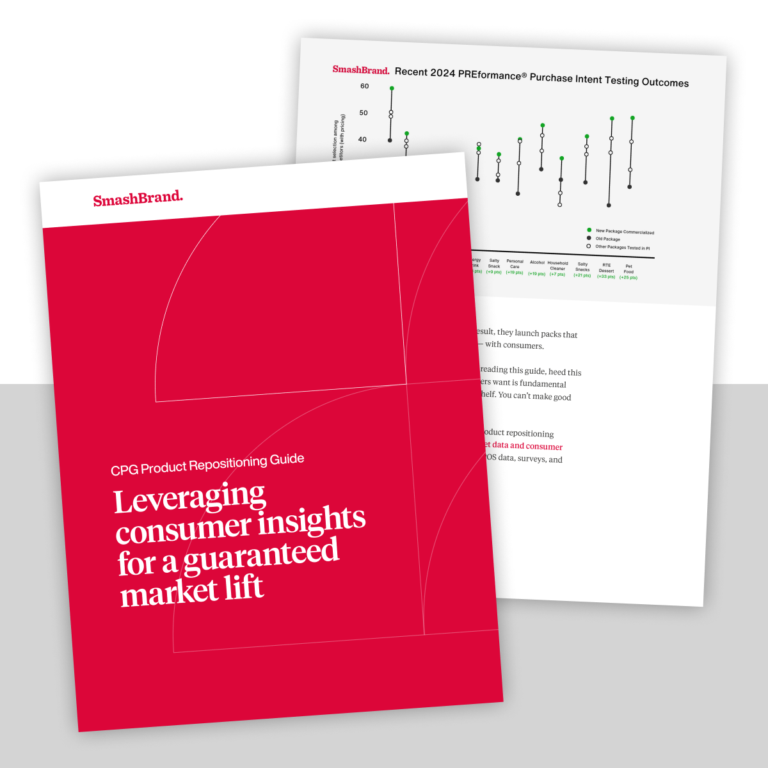
Explore the five undeniable signs your CPG product needs repositioning along with strategies for leveraging consumer insights for a guaranteed market lift.
Download Whitepaper About CPG product repositioning guide.