

Product quality is undoubtedly important for product trial and repeat purchases, but when consumers view your product on the shelf, quality is only a perception, not an experience. With an effective packaging design, you do everything possible to convince consumers to buy your product without prior awareness. Essentially, it would be best to assume they have never seen your brand before and may never see it again.
Let’s face it: This differs from most CPG brands’ strategies. Perform a store audit, and you will see garbage littering the shelves. To be fair, there’s nothing simple about product packaging as it requires substantial time, resources, and investment capital, which is why many brands drive customers away while effectively entombing their products until they expire.
What Makes Packaging Effective?
There are hundreds of ways to quantify a brand’s success. However, it comes down to the ability of the package to position, attract, persuade, communicate, and persuade consumers to purchase your product.
Adequate packaging builds a relationship between the consumer and the brand, creating loyalty and trust beyond the product itself.
If you want to move your products, consider these five tips at the start of your journey toward building more than a “good” packaging design.
Grab Attention
Grabbing attention is not just about being the flashiest (usually garish) but also involves communicating your brand essence in an eye-catching and fluid way. A funky package design is fine as long as it’s in service of a funky product and matches your brand identity. From your color choice to the chosen typography to how the packaging layout is structured, the best way to stand out is to create a cohesive image that is recognizable and coordinated.
But you cannot end at this tip, as every good packaging design attempts to grab attention. The trick is to grab the attention of your target audience above your competition. In industry lingo, this is called purchase intent. At SmashBrand, we offer a specific service for purchase intent testing.
Pass the Five-Year-Old Test
Your product packaging design should be simple and recognizable enough that if you described it to a five-year-old, they would have no problem snagging it from a lineup. The trick here is that five-year-olds rely exclusively on visual cues: They may not understand what a box of Frosted Flakes is, but if mom told them to grab the blue box of cereal with the big orange tiger on it, they’d have no problem because the essential elements of the design are easily identifiable. Your packaging needs this type of simplicity to capture consumers’ attention.
Author Note: This might lead you to run and pay the design firm that wants the most awards for creating visually appealing product packaging. Avoid this fateful decision because messaging takes consumers from purchase consideration to purchase intent in almost every CPG category, including beverage and food packaging.
Create Iconic Imagery
The Nike “Swoosh.” The sharp, defined lines of the Volkswagen VW. The green and white stripes of Starbucks. These branding assets seem basic but reflect the brands’ philosophies. The solid, parallel lines of the German-engineered Volkswagen logo imply strength and reliability.
The green and white swirls of the Starbucks logo suggest a hip and trendy corporate vibe. And the simple Nike Swoosh? It is a consistent complement to the minimalist “Just Do It” slogan the brand is known for. Iconic logos can provide a wealth of information in their design.
So before you disregard your logo as an aspect of an effective product packaging design, you must recognize the importance of logo branding for making a solid first impression and creating significant brand recall.
Trigger Emotions
Emotion is the crux of all advertisements, and your pack design is the most frequently seen form of marketing. Regardless of what we’re buying, emotion can cause us to ignore objections and realize we want this product.
Just look at Coca-Cola and its use of Santa Claus in marketing over the past 80-odd years. By teaming up with Santa (who conveniently shares Coke’s iconic red attire!), Coca-Cola ensured that customers would associate the positive imagery of Santa Claus with Coke creating brand loyalty for years to come.
Creating a strong emotional response prevents a one-hit wonder from quickly becoming a tired brand. When a company translates its product-specific brand values on the package, the consumer develops greater brand attachment increasing their likelihood for repeat purchases and supporting future line extensions.
Keep It Simple
Above all else, please keep it simple! Complexity and packaging are not friends. The most efficient packaging designs and marketing slogans are straightforward and memorable. In fact, in our overly cluttered retail establishment, where more brands than ever are vying for attention, the simple and clean designs stand out all the more.
The Result Of Following All Five Tips
A red and white can of soup. Chips that come in a long tube instead of a bag. A jolly green giant. When hearing these terms, most of us instantly have a clear image of what products are described: Campbell’s, Pringles, and Green Giant vegetables. That’s the power of effective packaging.
Implement these package design tips as a part of your packaging strategy and framework, and you will find that the sum is greater than its parts. You will have yourself a recipe for creating a memorable brand.
The Future of Packaging Design
The packaging design process is not as easy as it once was, and you need more than a packaging designer to set yourself up for success. It’s no longer luck but actual science. Everything from packaging technology to the customer experience affects how your product performs on the shelf.
Instead of guessing, your brand needs to start testing. Package design testing helps you identify what resonates with consumers and how to better communicate on the pack. Brands need to engage with a brand development agency that can assist in research and understanding to create the most impactful shelf-ready product.
That’s where we come in.
Data-Driven Packaging Design For CPG Brands
Want a best-selling brand? SmashBrand is a brand development agency for consumer goods brands that sell in retail. From brand strategy to packaging design, we help CPG companies see a performance lift against their shelf competition. Book a time to discuss your project with our team.
Subscribe to
Nice Package.
SmashBrand’s Nice Package: Stay current with our latest insights
Free Resource.
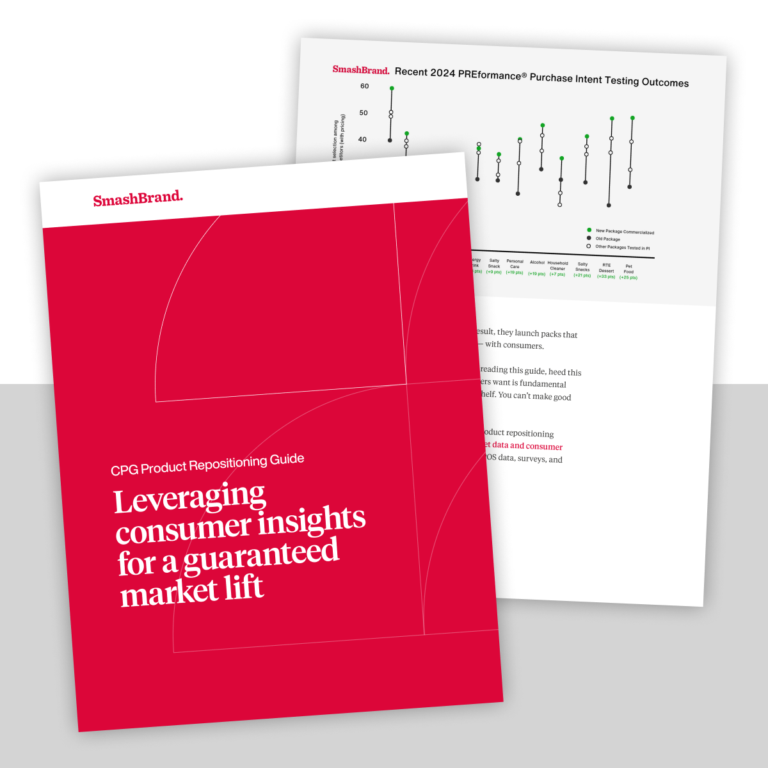
CPG product repositioning guide.
Explore the five undeniable signs your CPG product needs repositioning along with strategies for leveraging consumer insights for a guaranteed market lift.
Download Whitepaper About CPG product repositioning guide.