

Sometimes it seems like designers and clients just don’t speak the same language. Learning how to manage a client’s expectations ahead of the design process is sometimes as crucial to the project’s success as the end result. Here is how professional, board certified graphic design couples’ counsellors help designers and clients iron out their differences.
Designer: The client doesn’t understand the hours and hours that are involved in completing a task of this magnitude.
Counsellor: [To client] Would you like to respond?
Client: My brother found a guy who did his website for $50.
As designers, we owe it to ourselves and our professions to value what we do appropriately. We might have been thrilled to get a client of our very own after college, but don’t let that sense of honor diminish the worth of the work you do. In the end, your website/package/label will contribute thousands of dollars to your client’s revenue stream, and your experience, expertise, time and equipment weren’t just dropped in your lap by the gods of graphic art. You have operating expenses and skill, and you need to make sure your clients pay for it.
Designer Well, the client and I have a unique relationship. I am incredibly eager to give the client exactly what he wants. My client on the other hand, is incredibly unsure of what he wants.
Counsellor: I see.
Client: Not true. I told him I wanted it to pop.
Counsellor: Ah.
Client: It doesn’t pop.
Designer: WHAT DOES THAT MEAN???
Counsellor: Now, this is a safe environment…
Client: You see how he speaks to me?
Designer: [Weeping] I just want to know what that means…
Yes, the client–designer relationship is very delicate. While the designer is familiar with industry practice and terminology, the client — more often than not — isn’t, so client instructions can often be fairly ambiguous. Popular client phrases include: “make it pop,” “it needs to be edgy,” and “I don’t know how to work with this.”
It’s very difficult to get others to organize their thoughts, but you have to encourage your client to be as specific as he is capable of being. Make him give your examples of other designs — websites, packages, posters, fast-food wrappers — anything. Make sure you do this before you agree on a timeline of any kind and definitely before you begin any work. Your clients might attempt to explain their vision using hand gestures and facial expressions. Do not pretend to understand what they mean.
Designer: We agreed on a timeframe, and he won’t stop making modifications. I can’t finish the project on time if my directives change every day, and they’ve already added two weeks’ worth of work.
Counsellor: [To client] How does this make you feel?
Client: I discussed the project with my mother and she thinks it’s too bleak. She sent some notes.
Designer: She said to make it prettier. In 20 pages of file attachments, that is literally ALL she said. I don’t know what that means within the context of what you originally requested.
Client: [To counsellor] Mom collects miniatures!
Very often, clients will be utterly vague about their desires and requirements until the designer is knee-deep in the project. At that point, the client will resurface, like Count Orlok from the coffin in Nosferatu, and start giving the designer hundreds of pages of instructions — all contradicting the client’s original request. The designer then jettisons his original concept and then begins what will be weeks of additional work for which he isn’t certain he is going to be compensated. The client then scrutinizes the designer’s work — which he’s done exactly to the new specifications as far as he could decipher — and says “it doesn’t pop.” The designer then turns to whiskey.
It doesn’t have to be this way. Many clients continually bombard designers with notes, adjustments, additional requirements, things they forgot to say earlier, etc. As a designer, you have to anticipate this behavior and include in your contract safeguards. An example would be a clause describing how any modifications made by the client that change the scope of the project will result in payment for services rendered and the negotiation of a new contract with new specifications. One of the biggest and most avoidable traps a designer can fall into is allowing the workload to stretch far beyond what was originally negotiated.
Furthermore, the designer has to be clear about the parameters of client involvement during the project. Granted, the client should be available for input, and should furthermore feel free to involve himself in the process, but not to the extent that it interferes with the progress of the project.
It takes a foresight to properly manage a client’s expectations for the design process before it even begins. Although there are innumerable issues that can arise during a project, these some of the most common. And while we are designers ourselves (so we are heavily slanted towards a particular point of view), we understand that client experiences can also be fraught with anxiety, which we’ll touch upon in a later article.
Just so you know, the designer and client ironed out their differences, the project was a huge success, and the designer and client grew so close they formed a progressive rock band out of Akron, Ohio.
Keywords: manage client expectation design process
Subscribe to
Nice Package.
SmashBrand’s Nice Package: Stay current with our latest insights
Free Resource.
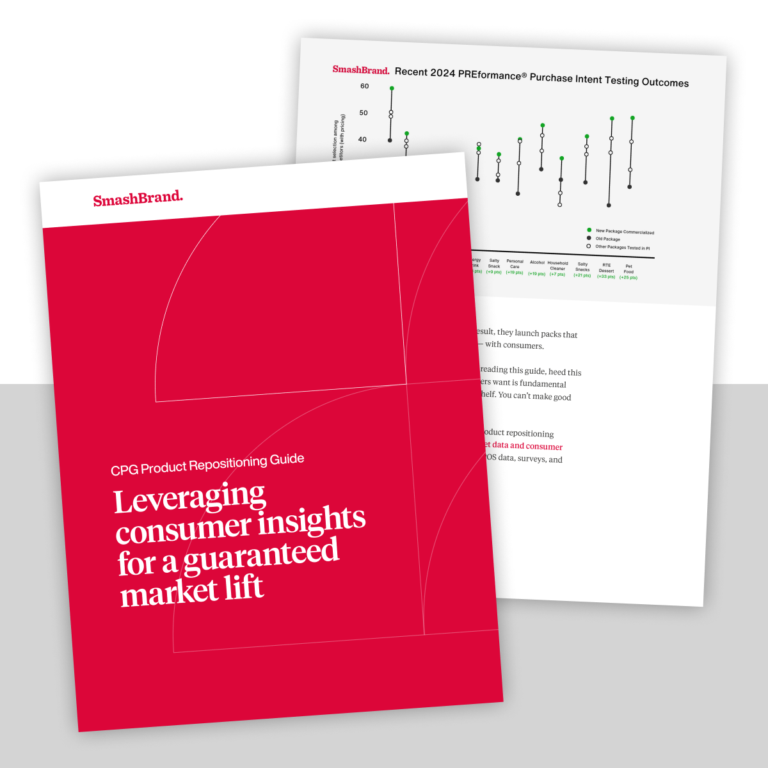
CPG product repositioning guide.
Explore the five undeniable signs your CPG product needs repositioning along with strategies for leveraging consumer insights for a guaranteed market lift.
Download Whitepaper About CPG product repositioning guide.