

It’s honorable to assume the role of a CPG company is producing the best product possible. But even the highest quality products go unnoticed when there isn’t a solid business strategy to support product quality. As we now find ourselves in the infancy of Web 3.0 and Web 3, consumer packaged goods brands must consider each emerging technology as a part of their brand strategy.
In this article, we discuss the role of Web 3.0 in CPG, what consumers and retailers expect from CPG brands, and how to leverage these technologies to your advantage.
How will Web 3.0 Change The CPG Industry?
The overarching theme behind CPG web 3.0 is how there will be a lesser distance between the consumer and the brand. Additionally, the lines between digital consumption and physical consumption are becoming blurrier. A better experience is at the forefront of these technologies and is one of the leading purchase drivers for Gen-Z consumers.
How Will Web3 Change The CPG Industry?
A welcomed change to the decentralization of currency opens is how the door for CPG brands to create loyalty programs that generate and process payments directly to consumers.
Another benefit to Web3 is selling products and collecting payments through the metaverse. CPG products selling to established grocers and retailers can create digital products that coincide with the physical goods, allowing them to generate direct-to-consumer sales without interfering with their retail partnerships.
Will Retail Survive On Web 3.0?
You will undoubtedly see media suggesting web 3.0 as the doom and gloom for retail CPG. But isn’t that what “experts” said throughout web 2.0? It’s also easy to assume that direct-to-consumer will capture more market share at an exponential rate.
Where web 3.0 will create a “better” digital experience, the desire for physical touch will only heighten. A part of the customer loyalty dilemma is convenience and distraction. Brands must take an Omnichannel approach to position their product in front of the same eyes at separate points in the buyer journey.
Looking back at the beginning of web 2.0, brick n mortar retailers and brands who sold to these stores thrived as long as they embraced the new technology. The retail landscape and consumer brands will need to change with it.
Retailers recognize this, which is why a portion of Target now looks more like a series of pop-up shops. Instead of aisles that keep you moving, these hang-out spots encourage more significant digital interactions.

The Challenge of CPG in Web 3.0
Prioritization is a challenge for any technology change. There will be no shortage of marketing opportunities on web 3.0, and brands can spread themselves thin trying to implement them all. Execution will be paramount for the entire CPG industry, including retailers and brands.
Forecasting the readiness of these technologies is also a concern. There is plenty of conversation around decentralized forms of currency, digital assets, and virtual experiences. But compared to the entire society, web 3.0 has reached just beyond the point of a cult following.
The 5-Technologies of Web 3.0
From these technologies comes innovation at every turn. Consumers can use these categories to create conversations with their teams about implementing and innovating for marketing and operational purposes.
Blockchain Technology
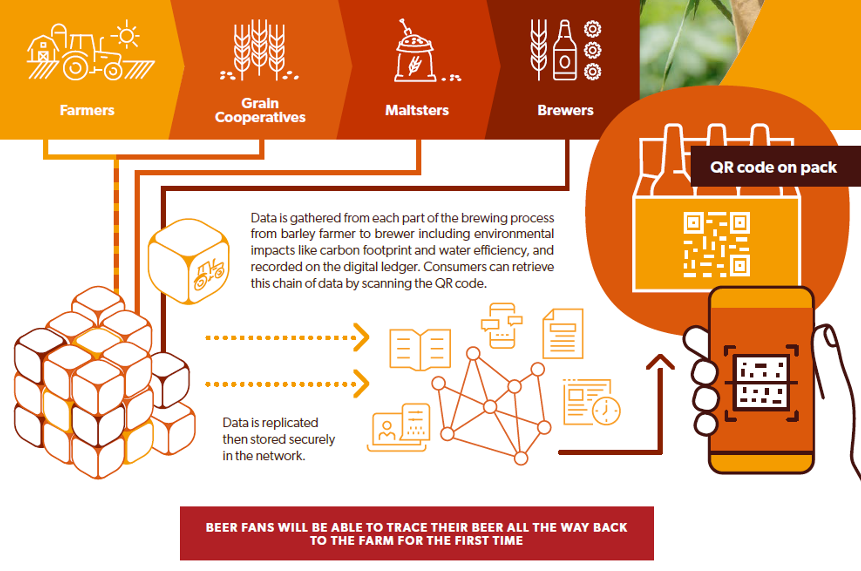
With the removal of centralized platforms, consumers can gain access and spend their money more freely. For example, consumers seeking flexible payment solutions explore options buy and send litecoin for seamless digital transactions. Crypto commerce directly affects the end user and is becoming a part of the entire CPG journey. One example is AB Bev testing a cryptocurrency pilot program to provide transparency throughout the supply chain. As blockchain adoption expands, many users also monitor metrics such as the ankr price to better understand activity within decentralized ecosystems.
Non-Fungible Tokens (NFT)
The means of ownership have changed over the years. Previous generations sought status and alignment, and younger generations sought personalization and one-of-a-kind experiences. Gen-Z has set the stage for NFTs, and they are finding their way into consumer packaged goods.
Once NFTs have hit the mainstream, expect CPG brands to adapt and shoot off NFTs in a rapid-fire fashion. Instead of toys in a cereal box, maybe it will be the chance to win a random NFT? While for the meantime, it may be astute offerings, eventually, the NFTs will be lower ticket value items available. However, it’s worth noting that brands venturing into NFTs may face legal and regulatory questions around digital ownership. To navigate these complexities, they can rely on VARA license advisory support to ensure compliance and proper licensing.
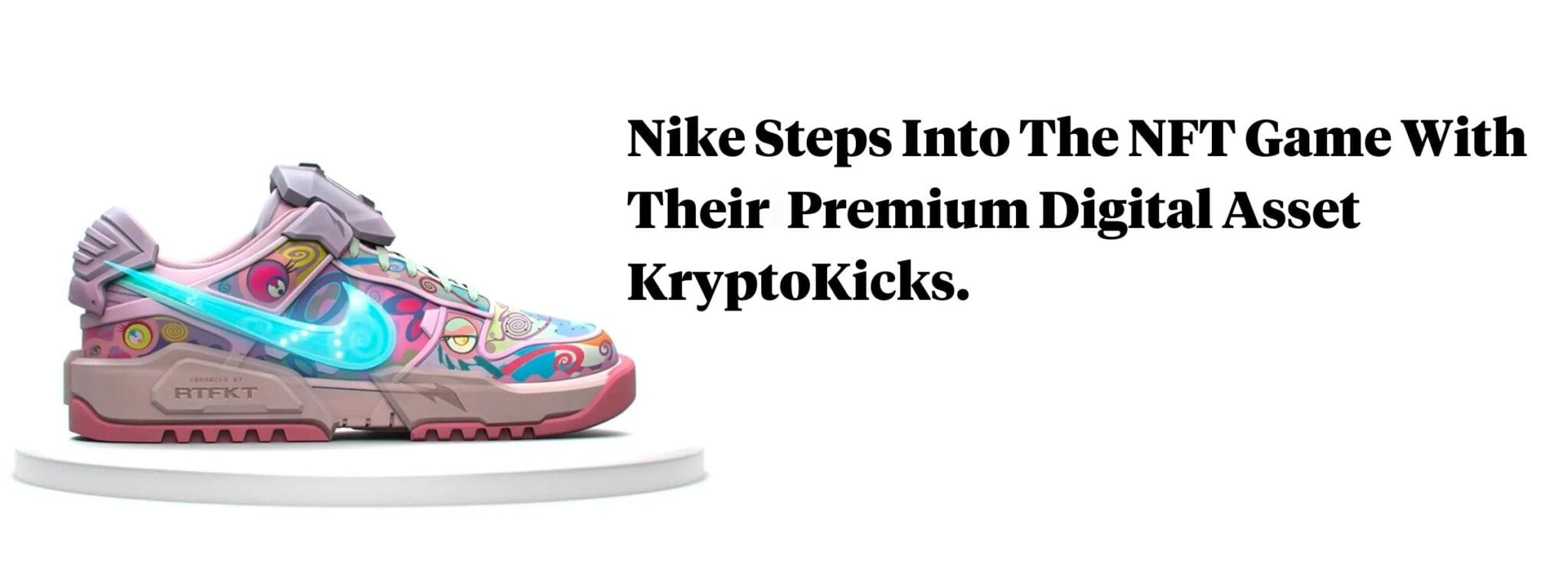
Want a nearly $800.00 pair of digital shoes? The token Nike Kryptokicks is the leader in sneakers introduction to the NFT project.
Artificial Intelligence
AI has a further impact on CPG than just cloud computing and analytics. Machine learning affects the entire supply chain, from robotically operated hydroponics to autonomous vehicles delivering groceries. AI technology will change the whole landscape for consumer goods in both process and experience.
Augmented Reality
CPG will significantly improve with advancements in augmented reality. Picture yourself at Whole Foods looking at raw milk. You are interested in this product but the concerns about harmful bacteria. You think about asking the employee to stock the cooler but figure that’s a long shot. Instead, you bring a customer service agent onto the floor through augmented reality and ask them to address your concerns.
Sure, you could do this over the phone, but when you have a concern, seeing a face helps to encourage trust. Using 3d objects and 3d models will become a staple in CPG stores just as much as it will be for ecommerce brands and retailers.
Virtual Reality
AR experiences are an expected feature of ecommerce that brands want here and now. Virtual showrooms give them an aspect of in-store that online cannot match. Think about how this impacts product assembly. A fitness equipment company can minimize returns by having a VR setup video where the consumer walks through the setup process step-by-step. Once this becomes a virtual reality, let’s light a match (oops, we mean recycle) of all the frustrating instruction manuals.
On the brand side, we are at the forefront of CPG virtual reality testing, which will play a major role in the coming years. Companies investing in virtual reality testing built for CPG brands will have more accurate data for retailers and consumers.
Meeting The Retailer’s Expectations
Brands looking to win on-shelf placement will need to adapt to these technologies. As the retailer implements web 3.0 into their business model, they expect a brand relationship to do the same. Not having a web 3.0 brand strategy might be the roadblock to entering your ideal retailer.
Here are three ways brands can meet the expectations of retailers:
Increasing Brand Communication
Now more than ever, consumers can enter a store with a complete understanding of a brand’s story and the product itself. Brand-to-consumer communication reduces purchase friction, taking less weight off the retailer’s shoulders.
customer experience
Web 2.0 introduced a brand’s ability to create fast-moving BOGOs and promotions for retailers, web 3.0 now introduces the ability to add experiences with every purchase. A grain company might have an offering where purchasing their flour, sugar, and baking powder give you VIP access to a VR bread baking class hosted by a celebrity baker.
Gamification
It seems like forever since Poke-man-Go brought gamification into the real world. But since then, there haven’t been many implementations since this early adopter. However, that will all change with augmented reality. A brand can create a shopping experience where, when a consumer puts a product in the cart, the brand adds a coin to its score.
Frequency of Content Creation
With the emergence of ChatGPT, content creation is set to explode in web 3.0. With OpenAI giving everyone access to their ChatGPT platform, brands can leverage this technology for blog articles, social media, and digital ads. The technology will also push for more video content as it can create pre-made scripts allowing digital creators to focus on points of differentiation.
Incorporating Web 3.0 Into Marketing Campaigns
Within the digital marketing community, there’s an understanding of adding value before asking prospective customers to take action. Adding weight will still be necessary for web 3.0, but what we consider helpful now will be common knowledge in the coming years.
We can expect every social platform to be the first to adapt to these technologies, hoping to keep users in the apps. CPG brands require a dual strategy where creating experiences is part of their social media marketing and brand strategy. In-app experiences and calls to action to experiences outside of social platforms but within their digital marketing strategy.
Package Design & Consumer Testing For CPG Brands
With all this talk about Web3 and Web 3.0, there’s still one fact. A CPG products packaging design is the most critical aspect of your brand marketing. It’s what people see at the point of purchase and interacts with your product each time.
At SmashBrand, we help you define and identify the most impact packaging designs for shelf performance. Whether in a retail or virtual store, our packaging design process ensures you have the best-performing package for your product. Book a time to discuss your project with our team.
Subscribe to
Nice Package.
SmashBrand’s Nice Package: Stay current with our latest insights
Free Resource.

CPG product repositioning guide.
Explore the five undeniable signs your CPG product needs repositioning along with strategies for leveraging consumer insights for a guaranteed market lift.
Download Whitepaper About CPG product repositioning guide.